7 hours ago
7
7 hours ago
7
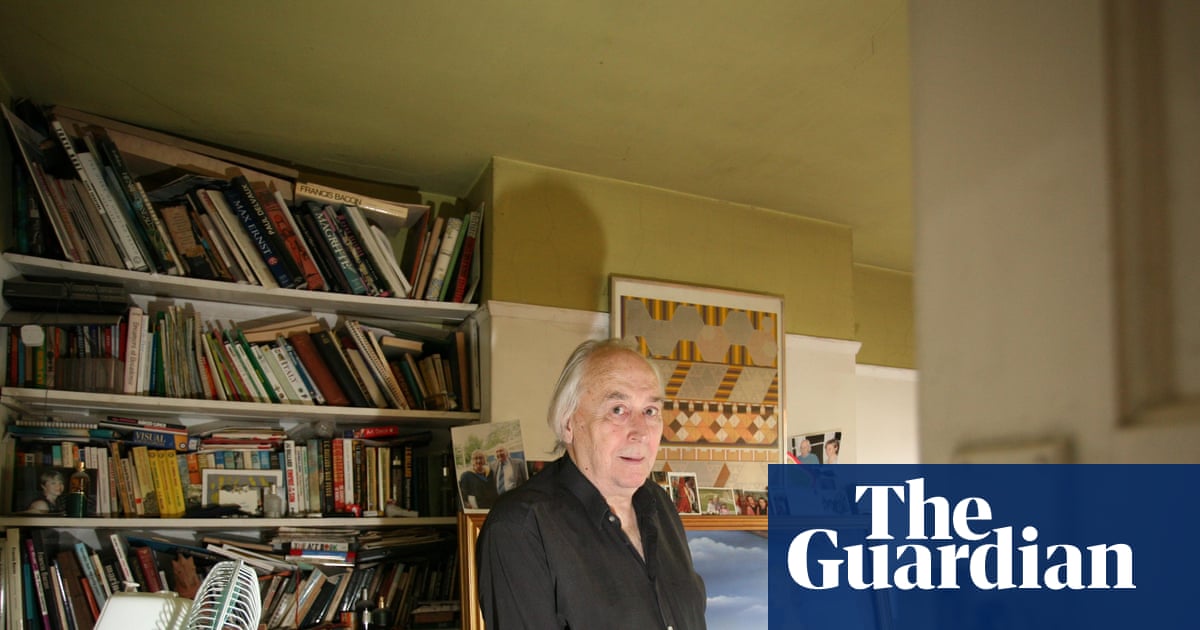
After the playwright Tom Stoppard died last year, one of the most striking tributes to his work came from a clinical scientist. Michael Baum explained in the British Medical Journal how, in the interval of a 1993 performance of Arcadia, he experienced an epiphany. Thomasina Coverly’s attempt to plot the equation for a rose prompted him to realise that chaos theory was the best way to explain breast cancer’s pattern of recurrence. It was, he wrote, “the bond that links the arts and the sciences as one enterprise rather than the contents of two silos”.
Mr Baum was not the first person to celebrate the bridging of this gap. CP Snow famously criticised the incuriosity of “literary intellectuals” about technology in his essay The Two Cultures (later turned into a lecture and a book). Whether or not this was justified at the time, many literary intellectuals besides Stoppard have since taken a close interest in science; Richard Holmes’s latest book, about the influence of evolutionary theory on Tennyson, is just one example. But the split between the humanities and sciences remains pronounced, and will be evident when this year’s A-level results are released on Thursday.
Stoppard’s Thomasina was talking to her maths tutor when she sparked Mr Baum’s chain of associations. For anyone interested in linking disciplines, education is clearly crucial. But while recent decades have seen successful efforts to boost Stem (science, technology, engineering and mathematics), at the expense of the humanities and arts, the division between these two broad fields of knowledge has been unaddressed. So has the issue of early specialisation, with many pupils in England and Wales choosing either one path or the other at age 16.
This narrowing is highly unusual internationally. In France, Germany, the US and Scotland, pupils typically study a broader curriculum until they leave school. And while theoretically, English and Welsh teenagers at least have a wide choice of subjects, and there is nothing to stop them from studying chemistry alongside dance or German, timetables can make this difficult, while the competitive nature of university admissions incentivises them to stick to what they are best at, whether that is a suite of essay-writing subjects or physics, maths and further maths.
This tendency to specialise has intensified recently. Under New Labour, pupils were encouraged to take four subjects in year 12 before choosing three A-levels. But following Michael Gove’s decision to scrap AS assessments, the options narrowed both in terms of the number of subjects studied and the range. Between 2003 and 2021, the proportion of students taking A-levels from a single subject-group rose from 18% to 35%. Only 5% of the latter cohort studied a combination of Stem, social science and humanities subjects. Last year the government cut funding for state schools teaching the wide‑ranging international baccalaureate.
There is no shortage of challenges facing the new education secretary, Lucy Powell – not least the repeatedly botched reform of vocational alternatives, and the rise in pupils with special educational needs. That’s one reason why A-levels barely featured in the recent curriculum review. But the 70th anniversary of Snow’s “two cultures” thesis is a good time to reflect on whether a rethink of 16-to-18 education is due. Young people should be enabled to keep more options open for longer. More people straddling the science and humanities disciplines would be a good thing.