4 hours ago
11
4 hours ago
11
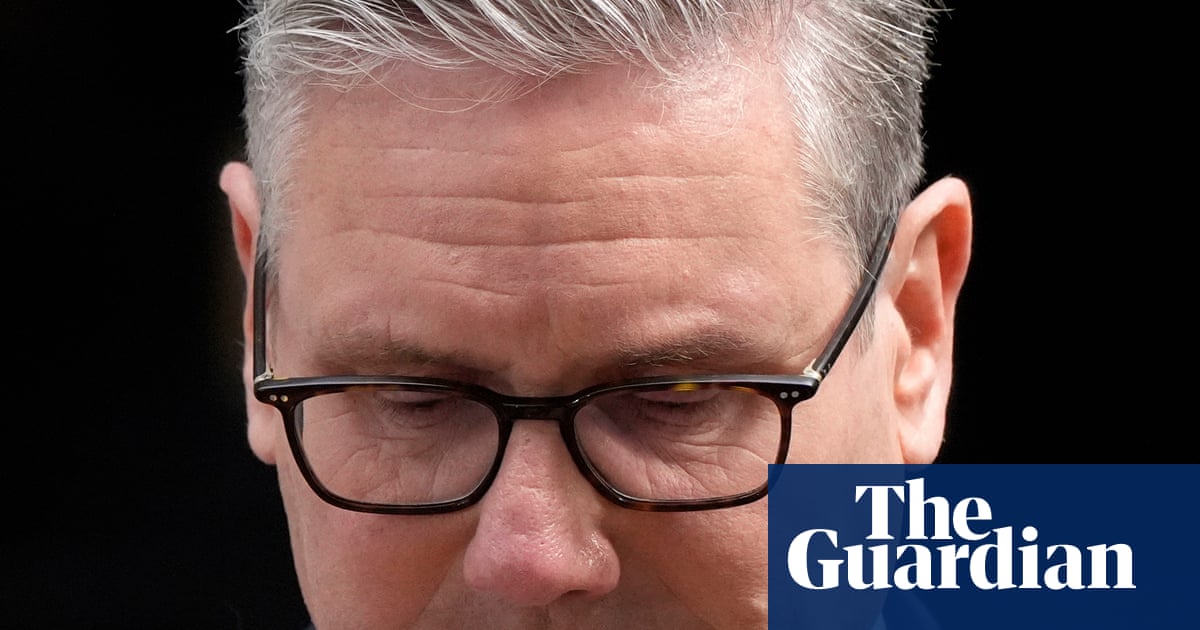
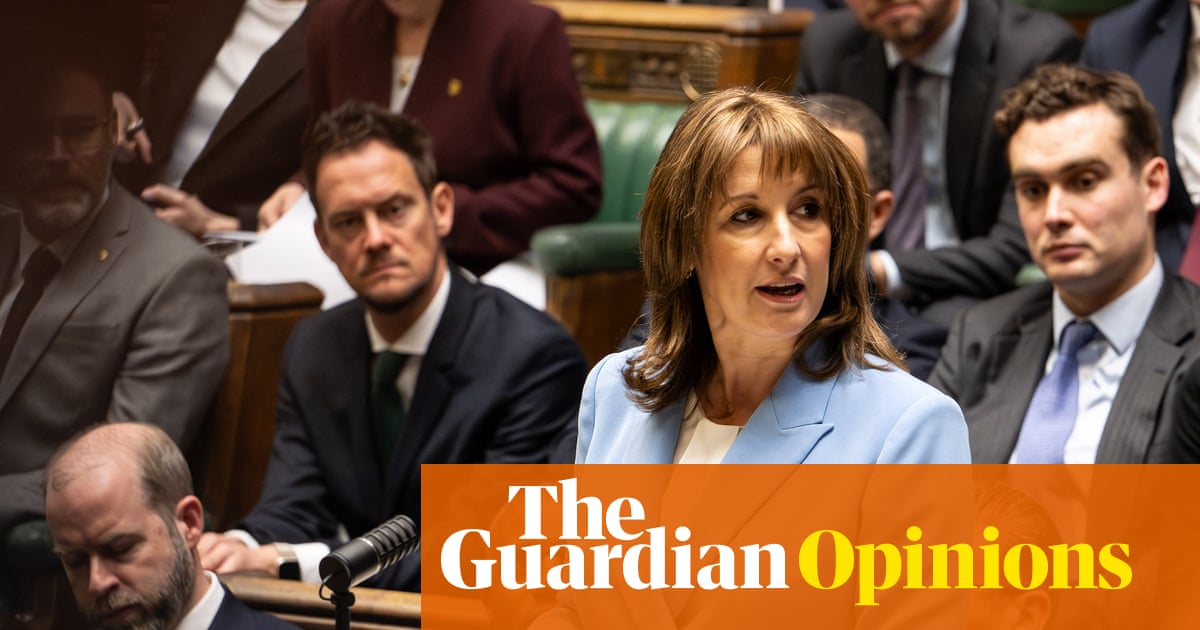
Historians will puzzle over this one. Of the six prime ministers that have led Britain over the last decade, with a seventh now on the way, it will be the fall of Keir Starmer that will most perplex the political analysts of the future.
They will ponder a man who won a landslide victory in July 2024 only to be pushed out less than two years later, having started no illegal wars, having triggered no grave economic crises, having been accused of no scandalous act of corruption.
They will scratch their heads at a PM who paid the ultimate political price, even though few could point to the single, obvious political crime he had committed.
So what did for Starmer – and what legacy, if any – does he leave behind? Perhaps most important, what does the fleeting premiership of the outgoing Labour leader portend for whoever takes his place?
Start with his undoing, which was a function of both the man and his times. Plenty will say, and have said in recent days, that Starmer’s failure was pre-ordained, for the simple reason that he was not a politician and had no aptitude for politics. At face value, that statement is obviously absurd. No one rises to the top of a major political party and then wins a 174-seat parliamentary majority by accident.
Nor will it do to suggest that Starmer’s success came solely from being in the right place at the right time, a lucky player of political pass-the-parcel who had an election victory land in his lap when it was Labour’s turn.
Of course, it’s fair to describe the 2024 result as a national repudiation of the Conservatives rather than an embrace of Labour, but merely to have turned the party into an acceptable receptacle for that deep well of anti-Tory feeling was itself a significant achievement.
Five years earlier, voters had handed Labour their biggest drubbing since 1935. But Starmer’s tacit promise of calm, technocratic competence – after the Boris Johnson and Liz Truss years of florid Tory scandal and chaos – the sense that he was a decent, if unexciting, man, was enough to reassure voters that Labour could be trusted with power.
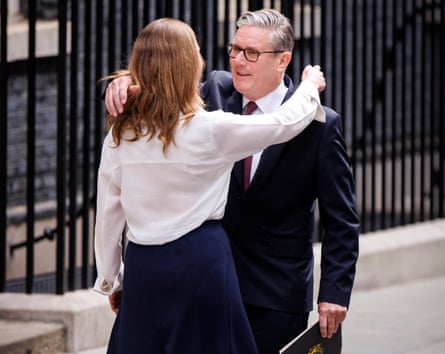
No one should fool themselves that such a process is automatic. Recall how few leaders in Labour’s entire history had ever won a parliamentary majority at a general election. Until Starmer, the grand total was three.
And yet, even a biographer as admiring of Starmer as Tom Baldwin was tempted to describe his subject as an “unpolitician”.
Baldwin meant that largely as a compliment, but the word also nodded to the fact that Starmer lacked several of the skills of the top-flight politician – and those deficiencies cost him very dear.
First, and most well-documented, was his weakness as a communicator. It was more than a mere absence of charisma. It was the inability to make a clear, compelling argument. A curious failing in a prosecutor, though perhaps not such a surprise when you recall that Starmer was rarely a courtroom, jury-facing advocate.
But Starmer could not seem to make a case, still less tell a story. He needed to construct a narrative for his government and he never did. Even his resignation speech on the steps of Downing Street felt more like a recitation, a list, than an argument. Perhaps the only moment of connection came when he spoke of his wife and children, and the crack in his voice spoke more eloquently than his words ever had.
Communication is not some kind of presentational add-on; it is essential to the task of political leadership. It enables a leader to retain the support of an anxious public when times get tough or during the inevitable delay between action and results.
Margaret Thatcher kept Britons with her when she explained that the strong economic medicine she had administered to the country might be hard to swallow, but it would eventually bring a recovery. It made even the pain seem like part of the plan.
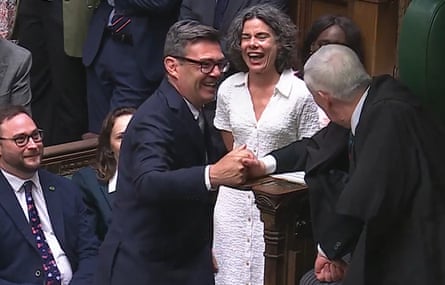
Starmer was unable to craft a similar account of himself and his government. Few voters could tell you what the Starmer plan for Britain was; the truth is, few Labour MPs could tell you that either.
And that failing could not be ascribed solely to Starmer’s limitations as a speaker. It flowed from the fact that Starmer did not, in fact, have a plan, at least not one that could be easily summarised and expressed, a project that might enable everyone in government to know what it was they were expected to achieve.
It needn’t have been anything as grand as an intellectual vision; it is not compulsory for a prime minister to double as a political theorist. But for Starmer to have arrived in office without a blueprint, or even a to-do list for each department, meant valuable time was lost in those precious first months when a government’s stock of political capital is at its highest.
It was in that same early period that Starmer made a crucial error that, again, betrayed a lack of an essential political instinct: the ability to read the (national) room.
The electorate had handed Labour a resounding mandate; they had been desperate to see the back of the Tories. After austerity, the divisions of Brexit and the deprivations of Covid, Britons wanted at least to hope that things might get better. But Starmer moved fast to trample on any green shoot of optimism, warning instead that life was about to get worse.
That didn’t just kill the mood. It had an economic effect, creating a feelbad factor at the very moment when consumer confidence might have taken off. He could have left the gloomcasting to his chancellor, while he spoke of the sunshine that was to come. Instead, he sounded as downbeat as his No 11 neighbour: it was bad cop, bad cop. A mood of sullen dissatisfaction set in and never shifted.
Beyond that, you can point to failings of both strategy and tactics. He got the big picture wrong, sticking with a chief adviser in Morgan McSweeney who had been a brilliant factional streetfighter, wresting control of Labour from the Corbynites. But McSweeney was so fixated on wooing the Farage-curious “hero voters” of the party’s former heartlands, that Starmer soon angered and alienated the urban, professional liberals and middle-class progressives who in the mid-2020s constitute much of Labour’s core vote. Only an unpolitician with no feel for his own party could have given a speech that channelled the spirit of Enoch Powell as it warned of Britain becoming an “island of strangers.”
Starmer walked that phrase back, saying he hadn’t known of its Powellite origins. That was one of a long list of U-turns – each one a tactical misstep that revealed either a muddled or entirely absent strategy. Whether it was the move to restrict winter fuel payments, a welfare reform bill or digital ID, Starmer made a habit of proposing a change only to abandon it. Each time he did, his authority shrank – and the sense grew of an administration that didn’t know where it was going or how to get there.
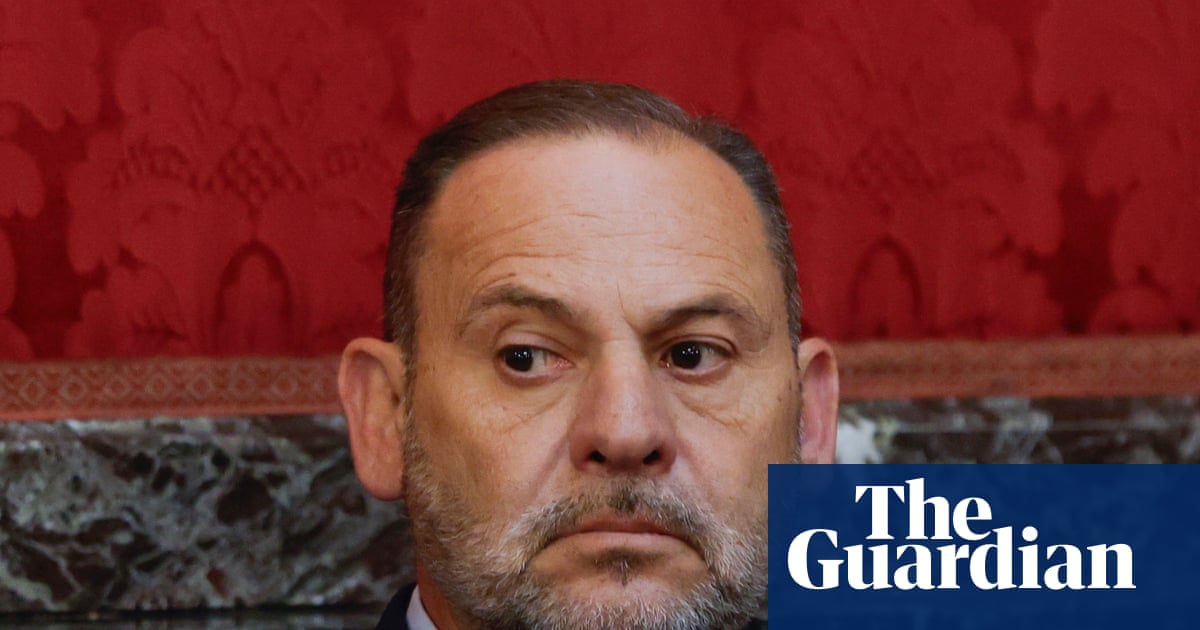
Observers of Whitehall testified to another gap in Starmer’s skillset, an inability, even an unwillingness, to do one of the defining aspects of the job of prime minister, namely to adjudicate disputes between departments and colleagues. That, they suggested, was one explanation for the multiple decisions that were unmade or reversed. Starmer’s defenders say that, while it was true that he believed in empowering his secretaries of state, and that he sought to delegate much conflict resolution to the newly-created role of chief secretary to the PM, he made the tough calls when he had to. Inevitably, some ministers didn’t like those calls when they came, with John Healey’s resignation over defence spending the most recent example.
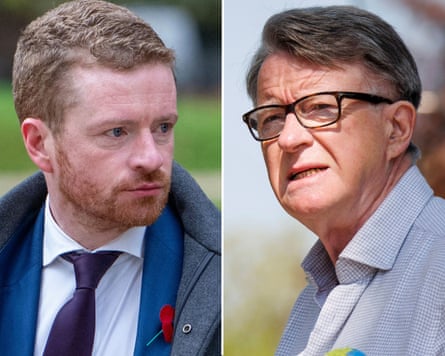
But that approach, delegating tasks that his predecessors might have, even somewhat control-freakishly, kept for themselves, also exacted a heavy price. Not only was he swayed, chiefly by McSweeney, to send Peter Mandelson to Washington as UK ambassador, but he was happy to hand over the whole matter to others. A more political PM would have known that Mandelson was a byword for risk and would have kept a vigilant eye on the process. Starmer did not and the Guardian revelation that the former grandee had, in effect, failed security vetting did him enormous damage.
What’s more, when trouble came, as it always does for a prime minister, Starmer had too few supporters to draw on. He had not courted individual MPs, inviting them in for a chat, showing them love, persuading them that their opinion mattered – the basic, human stuff of politics at any level, the means by which you build up a reserve of loyalty that you can draw on when the weather turns. Labour has a huge majority in the Commons – but few of those 400-plus MPs felt much allegiance, or debt, to Starmer.
Still, the fault lay not only in the man. The historians of the future will also note the structural disadvantages that made Starmer’s position so perilous. He arrived in July 2024 with a desperate inheritance: public services starved of cash and an anemic economy no longer generating the resources required to pay for everything Britons wanted and needed. Life has remained stubbornly hard for millions, which accounts for much of the anger that has infused British politics for over a decade.
Within weeks of his taking office, that discontent was directed at Starmer. One cabinet minister would describe the PM as suffering the fate of “the third plumber”. The homeowner feels their greatest fury not for the first plumber who fails to repair a leak, nor even the second plumber who botches the job and makes the problem worse, but for the one who comes after that. It’s that third plumber who cops all the rage that’s been building up. After austerity and Brexit and the Truss fiasco, the wrath landed on Starmer.
And he had little room for manoeuvre. Hemmed in by manifesto commitments that sharply limited the government’s revenue-raising options, it would have taken an outrageously gifted political communicator to persuade the country why Labour had to break its pre-election promises – and though there were hints he might do just that on income tax rates, he pulled back (again).
Perhaps there was a time when voters would have given a newly elected PM a few years to turn things around, but those days are long gone. The electorate is impatient now, demanding almost instant results. That process has been intensified and accelerated by social media, which does not merely put the worst possible gloss on the actions and motives of those in its sights, but distorts public figures out of all recognition. Labour canvassers for the May elections were shocked to find voters who were not just disappointed in Starmer but harboured a visceral loathing for him – who saw him in almost demonic terms. They were reacting to an invention untethered to reality, but one pushed and promoted by Elon Musk and his X platform especially.
Given all that he faced, historians might be impressed with what Starmer achieved. In his resignation speech, he highlighted his transformation of the Labour party, the fall in NHS waiting lists and the lifting of half a million children out of poverty, along with a raft of workers’ and renters’ rights that, say Starmer’s advocates, sits at the centre of a record of progressive accomplishment that bears comparison to the first two years of the 1945 government. They also credit Starmer with boosting Britain’s standing on the world stage, the canny statecraft that kept Donald Trump’s US engaged on Ukraine and which kept the UK out of Trump’s doomed war with Iran – a decision that takes its place alongside that of Starmer’s hero, Harold Wilson, to abstain from the war in Vietnam. At all this, say Starmer’s friends, he was brilliantly adept. But, sighs one, “This is not an age of substance, it’s an age of sheen – and he was just not very good at that.”
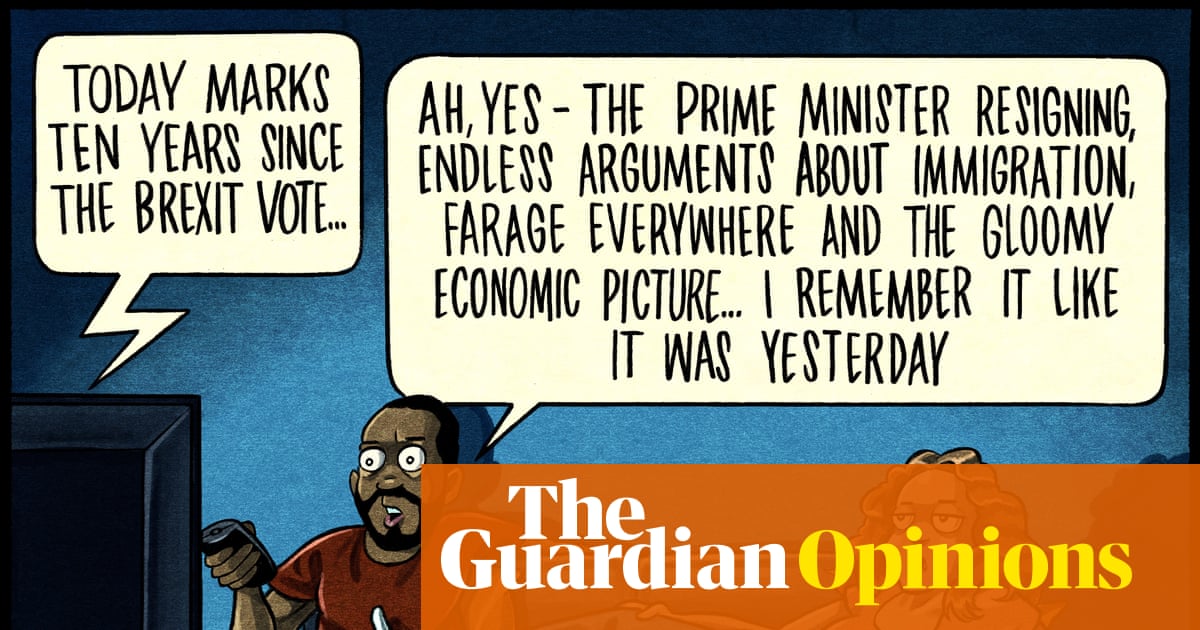
All of which amounts to a cautionary tale for Andy Burnham, or whoever steps next into No 10. He will be the fifth prime minister in four years and, as such, will overnight become the object of all the frustrations that only grow greater with each successive failure. Burnham has many of the skills that Starmer lacked – he is a politician to his fingertips – but he will face the same country. One whose economy has been struggling and institutions are creaking, one that has become volatile and unsteady in the decade since the Brexit vote that marks its 10th anniversaryon Tuesday – one whose impatience is growing. Keir Starmer is the latest victim of that impatience. Few would bet on him being the last.