2 months ago
101
2 months ago
101
More than a year after a devastating wildfire tore through Pacific Palisades, all but obliterating one of the west coast’s most iconic neighborhoods, prosecutors are honing their case against the man they say is responsible.
Jonathan Rinderknecht, a 29-year-old occasional Uber driver who used to live in Pacific Palisades, was charged with three felonies by federal prosecutors in October, who claim he was in the neighborhood in the early hours of New Year’s Day. According to a federal complaint, Rinderknecht allegedly used an open flame – likely a lighter – to start a small blaze that grew to about 8 acres (3.2 hectares) before firefighters rushed to the area and extinguished it.
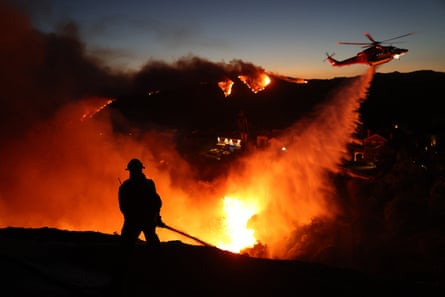
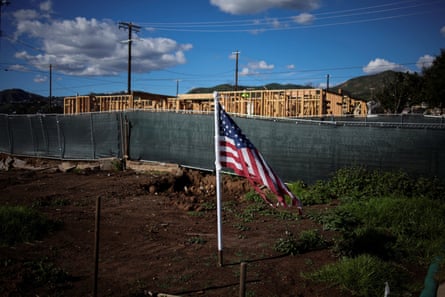
That blaze was known as the Lachman fire. But on 7 January, just five days after the Los Angeles fire department (LAFD) said they had put the Lachman fire out, the embers were whipped into a frenzy by 100mph (161km/h) winds and fed by tinderbox conditions – quickly growing to become the most destructive blaze in Los Angeles history.
It was a wildfire known as a “holdover” or “zombie” fire, a type of blaze that scientists say is becoming more common as the climate warms. Now, experts say the case against Rinderknecht will turn on a central question: should he have foreseen the destructive potential of his actions? Or are the firefighters who failed to fully extinguish the zombie fire the ones at fault?
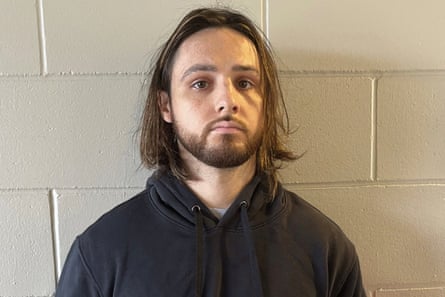
Aya Gruber, a criminal law expert and the Harold Medill Heimbaugh professor of law at the University of Southern California, says the outcome will depend on how responsible a jury would deem Rinderknecht for the ultimate deaths of 12 people and the loss of 7,000 structures in what became the Palisades fire.
If a person sets a fire and it burns continuously, that is generally considered “one fire” in the eyes of the law, Gruber said. The case will have to delve into the continuity of the burning, and if it is the rekindling into the catastrophic Palisades blaze could have been predicted.
“Even if [the initial Lachman fire] was a modest fire, was it foreseeable that this turn of events would happen?” she posed.
“I don’t think it’s completely unjustified, from a criminal law theory standpoint … just with the environmental conditions in California, that when you set small fires, they can pretty easily turn into out-of-control big fires.”
Who deserves the blame?
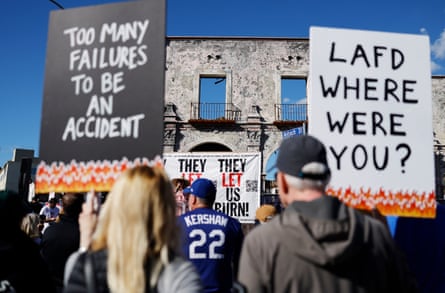
The story of how the Lachman blaze resurrected just days later, and the shortcomings of the firefighting effort to suppress it, have come into sharper focus in recent months.
The Los Angeles Times published a series of bombshell allegations, citing concerns from firefighters that the Lachman fire was not fully contained before they were ordered by superiors to leave the burn area. Another investigation by the paper also found the LAFD’s “after action” report on the Palisades fire and the department’s response was watered down over the course of seven drafts. Two weeks after the times published those details, the new chief of the LAFD, Jaime Moore, admitted they were true.
“It is now clear that multiple drafts were edited to soften language and reduce explicit criticism of department leadership in that final report,” he told the city’s board of fire commissioners on Tuesday, noting the report was written and edited before he was appointed to the role.
“I can assure you that nothing of this sort will ever again happen while I am fire chief.”
While Rinderknecht’s attorney appears to be centering his client’s defence on the department’s response to the Lachman fire, experts say the LAFD’s efforts – or failures – will probably not hurt the federal case against Rinderknecht, who faces between five and 45 years in prison.
Federal prosecutors have described Rinderknech as destructive and “reckless”, saying his actions caused “one of the worst fires Los Angeles has ever seen”.
But Steven Haney, Rinderknecht’s attorney, said in October he believed his client is being “scapegoated” and strongly suggested the duty to extinguish the Palisades fire, and its ultimate destruction, rested on the fire department. Haney noted that Rinderknecht called 911 multiple times after the fire broke out to report it. The complaint also notes Rinderknecht told investigators he offered to help firefighters help fight the fire.
“Blaming it on Jonathan Rinderknecht seems a little bit misguided,” Haney told reporters at the time. “It will be heavily litigated what happened during the Lachman fire, why it wasn’t put out.
“If the government says the Palisades was caused by the Lachman fire, then somebody, not my client, had a duty to extinguish that fire.”
But prosecutors wrote in the complaint Rinderknecht’s actions, including the 911 calls and questions about wildfires posed to ChatGPT, seemed to indicate that he “wanted to preserve evidence of himself trying to assist in the suppression of the fire and he wanted to create evidence regarding a more innocent explanation for the cause of the fire”.
Anatomy of an arson case
Federal investigators will have spent months combing through the wreckage of the Palisades fire and the initial blaze, as well as what or who they believe is responsible.
Wayne Miller, a retired special agent with the Bureau of Alcohol, Tobacco, Firearms and Explosives (ATF), said arson investigators quickly move to home in on the exact cause of a suspicious fire. Teams on site can examine burn scars to narrow down where, and often how, a blaze began, with those investigations regularly finding the initial pinpoint of a wildfire to an area of just a few feet.
Investigators were aided with their Lachman fire investigation as the area where it first began is monitored by cameras and sensors 24 hours a day that detect wildfires.
“You look at indicators, you look for directional burning, you know if you have small trees and brush, you look to the side that has char,” said Miller, who has been to about 2,300 fire and explosion scenes over the course of his career. “It leads you back to where the fire began.”
Investigators could even pinpoint a cigarette butt on the ground if they “look really hard”, Miller said.
Miller said in his reading of the complaint against Rinderknecht, investigators seemed to have discounted many other potential causes. Refraction of sunlight on broken glass was ruled out as it was night-time; nobody saw fireworks in the area or found any evidence of them; there were no lightning strikes or electrical infrastructure in the area. Smoking was also discounted as a cause, as the weather conditions were inconsistent with a cigarette as a source at the time, the complaint says.
Miller said over his career, arson sentences often depended on the prosecutor’s ability to craft the story of how a fire began, and how destructive it became to life and property.
“Unless a person is caught with a match in their hand, arson prosecutions are difficult,” he added. “But from everything I’ve read, they’ve got a darn good case where they can nail it right to one person.”
A battle of narratives
Other anecdotal details about Rinderknecht’s behavior and actions in the lead-up to the fire will also play a role in the trial. The federal complaint cites two of his Uber passengers that night, who described the man as “agitated and angry”. Cell phone data also shows Rinderknecht listening to a song by the French rapper Josman called Un Zder, Un Thé in the days and hours leading up to the Lachman fire, the lyrics of which are about “despair and bitterness”.
“The music video for the song shows the main character … lighting things on fire,” the complaint reads, noting Rinderknecht listened to the song at 11.54pm on New Year’s Eve, just moments before the Lachman fire began.
Digital evidence also revealed that months before the fire, Rinderknecht used ChatGPT to generate images fixated on fire and destruction. Those included a scene of a city being burned down, as well as an image of a burning forest with people running away.
“On the other side of the gate and the entire wall is a conglomerate of the richest people,” one of the prompts entered into the AI software read. “They are chilling, watching the world burn down, and watching the people struggle. They are laughing, enjoying themselves, and dancing.”
Rinderknecht will go to trial on 21 April 2026, and has pleaded not guilty to the felony charges.
Gruber said the trial – and any potential punishment – will probably become a battle of legal narratives between prosecutors and Rinderknecht’s defense attorney over different accounts of the “zombie” fire.
“The first is: this isn’t so unusual, it’s not on the outer limits of foreseeable. We have Santa Ana winds every year, that’s not unforeseeable,” she said. “You could also argue that this type of zombie fire is very unusual, so that is what it would turn on.”
Gruber said while she’s skeptical that major cases and their punishments deter other bad actors, if Rinderknecht is convicted and sentenced to a lengthy prison term, it could send a message to small fire-setters: “If you cause a major fire you’re going to get a lot of time, so don’t even start the small fires.”