1 hour ago
9
1 hour ago
9
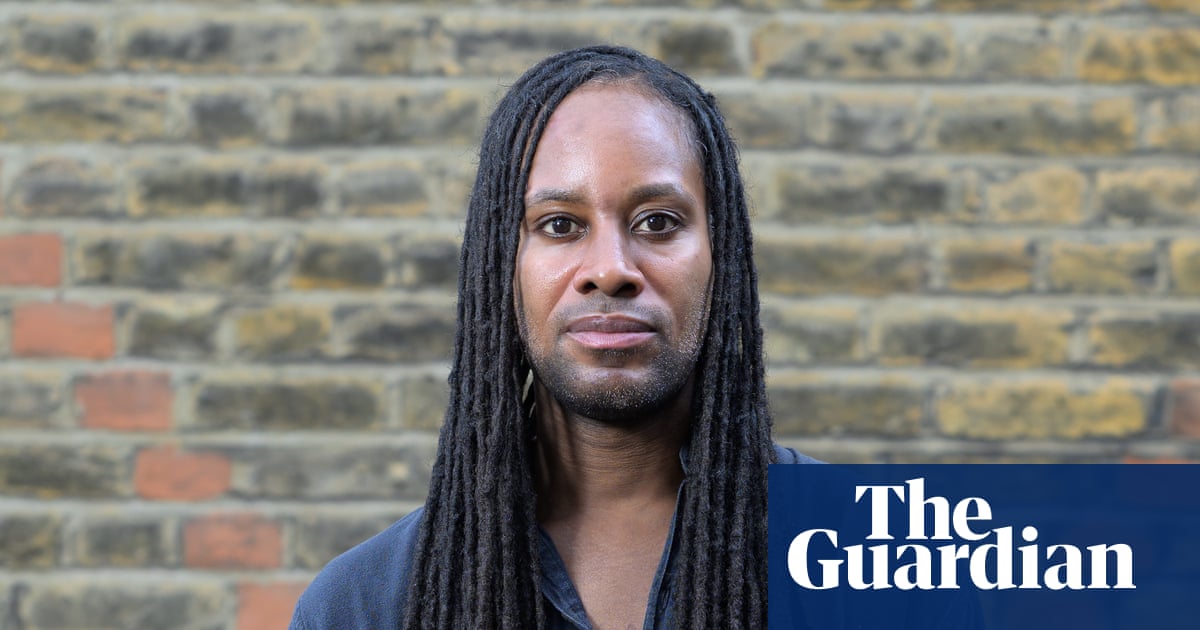
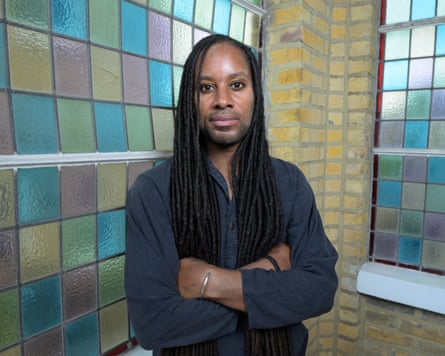
‘To be honest with you, I thought you’d just believe me.” That was the breathtaking response of Prof Jason Arday when the Guardian interrogated the details he provided of an alleged racist campaign of intimidation against him, which involved a severed pig’s head, a masked man wielding a knife and bullets in the post. Arday had been unable to provide evidence, and when the Guardian contacted the relevant parties, including a south London butcher and the police, his claims were either refuted or could not be verified.
Arday, whose appointment as professor of sociology of education at Cambridge became a widely lauded moment in the aftermath of Black Lives Matter, has found himself in the eye of the storm. Allegations of extensive plagiarism in his doctoral thesis, completed at Liverpool John Moores University, recently made their way from the Substack of self-described “race realist” academic Nathan Cofnas into the national press. The defence of Arday had rested on the fact that an investigation had already been conducted, and cleared him of plagiarism. And yet the case has taken on a life of its own. In recent weeks, more of Arday’s story has come under scrutiny: from claims of having installed water points in South America and west Africa with the charity WaterAid (WaterAid said it does not send volunteers abroad), to having run 30 marathons in 35 days, the last dozen or so after suffering a hairline fracture in his leg. After mounting pressure, Cambridge announced that it had launched a formal investigation into his academic qualifications and honorary appointments. Following this announcement, Arday resigned from his positions at the university. Though he has chosen to step aside to preserve his “wellbeing”, this has become a national story that will not go away.
Allegations of plagiarism in a doctoral thesis do not usually make for riveting, front-page news. Indeed, in 2023, when the Cambridge history professor William O’Reilly faced allegations of plagiarising student essays, the press coverage consisted of barely half a dozen articles (a tribunal ruled the plagiarism was “the product of negligent acts but was not deliberate”). Few people could care less about what academics get up to.
But Arday could not expect to be similarly insulated by academia’s remoteness. This story has endured, stubbornly, because it is so perfectly calibrated for some of the most combustible charges of Britain’s culture wars: namely, that academic standards have been surrendered to a woke orthodoxy, and that minorities are unfairly advanced in the name of diversity, equity and inclusion (DEI) initiatives.
The instinct of progressives had been to defend Arday; indeed, many went on to sign an open letter in support of him, seeing him as simply another black man under a sustained press attack. This was not least because the charges against him originated with Cofnas, who had been dismissed from his post at Emmanuel College, Cambridge, in 2024 after making pseudo-scientific claims that under a true meritocracy black people would “disappear from almost all high-profile positions outside of sports and entertainment”. And for many in the rightwing press, this is their victory lap, their vindication. The spectacle of it is just too grim to behold. The headlines of “DEI darling” and “diversity poster boy” barely conceal their excitement. Gotcha!
I do not care to examine the quality of Arday’s scholarship, research or life story beyond what has already been written elsewhere. What concerns me is how little space remains for a genuinely progressive critique of institutional diversity practices – one capable of scrutinising how for many organisations and corporations symbolic representation has been a substitute for deeper reform, leaving it vulnerable to just this kind of backlash. It has also meant that the right has enjoyed a near monopoly on criticism of DEI, leaving it to frame it entirely on its own terms.
Let’s take a look back at the coverage of Arday’s appointment at Cambridge in 2023. The headline was that Arday, then 37, was to become the “youngest black professor” ever appointed at Cambridge and that his feat was particularly remarkable considering that he supposedly only learned to speak at 11, and to read and write at 18, having been diagnosed with global development delay and autism spectrum disorder as a child. The media circus around this appointment rivalled Hollywood press junkets, with newspaper, television and radio slots covering him on both sides of the Atlantic, including an NBC News item on his “inspiring story”.
I am not privy to the hiring process for a professorial chair at Cambridge. I do not know exactly why and how Arday got the job or who else was in the running. But what happens when an academic’s story is sold through him being the “youngest black ever” (sitting alongside familiar monikers such as “the first black” or “black excellence”) and asterisked by a tale of hardship? You are not encouraged or invited to engage with the substance of their scholarship; instead, you are invited to clap. Instead of his appointment conjuring the question “what new opportunities for research will this lead to?”, it was “doesn’t this make you feel good?”
What this means is that Arday was treated not as a scholar but as a mascot, one who was particularly expedient for an institution that had been regularly embarrassed by its historic record on race: too few black students (in my cohort at Cambridge matriculating in 2015 there were only 15 black males out of 3,449 students); single-figure black academics (which is still the case); allegations of institutional racism. Independent of the merits or pitfalls of his own scholarship, what success looked like for Arday in this role was limited; what accountability could look like if misconduct occurred was constrained by him being a vehicle for Cambridge to signal its institutional progress.
These are not arguments that progressives should shy away from. Instead, they should own them. There is a real risk of this case being used to undermine black academics and others in positions of seniority. For all the talk of preferential treatment for black people in academia, it remains true that there are documented, systemic barriers for black students, including in their access to funding to advance their studies.
after newsletter promotion
The mass investigation into Arday’s PhD may be presented as the pursuit of public and intellectual integrity, and yet the origin of this is grievance politics from those who feel diversity has blocked their own advancement. It comes with that malign charge of being a “DEI hire” or being in your position to “fill a quota”, the accusation that so often stalks black people elevated to senior positions. And so with Arday as an avatar for the black colleague who was promoted over you, the black child who was made head boy over your son, that process turbocharges.
In Arday, those on the right feel that they have found what they are looking for; that is why every drop is being wrung out of this story. His resignation will not end that. The next step will be to make this single case bear the weight of the ideological arguments they pile on it.
How do you resist that? By embracing and learning from the mistakes that were made here, not avoiding them out of discomfort. That means advocating for diversity without tokenism, the celebration of excellent black scholarship without the need for exceptionalism or academic celebrity. If we let only our opponents tell the story, then it becomes a parable about the hazards of striving for progress and equality, rather than about the institutions that reduced equality to a mere PR exercise.
-
Jason Okundaye is an assistant Opinion editor at the Guardian