6 hours ago
8
6 hours ago
8
Public transport can be a hot, noisy, cramped and stressful environment – and that’s before you add in people with pungent food, questionable hygiene and giant backpacks. Most of us know the general rules – though we don’t all follow them – about letting people off first, not putting bags on seats, where to stand on escalators and offering your seat to others. But what about the vaguer conventions? How can you avoid chatty passengers? Or manspreaders? Is it sometimes OK to put your feet on the seats? (Spoiler: it’s not.) Here, three etiquette experts show us the way to public transport propriety.
How to use a seat
Who should I offer my seat to?
In principle, the answer is simple: anyone who needs it more than you do. “The reality is harder,” says Rupert Wesson, director of etiquette advisers Debrett’s, when trying to ascertain who that might be. If it’s a harassed parent with a baby or toddler, that’s obvious. But is that woman over there actually pregnant? Might that older person be appalled to be considered too frail to stand? “Nobody should be offended by being offered a seat – it’s a nice thing to do – but nevertheless you need to exercise a little caution,” says Wesson. Weigh it up, and offer discreetly. “Don’t make a big show about it – just try to catch somebody’s eye. You can do it without speaking.”
If you’re not sure, should you stand up, as if you’re pretending to get off, and hope the person takes your seat? “The danger is that somebody who doesn’t need it jumps in, so I try to be a bit more targeted,” says Wesson. “I’ll stand up, but not move out of the way straight away, just so that I know the person who might need it has caught my eye or my movement.” The idea of offering women a seat, mainly because of the assumption they are too delicate to stand, is “an old-fashioned concept. I know some people who will always do it, but the world has moved on from doing that by default.”
The most important step in ascertaining whether someone might need a seat, though, is getting off your phone and looking around at your fellow humans. “Checking in as people are getting on board is the critical thing,” says Wesson.
Can I put my feet on the seat?
Absolutely not, says Laura Akano, etiquette coach and founder of Polished Manners. “It’s a public space you’re sharing with other people, and you really should treat it with respect. You think that’s OK – to put [your shoes] on a seat that somebody else is going to sit on?” What if you think your shoes are clean enough? “They won’t be because you’ve been walking around,” says Akano, adding that it’s just as bad when people take their shoes off and put stockinged or bare feet on seats. “It’s not an extension of your sitting room. It’s just inappropriate behaviour in a public place.”
Can I always take the aisle seat?
Yes, but be alert and prepared to move to allow someone else to get to the window seat. “It’s an awful lot easier for you to jump into the window seat, rather than have people scramble over you,” says Wesson. But he points out that if the bus or train isn’t busy, and you’re making a short journey, then there is no real issue.
Can I sit at a four-seat train table if I’m on my own?
Of course. But if a group gets on, it would be considerate to offer to move. “You don’t have to, but it’s a nice thing to do,” says Wesson. Otherwise, “If you need to work and have your laptop out [on the table], then so be it.”
Can I ask someone to move so that I can sit next to my friend/partner?
“If you really can’t cope without sitting next to them, then yes, that would be fine,” says William Hanson, etiquette expert and director of the English Manner. “Although it depends on how busy it is. You also need to be aware that they may say no, and that’s their right.” If you’re aware of a couple being separated by your seat choice, should you move? “If there is a comparable seat, and they ask nicely, then yes,” says Hanson. “But sometimes I’ve had it where people come over and go, ‘Sorry, I want to sit next to my girlfriend’, rather than, ‘Would you consider moving?’ I think it would depend on how they ask.”
If I’m sitting in one of the prime front seats at the top of a doubledecker bus, do I have to give it up for children?
How generous are you feeling? “If they were to come to me politely and say, ‘Could we maybe swap seats with you?’ then I would,” says Akano. But beware of making assumptions. “I wouldn’t automatically think: ‘Because they’re children, they would prefer to sit here.’”
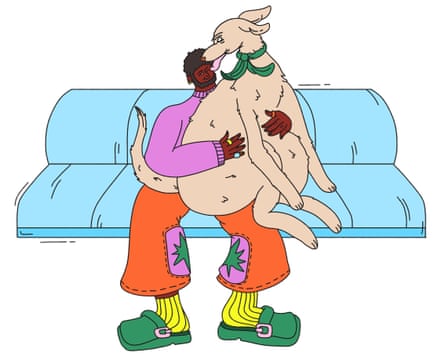
Is it unforgivably rude to move away from a stranger once more seats become available?
No, says Wesson. “It feels a bit weird when a train suddenly empties and everybody gets off, and then there’s just the two of you sat together. It’s always nice to spread out, and no, you don’t need to explain what you’re doing.”
Can I recline my seat on a plane?
If the seat reclines then it’s fair game, even on a short daytime flight, and even if the person behind you is silently seething. Don’t do it during food or drinks service, though. And if you do it, do it slowly. “It’s worth checking who’s behind you and what’s going on before you dip the seat back,” says Wesson. “Make sure you’re not going to skittle somebody’s drinks all over their lap.”
Is it acceptable to take up two seats on a bus or train if you have a huge suitcase and there’s nowhere else to put it?
“Sometimes there’s no choice, sadly,” says Wesson. “You’ve got to block something, and it’s either an aisle or a seat, so better to block a seat.” But he adds that the scenario is rare – there’s usually something you can do, and other people who can help you lift luggage on to a rack. “We can usually find ways of making things work, with a bit of polite collaboration.”
Travelling with children and pets
Is it OK to let my dog sit on a seat?
No, says Hanson. It is potentially tolerable if the dog sits on a mat or blanket on a seat, but “not during busy periods”. And many people, including those with severe allergies, would consider this unacceptable.
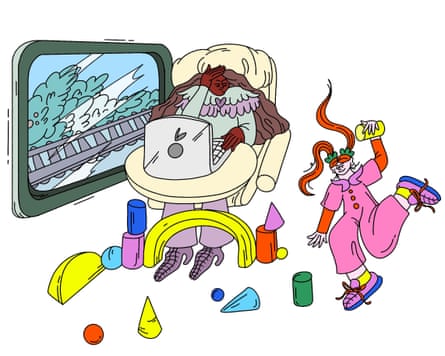
How much should children be allowed to roam on a plane or a train?
This is tricky, says Wesson. Some people may think it’s sweet, “as a child goes around talking to everybody in the train carriage. I have seen that, and it’s delightful, and shakes everybody out of whichever world they’re in.” And sometimes an energetic preschooler allowed to go on a walkabout is better for everyone than a bored and screeching one confined to their seat. But remember: nobody thinks your child is as adorable as you do. “People are often trying to work or relax on a train, so do try to keep your child from disturbing them,” says Wesson. Wandering around occasionally is fine but be mindful of “the noise and chaos that accompanies it”.
On personal space and other bodily matters
Can I lean, louchely, on a pole on a bus or train?
“It’s not very elegant, but it’s fine,” says Hanson. That is, if the bus or train is relatively empty; otherwise, move out of the way so people can use it to hold on to.
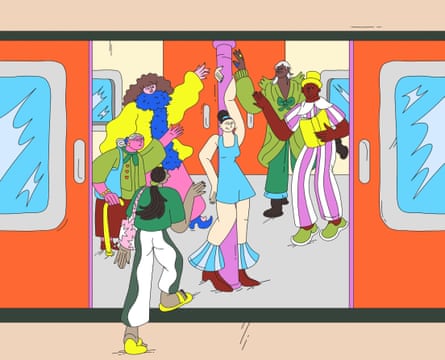
What if I accidentally make skin contact with a stranger?
Obviously immediately move back. “Say sorry to the person that you have inadvertently touched, whether you know them or not,” says Hanson. Could you just ignore it? Yes, he says. “If it was fleeting and they don’t seem to have noticed, I think you could probably get away with it, but even just a hand gesture to say sorry is better than nothing.”
Who gets the armrest?
On a plane, the general rule seems to be the person in a middle seat of three gets both armrests. On a bus or train, Hanson advises to view it as “an elbow rest, not an armrest”. That way, both of you could probably use it.
If somebody in the next seat is snoring and dribbling on me, can I wake them up?
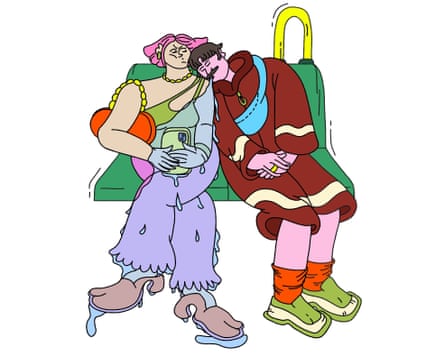
Dribbling, yes; snoring, no. Neither are deliberate, hopefully, but only one really adversely affects you. Hanson advises: “I would touch their elbow or their shoulder and say: ‘I’m so sorry, but you were dribbling on me.’ Keep it factual. Laugh it off if needs be. They’ll probably be absolutely mortified. Say: ‘Oh, it’s not a problem. I just thought I’d step in now before I’m drenched.’” With snoring, he says, “there’s not a lot you can do”.
Can you ever be too sweaty to use public transport?
Look, it’s not illegal but this comes under consideration for others and context. We all need to get around. Drenched with club sweat on a night bus? Probably fine, given the potential state of the other passengers. Travelling at rush hour after your morning gym session? Not ideal. “If there is a place for you to shower or freshen up before you get on public transport, I think that is a courtesy for others, particularly at busy periods,” says Hanson.
How do I deal with manspreading?
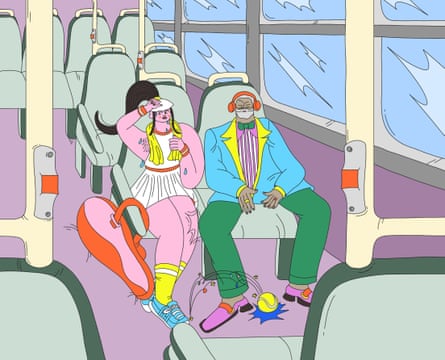
Don’t manspread back, says Hanson, “because two wrongs don’t make a right, whether you are a man, or however you identify. But if you need to adjust yourself slightly pointedly, then that normally does the trick.” He adds: “Obviously, don’t use your hands to touch somebody’s leg but you could slightly push against it [with your knee] if you feel emboldened. If you feel comfortable enough, you could always be quite passive aggressive and say something like: ‘Oh, I’m so sorry – am I taking up too much space?’” The general leg aperture rule is “nothing bigger than a tennis ball in between your knees”.
Can I apply makeup on public transport?
Hanson used to say absolutely not, but he’s softened. A quick lipstick refresh, or an elegant pat with a powder compact is “probably OK but starting-from-scratch makeup, I would say not – and this is not exclusive to women”. Akano is in agreement about the full face of makeup. “Ideally, you shouldn’t be doing that in a public space, whether on public transport or anywhere else in public,” she says. “I know some people say: ‘I don’t have the time before I leave home.’ Why don’t you wake up 10 or 15 minutes earlier to give yourself time?”
What about doing my hair?
No, says Hanson. “General grooming in public is to be kept to an absolute minimum, and I think brushing hair is too much.”
Or my nails?
“No, you shouldn’t be doing that in public,” says Akano. “These are private things and not something that other people should have to witness. You should have done them before you left home.” As for people who clip their toenails on public transport: “They deserve to be sent to a different planet,” says Hanson.
Can I apply sunscreen?
If you really have to – and even then, it should be the minimum amount you need, and ideally not a whole-body dose. It’s fine, says Akano, if “it is a cream or lotion that you can just put a little bit of in your hands, but if it’s a spray, then you’re most likely going to affect other people. It’s really about consideration and awareness of your environment and the people around you.”
Can I get changed in a train carriage?
“Absolutely not,” says Hanson. “You can remove some clothes – you could take off a hat, scarf, gloves or even a jumper. But beyond that, no. Small modifications, fine, but not big modifications.” Taking shoes or sandals off is also “a complete no”.
What should I do if I think I’m about to be sick?
Easy (in theory). “Go to the loo as quickly as possible,” says Hanson, “and hope that you are not sick anywhere other than the loo.”
Can I hold on to the overhead bar or strap if I’m wearing a sleeveless top?
How is your underarm hygiene? “If you know that it’s not good, then it’s not advisable,” says Akano. Even if you are impeccably clean and fragrant, bare armpits at eye level on busy trains and buses is not particularly pleasant, she adds. “If you’re quite tall, and there are shorter people around you, then that would not be a good experience for them. If you don’t have a choice, then I guess there’s nothing to do because safety is more important. But it’s not something I would necessarily do.”
Eating and drinking
Can I drink alcohol, even discreetly?
It depends, says Wesson. In some places, such as London and New York, drinking alcohol on public transport is forbidden. “But on the train I catch to London, they come round with a trolley full of the stuff.” If you are going to enjoy your can of beer or mini bottle of wine, make sure you’re not inconveniencing anyone. “Be conscious that if you’re travelling with somebody else, and you’re both having a drink, the chances are you’re going to be a bit louder because that’s what booze does to us all,” says Wesson.
Can I eat?
On a packed commuter train: “Nothing bigger than a Polo mint,” says Hanson. “Most public transport is riddled with germs, so why do you want to be eating anything in that environment?” On a longer train or coach journey, food is acceptable but nothing “that you’re going to be able to smell halfway down the carriage”. Hot food, and especially the aromas from fast food, can be particularly offensive, but so can a salad nicoise. “An orange or a tangerine is one of the most antisocial things to eat,” points out Hanson.
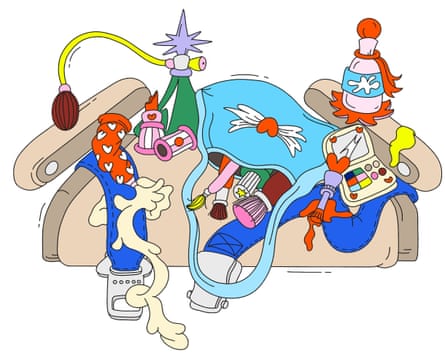
Should I have my ticket/passport/payment method ready?
You know the bus is coming, or you’re about to have your passport checked, so make sure whatever it is you need is in your hand. “That way, you don’t hold up a queue of people,” says Akano. “The bus comes, and that’s when some people start rummaging in their bag to get their card, or whatever it is they’re going to use. It’s the same thing with the barriers at the train stations.” Worse still is when you don’t move out of the way while you search for what you need. “Then we all stand there waiting for you.”
Is it acceptable to have loud conversations on your phone, or on speakerphone?
“Speakerphone, absolutely not,” says Wesson. “Nobody needs to hear both sides of the conversation.” A loud phone conversation is inconsiderate, but sometimes unavoidable. On a train, says Wesson, “You can always stand up and go into the bit between the carriages if needs be.” Ideally, phone calls should be quiet and quick.
Can I open the window?
Yes, but it’s polite to ask first, says Wesson. “Nine times out of 10, everyone will say: ‘Thank goodness for that.’” It also establishes some communality, he says, “so that if it becomes a problem for somebody, they can say: ‘Look, I’m absolutely perishing. Would it be possible to close it for a bit? What does everybody else think?’ It then doesn’t become about one person.” He adds: “Just doing it unilaterally is rarely the right thing to do.” It’s the same with anything else that affects others, such as blinds.
How can I ask someone to use headphones?
Hanson has a new way he’s so far only tried once. “You say: ‘Excuse me – I don’t think your headphones are connecting.’ When they go: ‘Oh no, I don’t have headphones’, you go, ‘Ah, that’ll be why.’ It’s so passive aggressive, which a lot of British etiquette is.” If they’re using headphones and it’s still so loud you can hear it, you might just have to try to ignore it. “I probably would move,” says Hanson.
Should I give money to people begging on trains?
As long as it’s not illegal in whichever country you’re in, “and if you feel comfortable doing it and you’d like to do it, then yes”, says Hanson. If you don’t want to, it’s rude to pretend to be engrossed in your phone. “Smile at them. They’re a human being.”
Can I sing football songs in a big drunken pack? I’ll take out all the bad language
Akano isn’t a fan of this behaviour. “It can be quite rowdy, especially if people have been drinking, and it gets uncomfortable,” she says. “I have experienced it enough times, and usually I move carriages, or sometimes I’ve decided to alight and wait for another train.” People chatting about the match is fine, “but you start singing, and there’s a whole element of chaos and unrest. I feel that is inappropriate because you’re not the only ones there. Show some consideration for other passengers.”
Can I peruse the book/paper/phone screen of someone next to me?
That one is never OK, says Wesson. “We have such private information on our devices these days, and also you might end up seeing or reading something you didn’t want to.” How about giving someone the answer to the crossword they’re doing? Absolutely not, says Akano. “They are minding their own business and you should mind your own business as well,” she says. “You never know who you’re dealing with. Someone might say: ‘Did I ask for your help?’ I would make a conscious effort to not look.”
My train is cancelled and everyone’s stranded. Should I offer to share a taxi with fellow passengers?
Consider vulnerability, including your own. “Personally, I wouldn’t,” says Akano. “My take on that is to do with safety, being a woman. It’s happened to me before – I got stuck, in the evening, and we didn’t know when the train tracks might be clear. There were a few people trying to book taxis, and one or two offered me a ride, and I thought, ‘No, I don’t know these people – they’re strangers’, so I didn’t take it.” It does depend on the situation, though, she says – if there is someone you feel more comfortable sharing with, perhaps a mother with small children, things might be different.
Should I wake a stranger up if I think they’re about to miss their stop?
This one takes some judgment, says Wesson. But if you absolutely know that it’s their stop – you had a chat earlier, or you overheard them buying their ticket – you should probably wake them up. “I have friends who fall asleep on trains quite regularly,” he adds, “and the cost of their taxi journeys is enormous and far exceeds the train tickets. I think my advice would be yes.” A gentle nudge in good time should be enough.
And finally, how do I get out of talking to a chatty stranger on a long journey?
Respond politely at first, says Akano. “Then, if you really don’t want to chat, we all have our phones now, or you might have a book on you. Get it out so they can see that’s the end of the conversation. I think when you do that, most people will tend to hold back on chatting.” If they’re oblivious to all hints, you may just have to pretend it’s your stop and move to another carriage.