2 hours ago
14
2 hours ago
14
UK 20- and 30-year gilt yields hits highest since July 1998
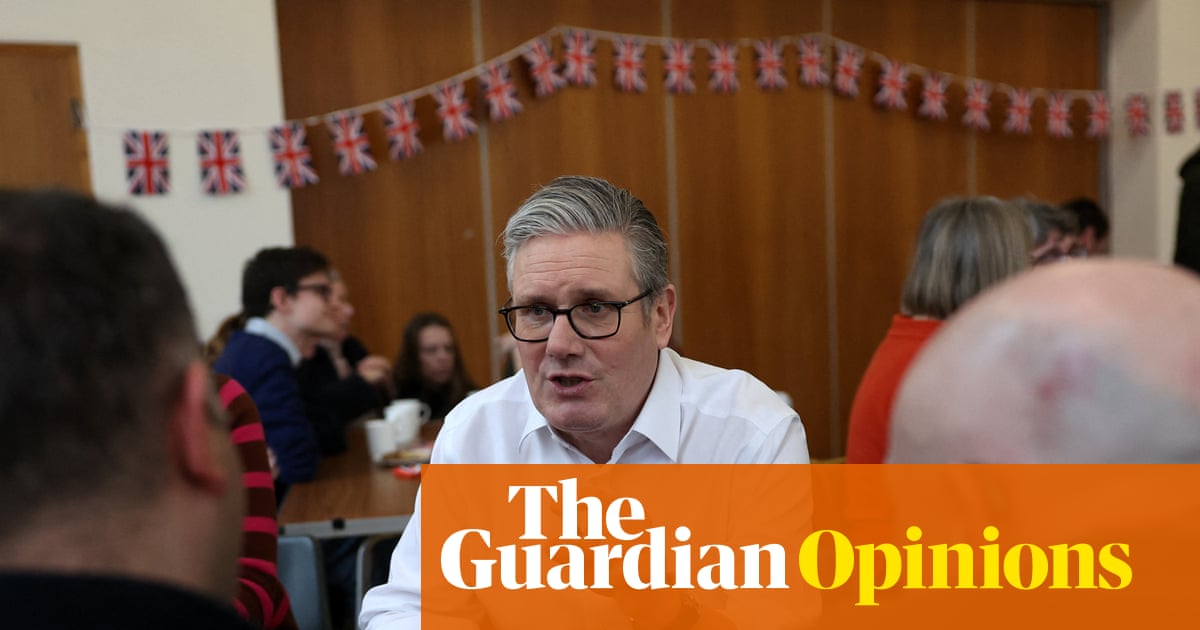
The UK’s long-term cost of borrowing has hit its highest level since early in Tony Blair’s first term as prime minister, as speculation swirls over Keir Starmer’s future.
Reuters are reporting that the yield (or interest rate) on both 20 and 30-year bonds is the highest since 1998, rising over the highs seen early this month.
Here’s the details:
-
UK 20-YEAR GILT YIELD RISES TO HIGHEST LEVEL SINCE JULY 1998 AT 5.734%, UP 12 BPS ON DAY - LSEG DATA
-
UK 30-YEAR GILT YIELD RISES TO HIGHEST SINCE MAY 1998 AT 5.794%, UP 11 BPS ON DAY - LSEG DATA
Key events Show key events only Please turn on JavaScript to use this feature
Labour must offer more than ‘better managed decline’ on economy, MPs urge

Richard Partington
An influential group of MPs has said that Labour needs an urgent renewal of economic strategy to offer voters “more than better management of decline” before the next general election.
With Keir Starmer fighting to ward off a leadership challenge, the leading backbenchers from the soft-left Tribune group published a series of essays calling for bolder action to salvage its remaining time in power.
In a foreword by the former cabinet minister Louise Haigh, and Yuan Yang, a prominent figure from Labour’s 2024 intake, the MPs issued a thinly disguised attack on Starmer amid pressure on him to set out a timeline for his departure.
The MPs wrote:
“We do not present this as the final word. They are an invitation – to challenge assumptions, test ideas, and help build a broader coalition for economic renewal. Because the economic status quo is no longer defensible.”
“And if politics is to regain trust, it must offer more than better management of decline.”
30-year bond yield now over 5.8%, as Starmer says he's not resigning
UK borrowing costs are hitting new highs during morning bond market trading.
The 30-year UK gilt yield has now nudged 5.81%, and is still trading above the 5.8% mark after Keir Starmer told his cabinet colleagues he is not leaving.
Our political editor Pippa Crerar reported a few minutes ago, on X:
BREAKING: Keir Starmer tells his cabinet this morning that he’s staying put.
“As I said yesterday, I take responsibility for these election results and I take responsibility for delivering the change we promised.
“The past 48 hours have been destabilising for government and that has a real economic cost for our country and for families.
“The Labour Party has a process for challenging a leader and that has not been triggered.
“The country expects us to get on with governing. That is what I am doing and what we must do as a Cabinet.”
Those economic costs are continuing to mount, with the 30-year bond yield now up 13bps (0.13 of a percentage point) at 5.803%.
That indicates investors remain deeply concerned about UK political turmoil.
XTB: Risk of UK bond market meltdown
The political turmoil in the UK has hit at a bad time for the bond market, points out Kathleen Brooks, research director at XTB.
That’s because the jump in oil prices is creating inflation risks, which pushes up government bond yields.
Brooks explains:
There is an upward bias for bond yields anyway, and the UK yields are facing a double whammy of an energy price spike and a political crisis. The risk is that we get a bond market meltdown in the UK in the coming days. If that happens, will it quiet the factions of the Labour party who have threatened to ignore the bond market, ditch fiscal rules and boost public spending even more?
In the past, Rachel Reeves has been seen as vital to the stability of the UK’s bond market because she introduced the ‘iron clad fiscal rules’ to bring down the UK’s debt levels and finance day-to-day spending with tax take.
If this is a drawn-out leadership battle, or if Starmer lays out a timetable to leave in the coming months, both Starmer and Reeves will be seen as lame ducks who have no control over the public purse. This would be a bad position for the UK to find itself in, especially since our last election was less than 2 years ago. Right now, it’s hard to see how the bond market can stabilize, and there could be further downside ahead.
Financial markets are pricing in a move to left under a new prime minister, reports Ruth Gregory, deputy chief UK economist at Capital Economics:
In short, a shift to the political left is likely to lead to looser fiscal policy, higher gilt yields and a lower pound than otherwise, but we doubt a new Prime Minister would be any more successful at boosting the economy’s medium-term growth rate.
With 10-year gilt yields up by 10bps this morning and the pound down by 0.4% against the euro, which comes after similar moves yesterday, this is already playing out in the financial markets.
The pound’s sell-off is gathering pace.
Sterling is now down almost one cent against the US dollar at $1.3511 (a one-week low).
The pound has also dropped against the euro, down half a eurocent to below €1.15 (a near three-week low).
IG: UK fiscal crisis looms as yields surge
Chris Beauchamp, chief market analyst at investing and trading platform IG, says:
There is no clear plan for what comes next, but markets are already pricing in a new PM who will open the floodgates on spending despite the UK’s dangerous fiscal situation.
Faced with hordes of Labour MPs worried about their re-election chances as Reform surges, a new PM will find it very hard to resist calls to spend more money in order to shore up their embattled party.
Much of the case for the UK as an investment destination rested on the Starmer/Reeves commitment to fiscal rectitude, but it is unlikely that a new leader from the left of the party would feel bound by such promises.”
Strategist: Risk of UK bond 'blowout' if there's a political dogfight
Neil Wilson, investor strategist at Saxo UK, says that UK gilt yields leapt sharply as prime minister Keir Starmer faces mounting pressure to resign.
He warns:
We could see a blowout in longer-dated gilts if this turns into a dogfight– political, fiscal and inflationary risks will rise.
Markets tend to dislike a lack of certainty over who runs a government; the fiscal position is already fragile and likely to become worse should a left-leaning ticket prioritise spending; and that this makes inflation stickier.
UK 20- and 30-year gilt yields hits highest since July 1998
The UK’s long-term cost of borrowing has hit its highest level since early in Tony Blair’s first term as prime minister, as speculation swirls over Keir Starmer’s future.
Reuters are reporting that the yield (or interest rate) on both 20 and 30-year bonds is the highest since 1998, rising over the highs seen early this month.
Here’s the details:
-
UK 20-YEAR GILT YIELD RISES TO HIGHEST LEVEL SINCE JULY 1998 AT 5.734%, UP 12 BPS ON DAY - LSEG DATA
-
UK 30-YEAR GILT YIELD RISES TO HIGHEST SINCE MAY 1998 AT 5.794%, UP 11 BPS ON DAY - LSEG DATA
This morning’s jump in UK borrowing costs comes after Darren Jones, the chief secretary to the PM, told broadcasters that Keir Starmer is ‘listening to colleagues’.
Jones told Sky News:
I spoke to the prime minister last night, as you would expect, and he is talking to colleagues who have raised issues yesterday.
But he was also very clear, as I’m sure all of my colleagues are, that coming into the office this morning, as we all are doing, we’re absolutely focussed on our jobs, on delivering the things that we’ve promised to deliver for the public.
My colleague Andrew Sparrow is live-blogging all the developments on another dramatic day in UK politics:
MUFG: leadership contest would be negative for pound and UK bonds
The pound is continuing to slide – now down two-thirds of a cent against the US dollar at $1.354.
Political uncertainty in the UK is hurting the pound, as well as driving up bond yields, reports Lee Hardman, currency expert at Japanese bank MUFG.
Hardman told clients;
So far the market moves have been relatively modest but are beginning to reflect building unease over the future of Prime Minister Keir Starmer who is facing growing pressure from within the Labour party to step down.
With more than 70 Labour MPs publicly calling for Starmer to stand down, and reports that home secretary Shabana Mahmood, foreign secretary Yvette Cooper and defence secretary John Healey are privately urging Starmer to consider plans for handing control to a successor, Hardman adds:
Pressure intensified yesterday on Starmer after four ministerial aides quit the government saying they no longer believed he could tun things around.
The latest developments increasingly look like the end of the road for Keir Stamer as prime minister. A leadership contest whether immediate or more drawn out will add to political uncertainty in the near-term which is negative for the pound and gilts. The risk of a bigger sell-off will increase if Labour shift towards the left.
FTSE 100 hits lowest since 31 March
The London stock market has opened in the red.
The blue-chip FTSE 100 share index fell by as much as 1.1% at the start of trading, down 117 points to 10,152 points. That’s its lowest level since the end of March.
Banks are leading the fallers; NatWest (-4.6%), Lloyds Banking Group (-4.1%) and Barclays (-4%).
Derren Nathan, head of equity research at Hargreaves Lansdown, says the “seemingly unbreakable diplomatic deadlock between Tehran and Washington” is hurting stocks.
He adds:
Back at home, rising government borrowing costs aren’t helping either, with Prime Minister Sir Keir Starmer’s leadership under increasing pressure. The potential for a fiscally looser successor may be weighing on rate expectations, but the inflationary influence of higher-for-longer oil prices is likely to be the bigger driver.
UK borrowing costs jump after cabinet ministers urge Starmer to quit
Newsflash: UK government borrowing costs have risen at the start of bond market trading.
Political uncertainty is gripping the markets, after Keir Starmer was urged to set out an orderly timetable for his departure ahead of this morning’s cabinet meeting.
The yield, or interest rate, on benchmark 10-year UK gilts has risen by almost 10 basis points (0.1 of a percentage point) to 5.1%, up from 5% last night.
Bond yields rise when prices fall, and this morning’s move adds to a rise in borrowing costs yesterday.
Longer-dated borrowing costs have also risen. The yield on 30-year UK bonds has risen by 10 basis points to over 5.77%, very close to the 28-year high (5.78%) set earlier this month.
Michael Brown, senior research strategist at brokerage Pepperstone, says bond investors are concerned about a possible change of prime minister:
The market’s main concern here, and the reason for this Gilt underperformance, is twofold – firstly, that a new PM would shift to the left, and loosen/scrap the UK’s current fiscal rules; and, secondly, that doing so would exacerbate the UK’s inflation problem.
With political uncertainty likely to persist for a while, and the fiscal rhetoric only set to ramp up, those considering buying the dip in Gilts may be minded to wait a while.
Investors ramp up bets on Bank of England rate hikes
The City financial markets have lifted their forecasts for UK interest rate rises this year.
The money markets are now pricing in 68 basis points (0.68 of a percentage point) of interest rate increases from the Bank of England by December.
That’s up from 56bps yesterday.
This indicates traders are more confident the BoE will raise interest rates twice this year (which would increase Bank rate by 50bps), and see a third hike as more possible.
That follows a rise in the oil price today (Brent crude is up 1.25% to $105.50 a barrel), which is inflationary.
It may also reflect the political uncertainty (if a new prime minister loosened fiscal policy through higher spending and borrowing, the BoE might respond with tighter monetary policy to dampen the inflation risks).
Investment bank Jefferies’ ‘base case scenario’ is that there is ‘a managed exit’ for Keir Starmer.
Jefferies economist Mohit Kumar told clients this morning that any replacement would likely be left leaning and be negative for the pound, and longer-dated government bonds.
Introduction: Pound 'weighed down by political uncertainty' over Starmer's future
Good morning, and welcome to our rolling coverage of business, the financial markets and the world economy.
Another UK political crisis is looming over the City of London today, as prime minister Sir Keir Starmer faces more calls to set out a timetable for his departure.
The bond market is fimly in the spotlight, after government borrowing costs jumped yesterday as Starmer’s ‘make-or-break’ speech failed to reassure investors, and prompted some Labour MPs to fall for his departure.
The Guardian reported last night that two senior cabinet ministers – Yvette Cooper, the foreign secretary, and Shabana Mahmood, the home secretary – were understood to have told the prime minister he should oversee an orderly transition of power, after last week’s local elections.
The pound has dropped against the dollar this morning, down half a cent to $1.3560.
Sterling is being “weighed down by political uncertainty as PM Keir Starmer faces pressure to step down”, reports IG analyst Tony Sycamore.
City investors will be watching Westminster, where Starmer is due to hold a cabinet meeting today.
Bond yields (which rise when price fall) could push higher if traders anticipate that a change of leadership would lead to higher spending, and more borrowing, and a break from the government’s fiscal rules.
Jim Reid, strategist at Deutsche Bank, explains:
With a Cabinet meeting expected this morning, today could be a big day in determining Starmer’s future.
In response to the uncertainty, 10-year UK gilt yields rose +8.6bps to 5.00% yesterday, whilst the 30-year yield rose +9.3bps to 5.67%, given expectations that a new Labour leader may face pressure to ease the fiscal rules and raise gilt issuance.
The agenda
-
10am BST: ZEW economic sentiment index for the eurozone
-
11am BST: NFIB US business optimism index
-
1.30pm BST: US CPI inflation report for April