7 hours ago
16
7 hours ago
16
The UK is vulnerable to food price shocks because of its dependence on imports of fruit and vegetable from countries even more exposed to the climate crisis, researchers say.
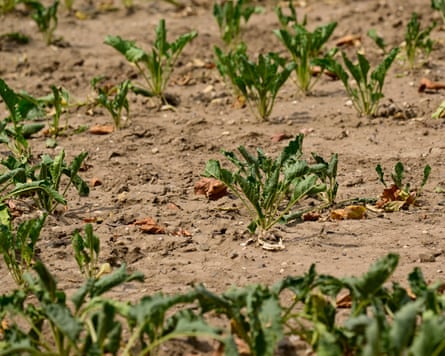
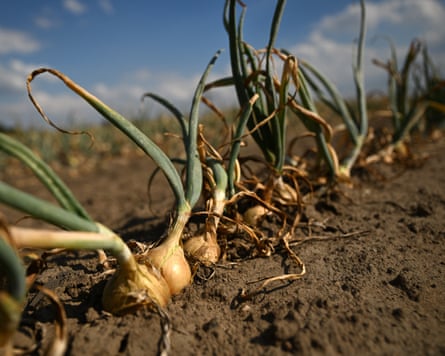
Much of Britain has sweltered under a record five heatwaves this year and endured drought and wildfires, with the hot, dry conditions damaging crops and reducing yields of domestic produce.
However, the UK relies on countries under even greater climate pressure for supplies of some of its most popular fresh foods, according to a report from the Food Foundation charity published on Wednesday.
While the UK generally produces enough grains, meat, milk and eggs to cover its needs, it has one of the lowest food self-sufficiency ratios among large western European countries.
About 40% of its food is imported – including 80% of its fruit and 47% of its vegetables – one of the highest rates of reliance on imported fruit in Europe, making the UK more dependent on imports than France, Germany or Spain.
The UN’s Intergovernmental Panel on Climate Change (IPCC) has forecast that without action to improve resilience, higher temperatures will cause lower yields, heat stress for plants, and poorer quality fruit, vegetables and other crops, especially across the Mediterranean, north Africa, and South and Central America.
The Food Foundation’s warning comes after the industry body the Cold Chain Federation, and top food experts, sounded the alarm in recent months that extreme weather, fuel shortages or cyber-attacks were all creating risks for supplies of food into the UK.
The charity, whose mission is to change food policy and business practices to ensure everyone in the UK can afford access to a healthy diet, is calling on the government to invest more in helping British farmers adapt to the changing climate to increase domestic production.
In what the Food Foundation calls a “mismatch between UK domestic food production and dietary goals”, its report found that 18 (90%) of the top 20 countries supplying the UK with healthy staple foods were rated moderately to severely vulnerable to climate breakdown.
Five of the UK’s nine most-purchased fruits can be grown domestically – including apples, strawberries, blueberries, raspberries and pears – but the UK grows less than 40% of domestic consumption for four of those.
For vegetables, only carrots reach a high level of self-sufficiency (94%), while the UK could grow more of the vegetables most popular with British consumers, including tomatoes, mushrooms, peppers, cucumbers, onions, broccoli and green beans, where only about half are produced domestically.
Anna Taylor, executive director at the Food Foundation, said: “There is a risk [the impacts of climate breakdown] will drive up prices in the future, putting nutritious foods further out of reach for many, so it is important government takes action now to prevent this.”
Horticulture businesses, particularly those that rely on glasshouses, have been saying for some time that they are struggling with rising energy costs, which are higher than in neighbouring European countries, forcing some to cut production.
Energy costs are just one challenge growers face, along with labour shortages, poor weather and changes to post-Brexit subsidies.
Ali Capper, who runs an apple and hops farm in Worcestershire and chairs the British Apples and Pears trade body, said its members wanted to grow more fruit: “To do so they need the certainty that good government policy can deliver – certainty on continued and increased access to the seasonal workers scheme; water for food; an agile planning regulation; competitively priced energy. Growers also need market certainty – long-term agreements and profitable returns.”
Food producers are calling on the government to address some of their concerns in its forthcoming horticulture sector growth plan.