2 months ago
99
2 months ago
99
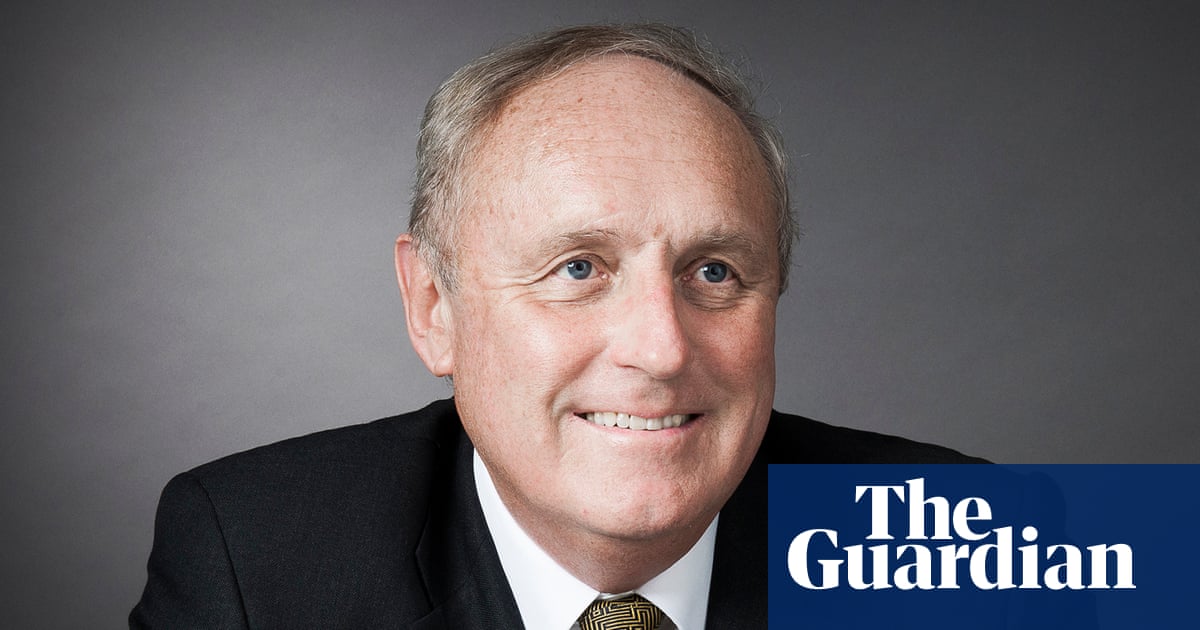
They are nursing their cups of tea on opposing sides of the table, and sit on opposing sides of the party political divide, but Gurinder Singh Josan and Kris Hopkins find common cause when it comes to the rise of populism, 1970s-style racism and community division – and finding ways to resist it.
Josan, 53, is a Labour MP; Hopkins, 62, a former Tory MP. It’s bracing how different they are: different politics, different pasts, different manners, different modes of expression, everything is different, but on this issue at least they have ended up under the same banner
Both are trustees of Hope Unlimited Charitable Trust, one of the Guardian 2025 appeal’s five partner charities. The appeal is raising funds for practical grassroots voluntary projects that build hope, tolerance and trust as an antidote to division, hatred and despair.
Josan’s interest was sparked as a student at Royal Holloway, University of London in the 1990s. He was in the Labour club, and a member of the far-right British National party (BNP) had just started at the university as a fellow student. “That was a major thing,” says Josan. “The UK representative of the Ku Klux Klan also lived in Egham, the university town.”
Josan became deeply embedded in Labour politics as a councillor in Sandwell in the West Midlands from the early 2000s. In 2024, he was elected MP for the newly created constituency of Smethwick. He has been Hope Unlimited’s chair of trustees formore than 10 years, and oversaw its recent revamp.
Hopkins’spath to Hope Unlimited came via an altogether different route. He served in the army, became a Tory MP in the coalition government in 2010, and was a minister for local government before losing his seat in 2017, since which time he has been a special adviser and a political consultant gun-for-hire.
His first encounter with racist extremism came 50 years ago. “I’d be 12 years of age, sat at the stop for the 702 Braithwaite bus, and there was me and a young Pakistani-heritage guy, and a group of white lads just abusing him. I’ll be honest, I didn’t even know what racism was. But the instinct sort of stepped in to say, ‘fuck off or I’ll smack you in the face’.”
Hopkins was a member of Bradford council from 1998, the year after he joined the Conservative party. Like Josan, he believes passionately in the power of communities to resist the politics of division and hatred. They came by that belief, even while remaining loyal to their respective parties, by seeing what happens when people feel let down by politics.
“When mainstream parties stop doing what they should be doing,” Josan says, referring to the surge of the BNP in the mid-2000s, “stop representing the community, stop engaging, leave a vacuum, that makes it easy for populists to walk in.”
“You’ve got to create environments where people can develop relationships, understand and respect each other,” Hopkins says. “Parts of Bradford are predominantly Pakistani heritage. You go to the Worth Valley, where I live, it’s predominantly white, and there’s very little interaction between the two.”
Hope Unlimited gives out grants to community projects, “a little hub on the estate,” as Josan describes them: “Somewhere young people can get together, employment support can be provided, they might be running a food bank there, none of that can happen unless that facility exists. Everybody’s struggling, and if that organisation goes, people end up with the dead end of nothing.”
If those places don’t exist , there’s nowhere to congregate in a crisis. Hopkins remembers 7/7, a devastating time for Bradford, “perpetrators from not too far away, people from all communities were frightened. Hope Not Hate [the anti-racism group] brought together an event, maybe 10,000-strong, the police, the council, the NHS, the university, the third sector, but also, regular people. I wanted to go home and cuddle my daughter. People recognised that we had to go to one place. We wanted reassurance.”
“You saw it in Southport [in 2024] ” Josan adds, “the community came together very quickly, standing up and saying, ‘we’re not having this, we’re not going to let this divide us’. I genuinely believe that people are generally good.”
Keeping the faith involves an element of tact: Josan and Hopkins are resolute about accepting different views. “Diversity comes in lots of different ways,” Josan says, “when I see people put flags on lamp-posts, I don’t automatically assume, ‘Oh, they’re racist’. My constituency office has the union flag flying outside all year round, except St George’s Day, when we take it off for a St George’s flag. Black Country day, we put up the Black Country flag. We can let these symbols divide us, or we can let them bring us together.”
“Politicians have a responsibility to address the reasons why people are angry,” Hopkins says, “But what we shouldn’t be doing is giving away our values to people who have become angry. I go back to my party, and say, ‘you’ve got to represent everybody. You’ve got to look at the needs of people who aren’t throwing things’.”
Josan sometimes asks at Labour party meetings, who is a school governor? Who volunteers? Who is a trustee? By the time he has finished, everyone has their hand up. “Our communities are full of people who want to do the best for the people around them,” says Josan.