1 month ago
111
1 month ago
111
The US struck targets across Iran on Friday, reaching as far as the Caspian Sea, as Donald Trump threatened “major military punishment” for Tehran and its Houthi allies in Yemen for extending the war to a second major shipping chokepoint at the entrance to the Red Sea.
As Iran retaliated with missile and drone fire against US bases and allies across the region, the New York Times reported that Tehran had rejected a US ceasefire proposal delivered by the Iraq prime minister, Ali al-Zaidi. This despite the US secretary of state, Marco Rubio, claiming a day earlier that Iran was begging for a ceasefire. Iraq later disputed the report.
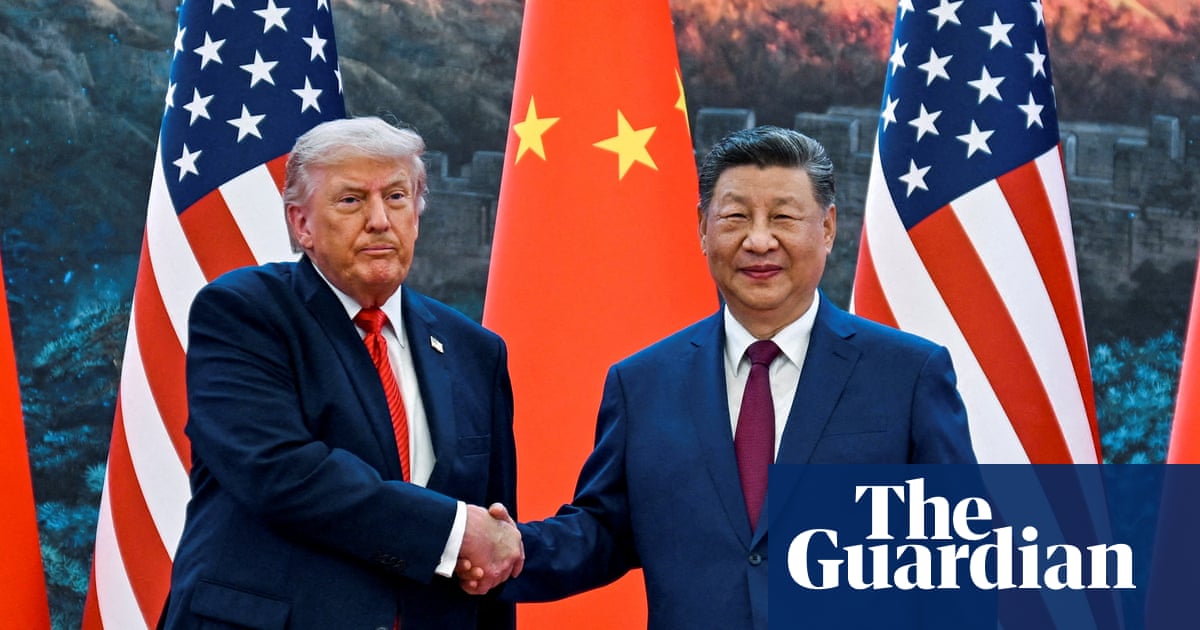
The strikes came as Trump warned China and Russia on Friday against selling weapons to Iran, saying he believed assurances from Xi Jinping and Vladimir Putin that they were not yet doing so. Iran said it was in consultations with both countries.
“Therefore, two major Countries that people speak of often in terms of Iran are, in my opinion, not participating,” the US president wrote on his Truth Social network. “If they did, it would be very bad for them – Certainly not in their best interests.”
Iran’s military said it had launched drone strikes on Friday morning against US military targets in Bahrain, Jordan and Kuwait as it appeared there was no end in sight to the fighting. It told civilians across the region to stay 500 metres/yards away from locations where US troops were present.
The Houthis, who control northern and western Yemen, continued to claim a naval blockade on Saudi Arabian ports and ships using the Bab el Mandeb strait at the entrance to the Red Sea.
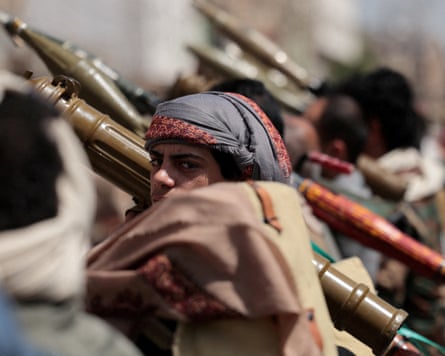
They insisted on Friday that only Saudi-linked trade was under blockade as ships in the Red Sea broadcast messages to the group identifying ownership, flag and crew in the hope of securing a safe passage.
The Houthis struck two Saudi tankers on Thursday in the Bab el-Mandeb strait, pushing oil prices up 7% to more than $100 per barrel for the first time since May.
The attacks forced several other tankers to turn around and head north through the Suez canal, a much longer and more expensive route to reach Asia by sailing around Africa.
Shipping insurance costs through the southern Red Sea doubled for some companies on Thursday, sources said. Still, half of the 18 ships exiting Bab el-Mandeb on Thursday were carrying crude oil, including two Chinese supertankers.
The number of tankers crossing through the trait of Hormuz fell to just one on Thursday, the lowest figure since 7 May.
Trump wrote on social media that he would hold Iran accountable for any further Red Sea attacks, saying “major military punishment will be inflicted upon Iran and, of course, the Houthis themselves”.
He told Axios he was considering relaunching major combat against Iran. “They haven’t received enough pain yet,” the US news outlet quoted him as saying.
Washington and Tehran appear to remain fundamentally at odds over future control of the strait of Hormuz. Iran’s foreign minister, Abbas Araghchi, insisted the problem with advancing peace talks was “the American approach”.
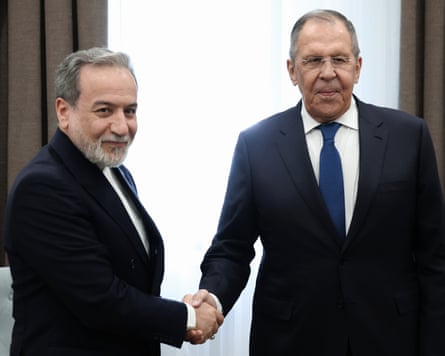
“Preserving Iran’s interests in the strait of Hormuz is among our principles and we are committed to them,” he said. “We are neither intimidated by threats nor will we yield to pressure.
“As long as the legitimate goals and demands of the Iranian people are not met, it is natural that we continue our efforts.”
Iranian officials had earlier suggested that the most recent US proposal involved a temporary arrangement that did not address control of the strait of Hormuz.
Pakistan, which has acted as a mediator in the conflict, has also been pushing for fresh talks between the two sides after an initiative by China.
Exploratory discussions took place during a visit by Iran’s interior minister, Eskandar Momeni, to Islamabad this week — his second within the last 10 days, sources said.
Iranian state media said US missiles had struck Qeshm Island in the Strait of Hormuz. Tehran said it had attacked US military equipment depots at Al-Adiri, officially named Camp Buehring, in northern Kuwait, and US troop positions at Camp Arifjan and Camp Doha near Kuwait City. It also said it had significantly damaged a surveillance tower used by the US Fifth Fleet in Bahrain.
In an example of how shipping disruption caused by the war affects other countries, Coca-Cola has raised the prices of Diet Coke in India — where it is mainly sold in aluminium cans — by more than 10% as the conflict chokes its supply chain.
Reuters and Associated Press contributed to this report