3 months ago
154
3 months ago
154
The US has launched strikes on southern Iran in a test of the seven-week long ceasefire, as both sides played down hopes for an imminent peace deal even as negotiators from Tehran began new talks in Qatar.
US forces targeted missile launch sites and boats attempting to lay mines, US central command (Centcom) said on Tuesday, but stressed that the strikes did not indicate the ceasefire with Iran was over.
Centcom “continues to defend our forces while using restraint during the ongoing ceasefire”, said navy captain Tim Hawkins, who characterised the action as “defensive”.
In Iran, the news website Tabnak, believed to be close to former Revolutionary Guard chief Mohsen Rezaei, identified four dead Guard troops it said had been killed in American strikes on boats. Iranian state television separately reported blasts around Bandar Abbas, a city on the Strait of Hormuz home to a military port and a dual-use airport. The Iranian state news agency Mehr later said the situation was “completely under control” and there was no reason for residents to worry.
The strikes – the second major attacks to take place during the seven-week ceasefire – came as Mohammad Bagher Ghalibaf, the speaker of Iran’s parliament, led a delegation of negotiators to Qatar. Local media said Iran’s foreign minister, Abbas Araghchi, and central bank governor, Abdolnaser Hemmati, were among the group as well.
Hemmati’s presence has fuelled speculation that talks will focus on the release of frozen Iranian assets. The deal currently under negotiation with the US would reportedly see Washington agree to unfreeze some Iranian assets being held in banks outside Iran – including Qatar.
Trump has faced criticism from loyalists in his party over the reports that billions of dollars in frozen assets could be made available to Tehran, with senior Republican saying the reported details of the peace deal appear too close to the nuclear deal negotiated in 2015 by the Obama administration, which Trump pulled out of.
The memorandum of understanding being negotiated would reportedly see Iran restore commercial shipping through the strait of Hormuz but would not include negotiations over any nuclear issues. Talks over Iran’s nuclear programme would then take place within a 30- to 60-day period after any agreement.
Trump has said his key aim in the war is to prevent Iran from developing a nuclear weapon with its highly enriched uranium and is under mounting pressure for the initial deal to contain a commitment from Iran to dispose of its stockpile.
On Monday he appeared to offer a concession to Tehran, announcing in a post on social media that the enriched uranium held in Iran could be “destroyed” inside the country, in a process overseen by an international nuclear agency.
The fate of Iran’s stockpile of highly enriched uranium has been a major sticking point in various rounds of negotiations between Washington and Tehran. In previous rounds of talks with the US, Iran said it was willing to dilute the purity of its enriched uranium, but it would not permit the transfer of the stockpile to either the US or Russia.
Experts said Trump’s announcement on Monday could amount to a major compromise from the US president, as negotiations appeared to slow after a flurry of diplomatic activity over the weekend.
Reopening the strait of Hormuz has become a matter of urgency for the Trump administration, which is months away from midterm elections in the US and facing voter anger over rising costs.
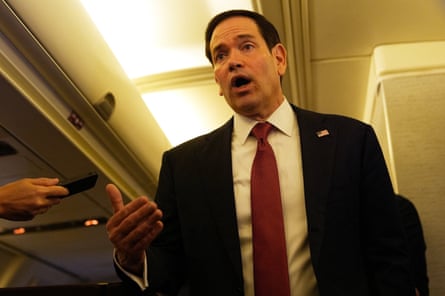
On Tuesday the secretary of state, Marco Rubio, said that despite the latest US strikes on Iran, a deal was still possible, adding that the strait of Hormuz would open “one way or another”.
“There were some talks going on in Qatar today, so we’ll see if we can make progress. I think it’s a lot of talking back and forth going on about specific language in the initial document,” Rubio told reporters in Jaipur during an official visit to India.
Iran has said future management of the strait – through which about a fifth of the world’s oil and liquefied natural gas usually flows – will be a matter for Oman and Iran to reach agreement on, and that “fees for navigational services” could be imposed.
In a lengthy post on Truth Social, Trump said talks with Iran were going “nicely”, but warned of fresh attacks if they failed. It “will only be a Great Deal for all, or no Deal at all”, he wrote.
Iran has insisted that a ceasefire in Lebanon has to be included in the memorandum of understanding that would lead to Iran opening up the strait of Hormuz.
On Monday the Israeli prime minister, Benjamin Netanyahu, said he would intensify strikes against the Iran-backed Hezbollah militia in Lebanon. Israel and Lebanon agreed to a ceasefire in mid-April but Israel has continued airstrikes it says are acts of self-defence against Hezbollah, which was not party to the truce.
With Reuters