2 months ago
132
2 months ago
132
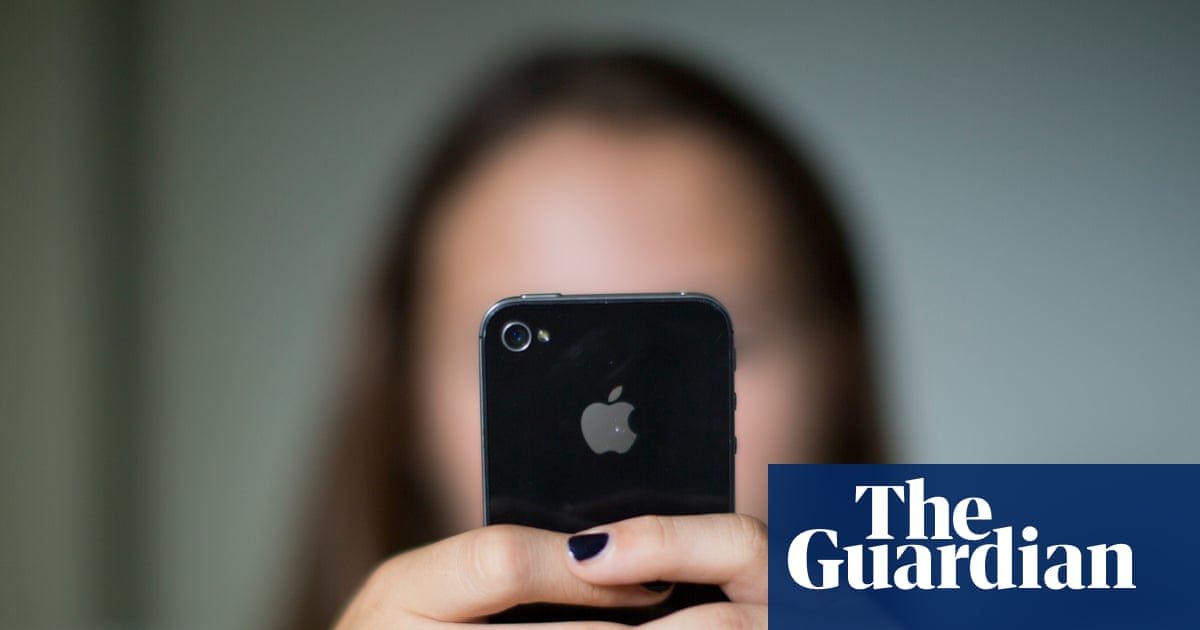
Sixteen- and 17-year-olds in Britain are to be encouraged to observe a midnight to 6am social media curfew but will be able to opt out by changing their account settings.
From next spring, they will be urged to refrain from using certain apps, with the block being switched on by default. But the curfew will not be mandatory and can be overridden.
The government also wants “addictive” features such as autoplay and infinite scroll to be disabled in the latest stage of its efforts “to protect the next generation” from online harms.
We spoke to 16- and 17-year-olds about the social media curfew proposals and what they thought about them. Here are some of their responses.
‘I don’t think there is one single solution’
Harvey, 16, from the south-east, thinks the opt-out nature of the curfew undermines its effectiveness, but is also worried about potential data breaches.
“I wasn’t expecting [the curfew] to be opt-out, and having it as an opt-out renders the whole thing meaningless, because if someone is addicted to Instagram and there’s a curfew but they can turn it off, they will turn it off.”
He says he mainly uses Instagram, X, YouTube and Snapchat, and, in conversation with his parents, has restrictions on his phone, but acknowledges that not everyone has this opportunity. He spends one or two hours a day on social media.
“My phone normally switches off at 10pm each day, but in scenarios where I would like to be on my phone later, say to watch a late England game and wanting to chat to my friends about it or see what other people are saying about it, then I’m able to discuss that with my parents and I’m able to adapt my phone to what I want it to be,” he says.
“Different circumstances demand different approaches. For example, during my GCSE exam season, there were occasions when I would stay up late revising via YouTube tutorials so my ‘social media’ use would have been very high, but it was because I was studying.”
He adds: “Having to verify your age, which applies to everyone, is one of my biggest issues with it, as that sort of removes this idea of an anonymous internet, which I know is both a good and a bad thing.”
He says of the government proposals: “I don’t think these measures are inherently bad, or that they should be just disregarded completely, but it’s the fine details that are important because everyone uses social media differently. Everyone has a different experience. I don’t think there is one single solution to this problem.”

‘It’s not obligatory, so what’s the point?’
Archie*, 17, who is in the sixth form studying A-levels and living in Bedford, also questions the opt-out nature of the proposal.
“In theory, I like the idea, but the fact that it is not obligatory, then it’s almost like, what’s the point?” he says. “I’m not going to care if Instagram tells me to get off because I can regulate myself, and it is not obligatory.”
Archie says he already has set restrictions on certain apps he uses – mainly TikTok and Instagram – which alert him to the time he has spent on social media and suggest taking a break. His usage, he says, amounts to “around three hours a day”.
“I wouldn’t say I use it a lot,” he adds. “I probably use it more than I should. But both Instagram and TikTok have those built-in settings I use.”
Although largely in favour of restrictions on infinite scrolling, he believes such restrictions should not be confined to children. “I think everyone could benefit from a check on this – adults too,” he adds.
Alex, 16, who lives in Scotland, believes the curfew proposals are “ridiculous”.
“In Scotland, at 16, you can legally move out, get married, work full time, leave education, and enlist, but can’t be on your phone when you want. I’m sorry, but that’s stupid.”
Alex, who uses TikTok, Instagram and Snapchat, is on social media for “a few hours” a day. “I’ll watch TikTok on the bus to college in the morning and during breaks at work,” he says. “I’ll watch it for a bit at night to wind down, but other than that, not much.”
He says he will “opt out” of the curfew. “Surely they know almost everyone is just going to turn the settings off,” he adds. “I do not live at home, I have college and work, and I feel I should be allowed to use social media when I want.”
‘Under-16s should have a curfew’
Meliha, who is 16, lives in Coventry, West Midlands, and is studying and working, says she does not support the curfew but would like to see it for under-16s.
“I disagree with it being for 16- and 17-year-olds as they are old enough to do so many things – for example, they can live independently, pay taxes and soon people will be able to vote from age 16. It’s silly to have a curfew.”
She does, however, agree with a curfew for “everyone under 16”. She says she will opt out of the curfew when it comes into force. “I look at social media late at night, yet it does not affect my sleep; also, some of my study sessions go past midnight,” she adds.
Meliha says she uses Snapchat, TikTok, and Instagram and spends four or five hours a day on social media.
She is in favour of the curfew not being mandatory. “The opt-out gives more of a choice rather than forcing a rule,” she says. “It gives us more independence. Not every teenager uses social media the same way, so a flexible approach could be more appropriate than just one big rule.”
* Name has been changed