2 months ago
118
2 months ago
118
What is wrong with resurrecting the prerogative of major powers to claim a sphere of influence in which they dictate and others must follow? That idea informs the “Donroe Doctrine” behind the US invasion of Venezuela to seize Nicolás Maduro. Donald Trump seems to believe that, as the world’s strongest military power, the United States should be allowed to invade other countries at will. Trump’s homeland security adviser, Stephen Miller, says “the real world” is “governed by strength”, by “power”, so we should get used to it.
There is a beguiling simplicity to this abandonment of the norms long designed to govern the behavior of states big and small. China has touted it as the reality that its Asian neighbors must live with. Russia, a third-tier power by comparison but still a nuclear-armed regional heavyweight, has periodically treated the boundaries of post-Soviet states as mere suggestions. But do we really want to return to the law of the jungle in which the guy with the biggest stick calls the shots?
Trump’s distaste for any constraints on US power did not emerge in a vacuum. The US government has long considered international law to be what Lilliputians use to restrain Gulliver. That wariness lies behind, for example, Washington’s reluctance to accept international standards that most others view as benign, such as the First Additional Protocol to the Geneva Conventions (articulating modern standards for warfare and ratified by 175 states), the Convention on the Rights of the Child (the US is the only nation in the world not to have ratified it) or the Law of the Sea Treaty (171 state parties). Joining the international criminal court (ICC) is deemed beyond the pale.
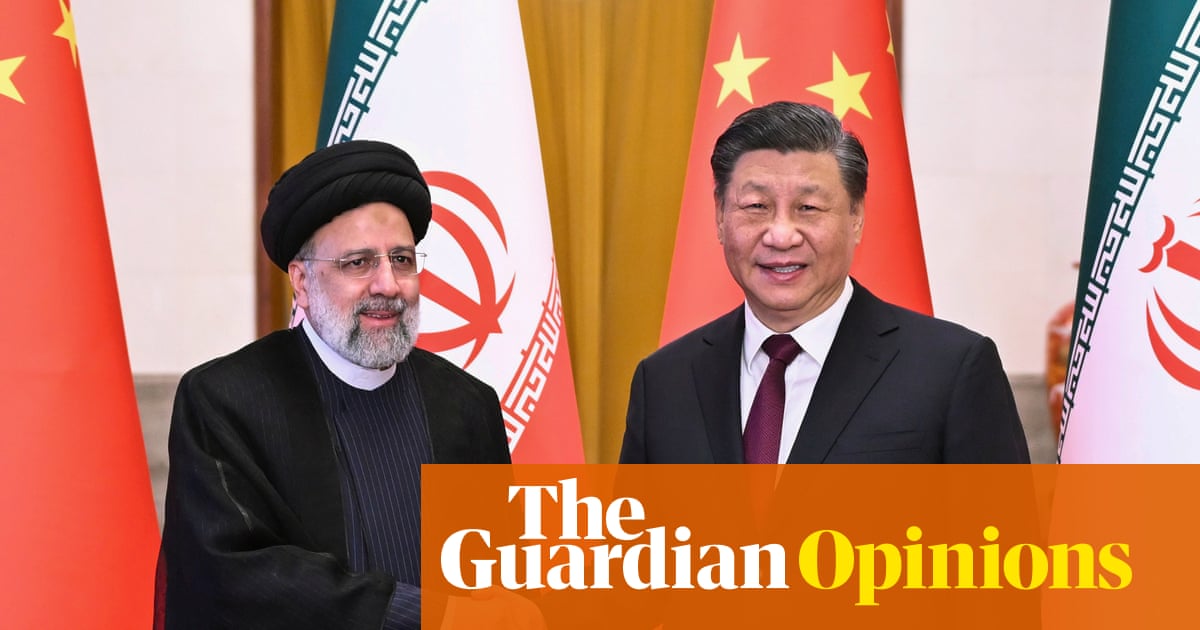
To some extent, spheres of influence have long existed. The United States has dominated the western hemisphere, while China held significant sway in parts of Asia and Russia in the countries of the former Soviet Union. On occasion those big powers flexed their military muscles without regard to international law – the United States to invade Iraq, for example, Russia to seize chunks of Ukraine and Georgia, China to fence off much of the South China Sea. But these forays have been exceptions, justified with allusions to Saddam’s supposed weapons of mass destruction, Putin’s stated fear of Nato expansion or China’s historical territorial claims. Trump is proposing a more unabashed return to great-power spheres of influence enforced largely by coercion.
In the past, the US government at least nominally portrayed its dominance as aimed at upholding democracy and the rule of law. Despite the many exceptions, Washington spent enough time promoting a rights-based world order that its hegemonic role seemed more palatable. Under Trump, that is all history.
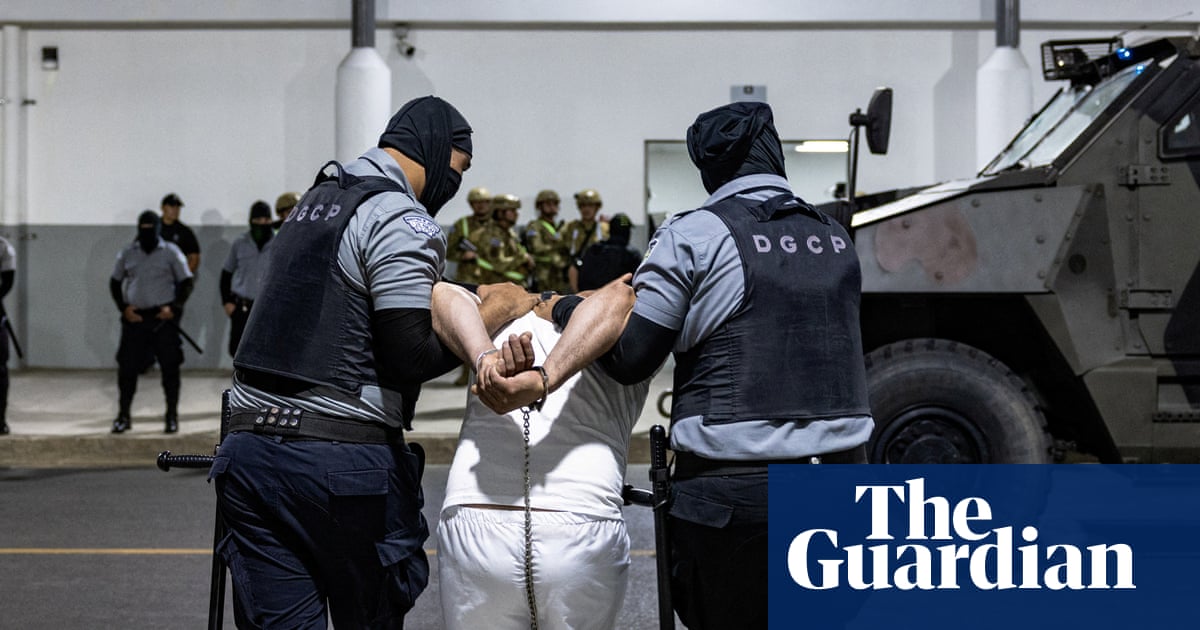
The highlights of Trump’s policy toward Latin America are illustrative. He has backed former Brazilian president Jair Bolsonaro despite his attempt to overthrow the country’s democracy, praised El Salvador’s president, Nayib Bukele, as he decimates the rule of law and detains young men in cruel conditions with limited due process, forced immigrants to return to dangerous and tumultuous countries, and now seized Venezuela’s oil. That is not an agenda designed to win hearts and minds.
But since the United States has long had the world’s most powerful military and biggest economy, why should Washington bind itself by international law rather than order others around? Trump promised to end “forever wars”, but seems to have calculated that there is nothing wrong with a quick win here or there, a return to “gunboat diplomacy”, if it brings a short-term political advantage.
But what would a world dominated by unrestrained force look like? The crime of aggression – the basic rule against invading or subjugating other states – would not disappear altogether, but it would be badly weakened. The international system already struggles to hold powerful countries accountable when they invade their neighbors. Trump’s vision would turn that weakness into a governing principle.
For example, the ICC would retain the power to prosecute aggression, but its jurisdiction is limited. For most crimes in its remit, it can prosecute leaders of non-member states so long as the relevant conduct takes place on the territory of a member state. That is the basis for the ICC’s jurisdiction over Israeli war crimes in Gaza and Russian war crimes in Ukraine. But for the crime of aggression, the court has jurisdiction only over the citizens of governments that grant it that power, which the United States, Russia and China have not done.
Similarly, the UN general assembly could continue to denounce acts of aggression, as it did for Russia’s invasion of Ukraine. But with the UN security council stymied by the permanent members’ veto, the UN’s coercive capacity is unavailable to address the conduct of the three governments most likely to aggressively claim a sphere of influence.
As the ability to uphold the law against aggression diminishes, weaker governments will begin to adjust. In a might-makes-right world, US allies, not to mention the emerging powers of the global south, would begin to hedge their bets. If an alliance with Washington meant a feudal relationship with a powerful overlord who could turn against you on a whim, why not balance Washington against others? In a transactional world where Trump threatens to seize Greenland, or conditions US military support for Nato members on his evaluation of their military expenditures, Europe would become more accommodating of Russia. Japan, South Korea and much of the rest of Asia would draw closer to Beijing. The consequences would be harmful for the defense of human rights, economic predictability and the stability of smaller states.
Should Americans care? To begin with, the United States has enormous economic interests in these regions that it will lose by alienating allies. Does it really want Europe building its military by shunning American arms or Taiwan prioritizing semiconductor sales to Beijing? Yes, Trump would dominate Latin America, but it has only 13% of the world’s population and a diminishing share of the global economy. Much of the world’s dynamism and growth lie elsewhere.
Moreover, spheres of influence must be defined, with predictable friction along the edges, as illustrated by the many cold war proxy conflicts in a Yalta-divided world. To keep the peace, the United States currently depends on a global network of bases and a series of military alliances, but as Washington tramples norms, alliances might give way to grudging partnerships, with allies slow-walking their commitments or finding excuses to step aside.
Africa, for example, with its ample supply of critical minerals and one of the world’s few regions of population growth, is already contested by the United States, Russia and China, as well as Saudi Arabia and the United Arab Emirates. Trump’s imperialist rhetoric is unlikely to play well on a continent with recent memories of colonialism.
A might-makes-right world could also fuel chaos, as is already playing out in Africa, where regional powers have begun to test limits. To gain access to valuable minerals, Rwanda has invaded the eastern Democratic Republic of the Congo, using its (notoriously abusive) M23 rebels. To continue to profit from Sudan’s gold, the United Arab Emirates has armed the Rapid Support Forces paramilitary group despite its genocidal rampages. Might Ethiopia now seize part of Eritrea for the Red Sea port it covets? Might the UAE help Somaliland establish formal independence from Somalia?
Beyond Africa, might Israel seize the occasion to annex the occupied Palestinian territory and even to expel Palestinians? Might an unreformed Venezuelan government renew Maduro’s claim to a big chunk of oil-rich Guyana? Although Xi Jinping considers international norms against aggression to be irrelevant to Taiwan, which he views as part of China, Trump’s rhetoric might still embolden him to seize the island.
Trump’s imperialist order also seems unduly focused on military power. The US economy thrives in significant part through global investments and trade. But that requires respect for the international law that Trump derides. Otherwise, contracts could be broken willy-nilly. Investments can be seized. Business personnel can be held hostage. Already the Trump administration is urging Americans to flee Venezuela for fear of kidnapping by armed paramilitaries.
Trump would undoubtedly hope to deter such lawlessness, but a lawless defense of law is hard to pull off, and even American power has its limits. The American military has struggled with the capacity to fight major wars on two fronts. It is hardly in a position to become a fire department, putting out conflagrations wherever they pop up. Trump has deftly wielded the threat of tariffs to coerce better treatment of American interests, but even that tactic has its limits as governments in this increasingly multipolar world deprioritize trade with the United States and negotiate alternative trade deals.
It was telling that as Trump announced his seizure of Venezuela’s oil, the European Union finalized a major free-trade deal with Mercosur, the South American trade bloc. Similar deals are in the works elsewhere. From tourism to education to business, Americans have profited enormously from the open global order that international law has enabled. Trump’s return to a world of power politics would mean a more circumscribed and impoverished America.
Trump has also turned his back on international institutions, preferring my-way-or-the-highway diplomacy. But global threats, from pandemics to the climate crisis, will not be so deferential to the would-be king in Washington, even if he pretends to wish them away. A go-it-alone approach guarantees ineffectiveness.
Even US military might cannot be taken for granted. Neutralizing the incompetent Venezuelan military is one thing, but what about China? Trump might figure that the US military can prevail in a short war with Beijing, but the ability to sustain a protracted conflict requires a strong manufacturing base. Yet China’s manufacturing capacity is now double that of the United States. The United States could try to make up for China’s advantage by joining hands with like-minded democracies, but not if Trump’s unilateralism alienates them.
Similarly, China’s current chokehold on rare-earths production requires a coordinated response. But in a might-makes-right world, US allies might believe they are better off cutting their own deals with China, leaving Washington to fend for itself.
Because the Pentagon cannot coerce everyone at once, economic clout still matters, but replacing voluntary partnerships with even economic coercion may not be a winning strategy for Washington either. The US economy for now is larger than China’s, but Beijing can direct its state-dominated economy more readily than Washington to promote foreign influence. In many parts of the world, including much of Latin America, China is already the largest investor and trading partner. Beijing’s belt and road initiative often exceeded US development aid even before Trump decimated USAID.
For decades, US presidents have seen the national interest served by a global order that limited aggression. Toppling a dictator may seem like a quick win, but if it portends an end to the norms that have helped to protect most international borders and curtail conflict for decades, it will be a pyrrhic victory.
Despite his aspirations, Trump is unlikely to be president for life. In three years, assuming the constitution holds, he will be gone. A lot of damage can be done in the interim, but it need not be irreversible. Beyond waiting for a new president with better judgment, we should do what we can to resist Trump’s flouting of such elemental norms now. Finding every conceivable way to repudiate his lawlessness is essential for redeeming that law in the future.
-
Kenneth Roth, former executive director of Human Rights Watch (1993-2022), is a visiting professor at Princeton’s School of Public and International Affairs. His book, Righting Wrongs: Three Decades on the Front Lines Battling Abusive Governments, is published by Knopf and Allen Lane