8 hours ago
17
8 hours ago
17
Summer is the season of socialising, from alfresco drinks to weddings to group holidays. It can get expensive – and suddenly you start noticing those friends who don’t pay their way. Or the ones who splash the cash and make you feel cheap. In fact, there are a host of annoying money-related habits that can cause tension among friends. Here are 20 common sources of financial frustration – and how to resolve them.
My friend never gets a round in
British pub etiquette seems simple: in a group of friends, everyone takes it in turns to buy the drinks. In practice, it is a minefield. There’s always someone who hangs back in the hope it won’t come round to them; someone who orders half a lager when it’s their turn to pay and a double G&T when it’s yours; couples who see themselves as one entity when it comes to paying, but not when it comes to drinking.
Ellie Austin-Williams, the London-based author of Money Talks: A Lifestyle Guide for Financial Wellbeing, says it is best to bring it up straight away. “Have the conversation at the start: do you want to do a round, or shall we pay our own way?” Isn’t that a bit embarrassing? “People feel it’s too awkward, but it’s better to say: ‘I’ll buy my own, I’m not drinking today.’ People really do respect that.” Conversely, if you’ve all agreed upfront to do rounds, it’s harder for someone to shirk their turn.

Matt Altmix, who is based in Atlanta, Georgia, and co-hosts the podcast How to Money, suggests budgeting for pub trips. If you’re happy with how much you’ve decided to spend that night, you don’t need to obsess about what everyone else is doing. “That way, you’re actually having a good time,” says Altmix. Warning: this may mean going to the pub less often. “Skipping out sometimes is totally acceptable,” he says. “Then when you do show up, make it count.”
Alex Holder, who lives in Lewes, East Sussex, is the author of Open Up: Why Talking About Money Will Change Your Life. She rejects round culture altogether. “It’s presuming we’re all going to drink the same amount. Not everyone wants to drink five drinks,” she says. “Rather than noticing that someone gets a cheap drink when they’re paying and feeling enraged, exit the culture.”
The way we split the bill in restaurants isn’t fair
Going out for dinner with friends is fraught with financial pitfalls. Do you simply divide the bill by the number of people? That’s a rough deal for the teetotal vegetarian with a small appetite, who ends up subsidising someone else’s steak, sides and wine. Do you pay only for what you ordered? That can seem petty – and somehow there’s always a shortfall.
Joel Larsgaard, Altmix’s best friend and co-host, says: “Typically, the things that add up are the drinks, the appetisers and the dessert. You can still go out and enjoy a nice dinner without overspending if you avoid those big culprits. But you don’t get the savings in the same way if you split a bill with somebody and they’re like: ‘Yeah, I got three cocktails and the fancy tiramisu.’”
Altmix suggests bringing it up in a lighthearted way: “‘Man, Sam’s over there just throwing down the steak, am I right?!’ There’s a way you can have those conversations without it feeling judgmental. Crack some jokes, be light about it and hopefully it leads to some healthy conversation.”
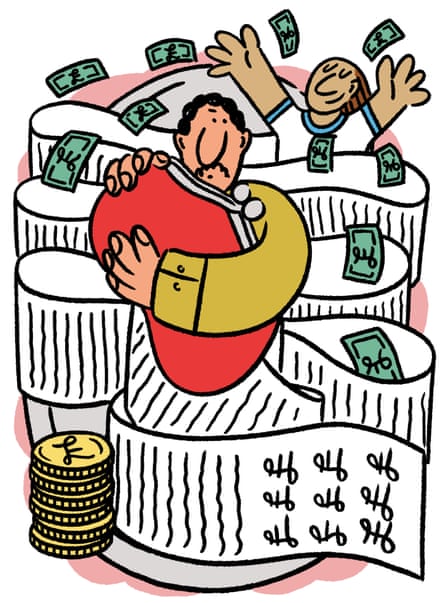
Of course, this approach won’t go down well with everyone. “To some, it’s normal to split the bill,” says Holder. “Not to is an attack on what they ordered.”
Austin-Williams would rather discuss money matters before dinner: “Try to bring it into the conversation when you’re planning. If friends want to go to a fancy restaurant, say: ‘Can we just get a burger? I’m on a budget.’”
Alternatively, raise it before ordering, she says. For example: “‘I’ve got a maximum of £30, so I’m just going to have a main, but you have what you want.’” Failing that, speak up when the bill arrives. You could say: “‘I didn’t have as much and I’m trying to watch my spending this month – is it OK if we pay per item this time?’” She says people worry about looking cheap and not being part of the group, but often others will be relieved that someone has spoken up.
We disagree about tipping
“I believe we should tip because, unfortunately, that is the way that hospitality staff are paid properly. It’s a really hard job with low wages,” says Holder. She understands why some people may dislike the tipping system: “These things feel emotionally fraught: you feel deceived, that the establishment is out to get you.” However, like everyone else I speak to, she feels tipping is non-negotiable.
Larsgaard advises factoring in the tip when budgeting to eat out. “You cannot let your financial situation dictate how much you tip. If you can’t afford it, that is just a sign that you should be eating at home,” he says. “If you don’t want to tip, that’s not frugal, it’s cheap. That’s how we make a distinction: you’re being cheap when your attempts to save money are coming at someone else’s expense.”
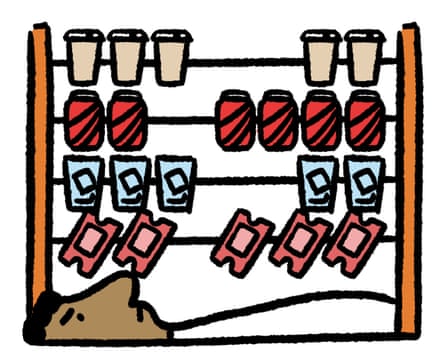
Austin-Williams prefers to take charge, saying something like: “‘Can everyone add £2 for the tip?’” But Holder says: “You can’t make friends tip; everyone has different money rules. Work out your own relationship with tipping.”
If Larsgaard were to notice a friend hadn’t tipped, “that would probably make me mad enough to either leave more on my tip or have a conversation. ‘Did you see how hard she was working? Do you know how much she gets paid?’ I think sometimes people don’t understand the economics of being a server.”
They spend too much (or too little) on theatre or concert tickets
Some people insist on being in the front row; others are happiest in the cheap seats. Often, these preferences have no correlation to bank balances. “Some things can be triggers for certain people, such as spending on theatre tickets or taxis,” says Holder. “Others find it easier to spend on experiences than things.” So what do you do if you’re misaligned with a friend?
Austin-Williams would try to compromise with a high spender. “Say: ‘I’d really like to go, but £70 seats are a bit out of budget at the moment. If you really want to go front row, count me out this time. If not, £30 tickets are fine,’” she says. “Give them the option – they’d probably rather go with you.” You can do similar with a low spender, saying, for example, that you struggled to see from the £10 seats last time, so would prefer to spend a little more if possible.
Larsgaard has other ways to compromise. “Maybe you take one for the team. You’re front row at this one because you both love this artist, then you either skip the next concert or sit in the cheap seats at that one. Or hang out before the show, go together, but sit in different spots.”
No one likes to be a letdown, but sometimes you have to decline an invitation. “One of my friends was just in Europe and went to see Harry Styles at Wembley,” says Larsgaard. “I was like: ‘No, sorry, I can’t afford that right now. Let’s put the record on at my house. If you can afford it, man, go and have an awesome time. I will be a little bit jealous, but also psyched for you.’”
I always end up buying the tickets
“If you are a type A person who likes to plan everything,” this can happen, says Altmix. Friends may have every intention of getting the tickets next time, but just don’t get the chance. “If you kick back a little bit, that gives them an opportunity to, right? People work at different speeds and have different things going on in their lives and maybe they’re just in a really busy season.”
Austin-Williams says: “If you’re noticing a bit of a pattern, stop offering. Next time, say: ‘I’ll get mine,’ or: ‘Let’s just get our own.’ If your friendship is in danger, raise it: ‘I picked up the bill the last couple of times, would you mind getting it this time?’ Often, people just haven’t been paying attention.”
They said they’d pay me back – and haven’t

“Don’t presume that everyone has a collective relationship with money,” says Holder. “Some people find paying money back really difficult; they almost have a block.” She says most people will appreciate it if you are “very straight up” and text with your bank details.
If that doesn’t work, you’ll have to talk to them. “Have a really frank conversation,” says Austin-Williams. “Things happen – your car breaks down, you lose your job. It’s important to understand if your friend is struggling.”
Express concern, rather than making accusations, says Larsgaard. “‘Hey, I noticed you said you were going to pay and you didn’t. Is everything OK?’” They may simply apologise for forgetting, or they may open up about money worries. “It’s very easy to be a jerk, but they’re your friend. Asking a question about what’s going on gives you a chance for deeper connection and understanding.”
They always expect me to buy them little things
When you’re popping to the shops, some friends think nothing of placing an order, even if you haven’t offered. It might only be a couple of quid here and there, but even low-level freeloading can be annoying over time. What should you do?
“You’re thinking: I would never do that,” says Holder. But everyone is different: it has probably never crossed your friend’s mind that you might begrudge them a Diet Coke. “You can a) have a conversation, b) continue to be bothered or c) get over it,” she says. Unless money is really tight, getting over it seems the best option here.
They never contribute to travel costs

It may feel as though you’re always the one paying for the taxi or doing the driving and that your friends are taking advantage. It’s probably not that calculated, says Holder. “Someone might think: ‘You’re always getting an Uber; I’ll get in it as I’m going that way.’ Accept that their norm about money may not be yours,” she says. “Rather than getting mad with friends, take responsibility for your own spending. For example, if you often give a friend a lift, either ask them for petrol money or don’t agree to drive them places.”
What if they said they’d contribute, but haven’t? “Always assume it’s unintentional,” says Austin-Williams. “Give them a nudge: ‘Just doing my budget and wondered if you could send that Uber fare over?’ Most friends just need that nudge.”
We’re going on holiday together and they want to spend a fortune (or a pittance)
Ideally, says Holder, “holiday with people who are willing to spend a similar amount to you. Don’t holiday with really rich people or accept it’s really going to bug you!”
Altmix will only travel with someone he knows well. “You’ve got to pay for everything when you’re travelling, right? Everything costs money. You wake up, you’re paying for something: you’ve got to get some coffee, you’ve got to get some breakfast. There are all these money decisions throughout the day. And if you haven’t established an understanding of how much you like to spend and the type of travelling that you like to do, I think you could be in a world of hurt financially and from a relational standpoint.”
Be clear about your expectations at the planning stage, says Austin-Williams. “Be specific. ‘This is my budget for the whole trip; this is my budget for the accommodation. Who’s going to pay? What’s the repayment schedule?’ There’s a chance you won’t be able to align.”
Larsgaard says: “It comes down to honesty and having those conversations up front. ‘Yeah, I’d like to go to Spain, but how do you feel about a hotel versus a B&B? Can we save on this part of the trip and accentuate that part of the trip?” Is the holiday doomed if your friend wants to go for a five-star all-inclusive and you want to go for budget self-catering, or vice versa? “I think people feel, if one of their friends suggests this fancy trip, they either have to be: I’m in or I’m out. I don’t think that it’s a dichotomy like that. You can come to a happy medium. If you really don’t have the money, you can say: ‘Spain’s off for now, but maybe I can start saving up for next year. What do you think about a camping trip instead?’”
The way we’re splitting the cost of the accommodation isn’t fair
If you’re renting a shared house or a villa, do you pay per head, per room – or another way? What if some people are staying longer than others? It comes down to communication, says Austin-Williams. “Say if you’d like a bigger room and you’re happy to pay more, rather than assuming everything is split equally. People feel resentful if they don’t get an en suite and they’re paying the same. There’s no right or wrong, but if you’ve had the conversation, no one can say it’s unfair.”
Olly Green, a Leeds-based content editor at the price-comparison website TravelSupermarket, says: “Work out what each room would typically cost if booked on its own, then split the bill according to that. This way, a single traveller staying in a single room should pay less than a couple in a double room. Likewise, a family with children will pay more for a bigger room with extras such as additional beds or an en suite.”
Too complicated? Holder says this is one of the few occasions when she would recommend using AI: “You can outline the scenario and it will do the maths for you.” Failing that, “organise separate accommodation near each other”.
They have more holiday spending money than me

You budgeted for the travel and accommodation and thought you had plenty for food and activities, but now your friends want to eat at fancy restaurants and go on expensive excursions. Do you have to miss out?
“You could just sit back and not be a part of it and it’s going to seem like you’re a wet blanket,” says Altmix. “Or you catch the first whiff of that and you jump into the fray.” Make sure you’ve researched some better-value alternatives. “You say: ‘What if we are able to save some money by doing XYZ? It’s going to be a ton of fun. And then I heard about this thing over here that’s a great deal. We could have an absolute blast.’ Don’t retreat and be absent from the conversation, but steer it.” Chances are, others will appreciate some affordable options, too.
Groups have different ways of sharing holiday costs: some take it in turns to pay, some pay into a kitty, others keep a spreadsheet or use apps such as Splitwise. “There is no single ‘best’ way to share costs on holiday,” says Green. “The key thing is to be honest about how you’d prefer to do it before the holiday starts. Leaving it until it comes to paying the first bill can lead to awkward situations.”
Holder isn’t a fan of a shared pot: “Kitties can be difficult, as people have different spending habits.” She tells me about a group holiday where one friend was looking for the cheapest brand of grapes to buy while another was ordering fresh oysters to be delivered to the villa – both out of the kitty. “Often, everyone thinks they’re the reasonable person,” she says.
Nor is she a huge fan of technological solutions. “Apps can help, but some people forget to add their costs, while some people add every little thing,” she says. “It’s better if everyone has a night when they’re catering.”
My friend’s hen do or stag do costs a fortune

Austin-Williams thinks these send-offs “have got a bit out of hand” and are one of the most difficult situations to handle with friends. “If you don’t want to go to an expensive hen do abroad, honesty is the best policy,” she says. “A really good friend doesn’t want you to rack up debts. Say that you can’t afford to go and offer an alternative: ‘I would love to take you out for lunch or spend a day with you instead.’ Try to present a positive angle.”
My friend is having a destination wedding
“You don’t have to go! You’re not held to ransom,” says Holder. “I believe very strongly that you can’t let yourself get into debt for someone else’s wedding.”
However, “if it’s a really close friend, you find ways to afford it”, says Altmix. “That doesn’t mean putting it on a credit card. It means cutting back in other areas.” Larsgaard mentions a friend who declined a wedding he could afford because he was prioritising saving and later regretted it. “Don’t be so cheap as to miss out on important life memories. Be there for your friends,” Larsgaard says.
If you genuinely can’t afford to attend, make an effort to be part of the day, says Altmix: “You could put together a cool video of you as friends over the years and include a nice, heartfelt note.”

You are not duty-bound to say yes, says Holder: “You don’t have to feel mugged or go into debt for a donkey sanctuary.” So what should you say to your friend, who may have been training hard for a cause close to their heart? “Say you’d love to support, but you give to specific charities regularly,” says Austin-Williams. “If that isn’t the case, be honest about your financial capacity and say that you have allocated all your budget.”
But every little helps – maybe you could consider making a small donation. “I’d always encourage people to factor giving into a budget where they can, as it’s such a key part of a healthy financial mindset,” says Austin-Williams. And if you can give a little something, says Holder, “you get to feel good twice – for being a supportive friend and for being charitable.”
Our birthday or Christmas presents have spiralled out of control
Holder thinks it’s worth questioning your approach to gift-gifting: “What is the gift serving? Is it a true act of love or an awkward routine? Is a friendship going to fail because you didn’t buy them a gift?” She has noticed that “we buy our richest friends the most expensive gifts. Who are you doing it for? You can just stop.”
Austin-Williams would rather give friends a heads up. “Say: ‘I’m changing my approach to gifting. I’m trying to reduce how much I’m consuming.’” She suggests buying books (“They can be from a charity shop”) or sharing an experience, such as a day trip.
It’s the thought that counts, says Larsgaard. “With a friend, so much of what they’re after is your thoughtfulness; it’s not how much the gift costs. If a friend saw something you were going through and wrote you a handwritten note, that would mean more to you than a fancy necklace. Just because you ditch expensive presents, it doesn’t mean you have to ditch the thoughtfulness behind gift-giving.”
I want to borrow money from a friend
Is it OK to ask a friend for a loan? This really depends on you and your friends. For Holder, it’s a hard no: “I would never ask to borrow money from a friend.” Austin-Williams, on the other hand, says: “If you’ve got a strong friendship, there’s no reason you shouldn’t be able to ask. Friends are meant to help you out in good and bad times.” To avoid potential difficulties, she says: “Be really clear about the amount and the payment terms. Don’t accept ‘pay me back whenever’. Push them to have a date in the diary.”
My friend wants to borrow money from me
“I would be happy to lend to a friend if they were struggling and were clear about repayment,” says Austin-Williams. “I would not hesitate – and I hope my close friends would do the same for me.”
Only give money to a friend if you don’t expect to be paid back, says Larsgaard. “That’s the hard and fast rule: it has to be seen as a gift. If you’re haranguing them about it – ‘Hey, when are you going to give me that 150 bucks I lent you?’ – you’re going to do damage to your friendship.”
Even then, there can be negative consequences, he says: “Oftentimes, giving that gift or accepting a gift is a recipe for uncomfortable feelings and potential friendship harm. You have to be really careful before you wade into that territory.”
They’re much richer than me (or not as well-off)
“Often, we meet new friends in a neutral environment where our circumstances are similar on the surface – at school, university or work,” says Austin-Williams. “As you notice differences, that can be uncomfortable. For example, you and your colleague have the same career path, but they were bought their flat and you’re struggling to pay your rent.”
She recommends talking about it openly. “Some people have been brought up in a ‘money is taboo’ family. But most people, if asked directly, will answer: ‘Mum and Dad gave me the deposit.’ It allows you to join the dots. The more you can talk about it, the more your friendship can thrive.” She even asks her friends how much they earn. “There’s a lot of shame attached to financial circumstances – not having money, or having it. But if the friendship can’t survive honesty, is it really that good?”
It’s a case of acknowledging that we’re all different, she continues. “Just because their finances are better, it doesn’t mean their life is rosy. Money feels all-consuming, but it doesn’t have to be a make-or-break in your friendship. A bit of jealousy is fine, but recognise it and try not to let it get in the way of your friendship.”
Holder says: “Friendships are all about bridging so many disparities: health, time, family. Wages are just one of these. Often, what gets in the way of friendships isn’t disparity in earnings, but different expectations and judgments of the ‘correct’ way to spend and save and share money. Our relationship with money is like our relationship with sex – there is no definitively ‘good’ way to be with money. I’ve seen overgenerosity annoy a friendship group as much as the person who never pays their share of petrol.”
What if you can’t afford to do the things your better-off friends suggest? “It’s quite sad when the only time you can socialise is through expensive experiences,” Holder says. “Acknowledge if it’s always costing money and suggest a different way to spend time together, such as coming round to yours for pasta.”
I’m worried my friend is in debt
If you think a friend is struggling financially, should you broach the topic with them? “I’d definitely approach them with sensitivity,” says Austin-Williams. “I’d say: ‘I’ve noticed XYZ. You can always talk to me.’ You don’t have to be specific about money. Give them the opportunity: ‘I’m here to talk about anything if you’re struggling.’”
Larsgaard says: “Most people feel uncomfortable talking about money; it feels like another language. But if your friend is struggling and you have even just a little bit of knowledge and can point them to some resources, that’s what friends are for.”
Altmix adds: “You don’t have to have a specialised knowledge of the topic in order to be a good friend. A lot of times, folks just need someone to walk alongside them.”