2 months ago
115
2 months ago
115
Looking at the women in my own immediate friendship group, ranging in age from 50 to 63, we have lived through every flavour of chaos. Apart from the haywire hormones and feelings of invisibility, there are also the life-changing events that happen at this life stage – post-divorce relocation, caring for a parent with dementia, a breast cancer diagnosis, redundancy. Some of my friends are also supporting adult children with mental health problems, who are still living at home. When the singer and memoirist Tracey Thorn referred to this life stage as “sniper’s alley” she wasn’t kidding.
A survey by the British Association for Counselling and Psychotherapy (BACP) reported recently that almost two-thirds of women over 50 struggle with their mental health. Underlying factors included anxiety, sleep problems and bereavement, as well as the glaringly obvious: menopause. Nine out of 10 of the 2,000 women surveyed had not sought any help.
So what is driving what looks suspiciously like a mental health crisis for women who identify as gen X, the cohort sandwiched between boomers and millennials? By rights, we should be running the world by now. The first cohort to have grown up with widespread working mother role models, we benefited from free university education and the morning-after-pill, not to mention MTV and newfangled Mac computers. We had inspiring feminist role models such as the writers Elizabeth Wurtzel (Prozac Nation) and Susan Faludi. Our demographic runs the gamut from diehard feminists, who participated in campus Reclaim the Night marches, to post-punks, acid house trippers and women who had wedding dresses inspired by Diana, Princess of Wales.
“As a woman in midlife, you kind of lose yourself,” says Dr Lisa Morrison, the BACP’s director of professional standards, policy and research. “Maybe because you feel invisible or you’re putting yourself at the bottom of the list of family priorities. Many women are dealing with being the “filling” in the middle of the sandwich between looking after children and also caring for older adults.”
While these scenarios obviously represent difficult challenges, mental health experts don’t talk much about the almost one in five of us over 50 who don’t have children. And, by this age, many of us have lost parents. The “sandwich generation” tag doesn’t apply to me or many of my friends, who are approaching ageing in different ways. Few can afford to retire; many are making bold career pivots, becoming florists, sommeliers, teachers. One plays bass in an indie band; another is a volunteer gardener. But, whether someone has followed a conventional path or not, the tsunami of life problems post-50 is multifaceted and unpredictable.
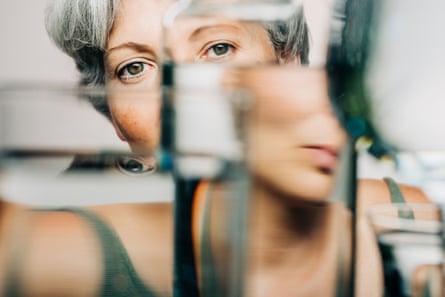
For Emma*, a 52-year-old lecturer, it was a commonplace medical issue that pushed her into a downward spiral of despair. “My cholesterol test came back really high. I was advised to cut back on all the things that make life bearable: French cheese, red wine, crisps. I was already dealing with a belittling new boss at work, much younger than me of course, and trying to cope with my teenage son who was threatened with school exclusion for antisocial behaviour. I wasn’t coping and I felt my temper spinning out of control frequently.
“Everything about me felt wrong. My hair was wrong, my clothes seemed to belong to another woman entirely, my friendships became tense and fractious. Looking around at other women my age, it seemed like everyone else was coping just fine. I felt like a failure. On my darkest nights, I questioned what the point of being alive was. Counselling, suggested by my GP, did help me to move forward and make some positive plans for my life. I’m grateful that I had it, though I would also suggest that it has its limits. The things that hit you at mid-life are so hard, on a physical and practical level. No amount of talking is going to make a terminally ill parent well again, or give you back the energy you had at 35.”
For context, women of all ages are more likely than men to be living with common mental health problems (defined as being less disabling than major psychiatric disorders; depression, anxiety, panic attacks and OCD fall into this category). In England, around one in four women experience a common mental health problem in any given week, compared to nearly one in six men, according to the NHS. Suicide rates for women peak at age 45-54 – the perimenopause and menopause years. (However, suicide is about three times more common among men than among women in England and Wales.)
A lack of understanding about the impact of hormones on mental health is also driving an increase in mental health problems. Pooja Saini, professor of suicide and self-harm prevention at Liverpool John Moores University, has co-authored research in this field. “Medical training has historically given very limited attention to menopause and often focused even less on prescribing and managing HRT. The legacy of old, widely publicised data, which suggested an increased risk of breast cancer with HRT, has had a lasting effect on prescribing behaviours. And the medical model has traditionally interpreted women’s midlife symptoms – such as low mood, fatigue or anxiety – as psychological, related to depression or stress, rather than recognising them as physiological symptoms of hormonal transition.”
Saini’s team undertook research with the Newson Clinic, a private menopause clinic in the UK, which revealed that approximately one in six perimenopausal or menopausal women experience suicidal thoughts that are not being identified or treated effectively. The study was published in BJPsych International and analysed data from 957 perimenopausal and menopausal women. “This generation of midlife women are doing more than previous generations in terms of working and caregiving, and experiencing greater cumulative pressures. Taken together, these intersecting factors, and persistent under‑recognition of menopause‑related distress in healthcare, appear to be driving the rising suicide risk observed in midlife women,” she says.
Saini also highlights the reason why more women don’t seek help: the lack of access to affordable resources. Although NHS England talking therapies usually aim to start within six weeks of referral, waiting times vary by region, with some reporting a two- to five-month wait. Private therapy is expensive – typically between £50 and £100 per session. “We need more accessible, community‑based services designed with women’s lived experiences in mind,” Saini says. “Strengthening GP and primary‑care training so hormonal symptoms are not misread as purely psychological is essential, but equally important is expanding local support that women can access without stigma or long delays.”

De-stigmatising poor mental health was something that inspired the BACP to launch a campaign, No More Stiff Upper Lip, on the back of its recent statistics. It features fiftysomething women sharing their positive experiences of therapy. Shot by Rankin, a great photographer but definitely male, it has a daytime TV makeover vibe, not helped by the fact that some of the women are holding lipsticks, confusingly, custom-designed by the BACP.
The response from BACP members has been, shall we say, mixed. “I hate this viscerally. It feels so reductive and stereotypical. By all means let’s invite a conversation around the demographic, but the lipstick framing is awful and the connotation of ‘putting on a face’ is the antithesis of the authenticity and congruence that are hallmarks of counselling,” wrote one on the association’s Facebook page. “I initially thought this was satire,” wrote another. But a few responded positively. “Great campaign. Women need to know they’re not alone.”
Unusually, the BACP was forced to issue a statement addressing the negative comments on its Facebook page. Were they surprised by members’ reactions? “We can’t be all things to all people,” says Morrison. “The lipstick is a symbol of the challenges that women face in keeping a stiff upper lip and holding everything in without seeking support. We recognise that the very bold imagery may have been a barrier to understanding what the true purpose of the campaign was.”
The polarised response does reveal a wider truth about this age group, though. One reason why women over 50 feel invisible is because it’s an uncategorisable cohort. A gloomy article in the Economist, Why Gen X is the Real Loser Generation, opined: “there are few podcasts or memes about gen X”. Somehow, the large number of brilliant gen X writers, broadcasters and comedians seems to have passed them by. From The Rest Is Entertainment, co-hosted by Marina Hyde, to The Guilty Feminist’s Deborah Frances White and Miranda July, gen X’s malaise surely isn’t caused by invisibility. If anything, the problem might be that there are so many disparate, noisy women refusing to slink into the shadows like previous generations.
Writer and teacher Susannah Conway, 53, believes that women in their 50s are doing what they’ve always done: blazing a trail for future generations. “We’re constantly trying to change things. Look at periods: everyone’s talking about their luteal phases now. That’s because we paved the way for being more open about that stuff. Same with menopause.”
Conway has had her own struggles: “I had seven years of perimenopause hell. I nearly collapsed in M&S on one occasion from lack of sleep. HRT sorted out my symptoms within a month. They used to call this life stage ‘the Change’. And I do feel changed. Part of it makes me feel more sure of myself.”
But the emotional fallout has been tougher to navigate. “I’m not married. I choose to live alone, I choose to be single. I don’t have kids. Yet I live in a society that wants me to believe that I’m washed up because it only values being young and pretty.”
Conway’s superpower is bringing people together in online communities. We first met over a decade ago on a course she ran about navigating grief. Recently, struck by the number of conversations she was having with women feeling isolated and confused at this life stage, she launched a digital community, Unravelling Midlife. After 200 women signed up, membership was closed. “We have so much more power than we realise,” she says. “We’re not just sitting around going, ‘Oh, I wish I was younger!’ We’re talking about what we’re looking forward to in the future and finding value in what we have now. Society wants to hustle you from menopause straight to retirement – but we’re not there yet!”
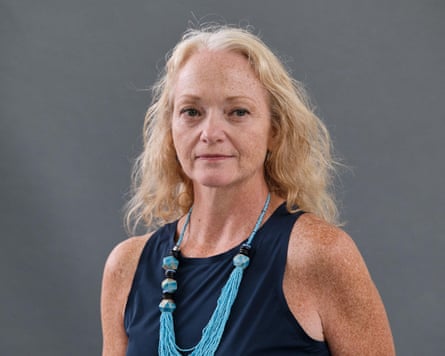
Therapist and author Stella Duffy agrees that societal pressure is having a corrosive impact on older women. “You cannot win in a society that values women by their fertility. Either you’re rubbish because you didn’t manage to be a mother, or you’re a rubbish mother. If you’re in the workplace and you have to leave early to look after your children, you’re a bad worker. Then, when you hit menopause, you’ve become infertile in a pro-natal culture. Instantly, we lose value.”
Just at the very worst juncture, our bodies betray us. “You can’t hide a hot flush and you can’t hide a sweat. You can’t control your body – but we live in a culture that wants us to pretend that we can,” says Duffy who has had breast cancer twice, not to mention a ruptured brain aneurysm. “And, of course, menopause is the most amazing wake-up call to mortality. We’re calling it midlife but it definitely isn’t. It’s mid-adulthood. And for anybody who’s got any other intersections around race, ethnicity, lack of money, disability, any of it, it just really bites.”
Sally Chivers is professor of English literature, gender and social justice at Trent University, Ontario, Canada. An expert in ageing and society, she is the author of The Silvering Screen, which explores cinematic depictions of older people. “Inequality is a frequently overlooked factor in struggles with ageing. People say things like, ‘We all age,’ and ‘Ageing is the one universal,’ as if we’re all having the same experience. It ignores the fact that advantage accumulates over the lifespan, and so does disadvantage.”
It’s certainly true that by the time you hit 50, the illusion that we’re all heading for the same vague but distant idyllic retirement starts to fall apart. I’ve already seen enmity between acquaintances. One person has inherited a family fortune and has an index-linked pension, while another is living in a post-divorce flatshare and has seen their copywriting job decimated by AI.
“There is a move among advertisers to think about women going through menopause as a target market,” says Chivers. “It’s viewed as a condition that you can buy products for so you can do better. This is putting new pressure on women.” At the same time, advertising visuals are caught in a time warp, churning out imagery of women in their 50s that has little connection with reality.
Chivers points to adverts for “older” people, a homogenised group representing anyone aged between 50 and 100. “They always use the whitest people, and I don’t just mean their skin colour. They will have white hair and be wearing white clothes, and if it’s a luxury ad, they will be on a white cruise ship staring at fluffy white clouds.” Adverts for homes for “over 55s” are some of the worst examples, featuring residents who look closer to 90. It’s easy to forget that Jennifer Lopez, Kate Moss, Victoria Beckham and Angelina Jolie are all now in their 50s.
Duffy, who has written 17 novels, expresses her frustration with the one-dimensional representations of this life stage, and the silence around what happens after menopause. For her academic research she has interviewed “women who were black, white, mixed heritage, queer, working class and disabled. They were mothers, non-mothers and stepmothers. All of them found their post-menopause far easier than they were expecting – and they really came into themselves in their late 50s and early 60s.”
Conway sounds a similar note of optimism. “What we go through, it’s not a midlife crisis, it’s a reckoning. I turned 53 last week, and how am I celebrating? I’m getting another tattoo. It’s not about how I look, it’s about how I feel. And how I feel is, I feel exactly like myself.”
* Emma’s name and identifying details changed.
In the UK, the charity Mind is available on 0300 123 3393 and Childline on 0800 1111. In the US, call or text Mental Health America at 988 or chat 988lifeline.org. In Australia, support is available at Beyond Blue on 1300 22 4636, Lifeline on 13 11 14, and at MensLine on 1300 789 978