2 months ago
71
2 months ago
71
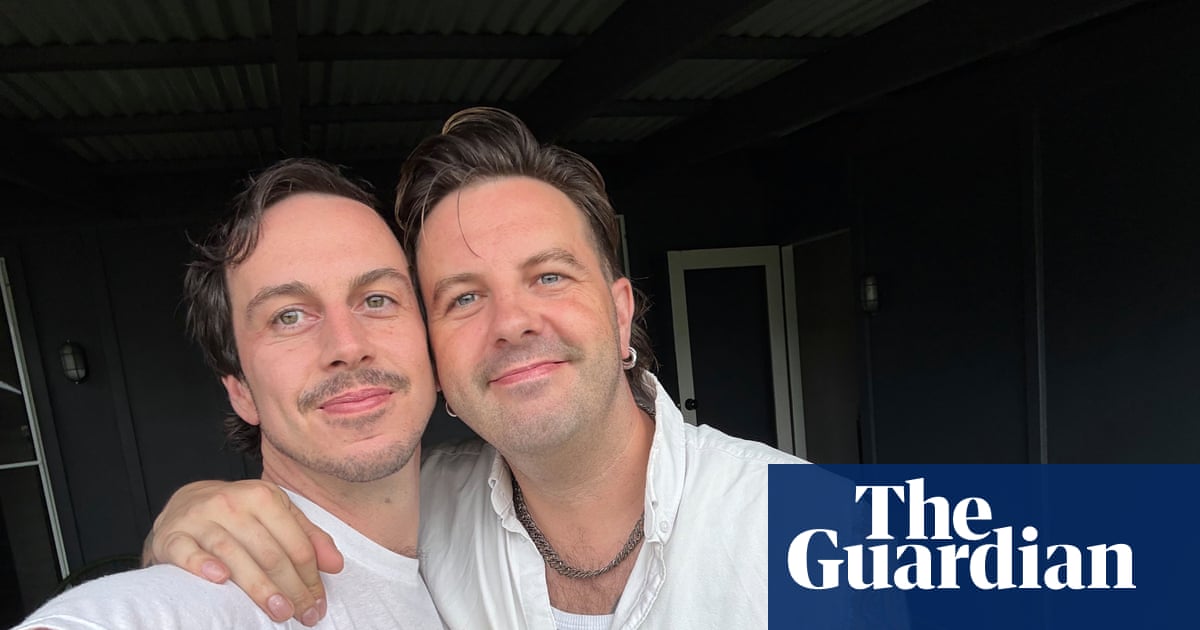
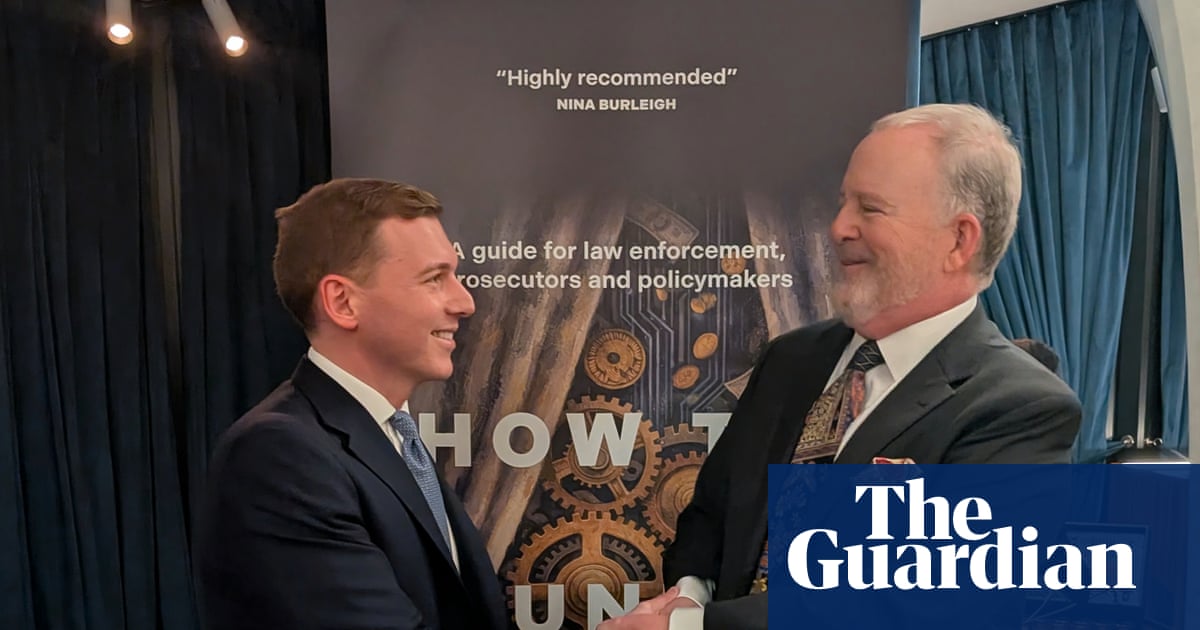
‘From the get go, T was incredibly transparent about the fact that he wants a completely subservient woman he can control. He didn’t even necessarily know that what he was saying was offensive.” Ben Zand is a 35-year-old documentary-maker, right in the eye of the millennial cohort that sees the contours of the manosphere, takes it seriously, but understands its logic for what it is: misogynistic neofascist swill. Through his independent production company, Zandland, he has made films about “incels”, QAnon and looksmaxxing – along with tangential matters, such as: what does a Mexican drug overlord have for breakfast (in the Bafta-nominated film he made for Channel 4, Kingpin Cribs).
Inside the Incels Who Rent Girlfriends is an intense one-to-one with T, a British 27-year-old with a good job, who over the past eight years has spent £50,000 renting girlfriends. In the film, his voice is disguised and he is wearing an Anonymous-style mask, which does nothing to offset the menace of the whole picture. He is, as Zand says, completely open about what he wants: a girlfriend who always says yes. I speak to him with his camera off but he’s using his regular voice, so he sounds – well, obviously – much more human and more vulnerable.
Your first feeling for him might be pity at how hapless he sounds, thinking he can bring his feelings to what is plainly a transaction. “You can really like some of the hired girlfriends. I did, sometimes, and they just disappeared. And that sucked. She just stopped doing the girlfriend experience and I never knew why.” Or you might notice how lost he is, in the unmapped territory of another person: “With the rented girlfriends, you never know whether they’re acting or they really mean it. It’s quite confusing and stressful at times.”
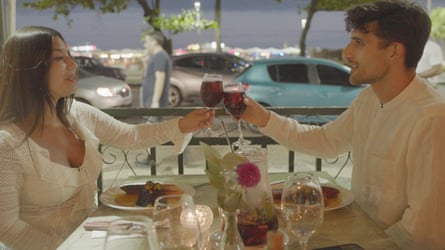
Zand says at the start of the film that he expected this to be about sex, and in the end found something much darker. I expected it to be about inadequacy and loneliness, and had the same experience: I found it much darker.
T estimates that over the years, 80% of his interactions have been online, 20% in real life. He has experimented with an AI girlfriend: “I wondered whether it would help tackle my feelings of loneliness and need for companionship. But – don’t laugh – I wanted a girlfriend for the sexual side of it as well.” But it’s case-by-case whether sex is on the table with the real-life rented girlfriends. Sometimes it is, sometimes it isn’t, “but those relationships don’t last very long”.
You might rent an online girlfriend for a week or a month, whereas “in real life, because it’s so much more interactive, you wouldn’t have time for a whole week, so you’d be more likely to rent for a day or two”. They would do regular stuff: go out for lunch, go back to her place, watch a movie. He has engaged sex workers as well, and concludes: “I guess if you look at it as different levels, you’ve got the real partner, who is obviously top tier. And then at the bottom you’ve got the sex worker, who you absolutely know is just doing it for the money. In the middle is the hired girlfriend, who you’re not fully sure sometimes.”
You can think what you like about the commodification of sex, the commodification of companionship, that grey space where T is escaping into the fantasy that his rented girlfriend is really feeling the emotions he has paid her to act out. But the more T talks, the more it becomes clear that what he really wants is a girlfriend with no autonomy at all.
It starts quite mildly: he describes renting a girlfriend as “like being on vacation: they’ll always be happy, they’ll always be in a good mood”. He says he has had problems with online rentals based in the US or Asia, because the time zone means they don’t respond fast enough. To Zand, he says straightforwardly that he wants a girlfriend who never says no. But there’s an even more telling moment when Zand brings in three real-life women to talk to T, and try to get to the bottom of why a real-life partner eludes him. He says he wants them to reply to him immediately, and one woman asks: what if she’s busy? And he replies: “Well, within reason. She might need to go to the toilet, or have a drink of water.” The woman in this fantasy is no more complicated than a Tiny Tears crying doll; you put water in and the water comes out, and that’s the range of her allowable agency.
It’s quite a lurching realisation that this guy, who sounds quite personable and shy, who might remind you of a piece you read recently about rejection sensitive dysphoria, is actually pathologically controlling – which leaves you with two possible conclusions. Either he’s just not a good person – coercive, domineering, psychologically a danger to women – or he is a good person, whose online existence has led him so deep into a world where you can buy fake things that you are no longer fit for the world of real things. If it’s the first, it’s dark; but if it’s the second, it’s dark and incredibly sad.
Zand, toggling between the same interpretations, was struck by a different moment in the film. He introduces T to one of the three women and T “slaps his legs and gestures for the woman to sit on his knee. That exemplified it all – that there’s a rulebook he’s read on the internet of what it means to be an attractive guy in the world. He’s trying to fulfil a role that’s all wrong.” Of the three women T speaks to, two choose to sit as far away from T as it’s possible to be while remaining on the same sofa. One looks as if she’s actually burrowing.
Given that this isn’t his first manosphere rodeo, Zand is unsurprised by a lot of its rules, which to me sound ridiculous (T, wondering aloud why he couldn’t get a girlfriend in real life, says he has “no height issues”, as if women are walking around making a constant vertical analysis of their surroundings, discarding anything shorter than a young tree). “A lot of guys in these spaces have a metric of what they think an acceptable guy is: someone who’s over 6ft 2in, looks a certain way, has a certain amount of money. One thing T said to me a few times is that he was confused because he meets all those criteria – he’s 6ft, or nearly; he has a good job, gets paid well, and he can’t understand why he’s not getting what he deserves. Why am I not getting access to the girlfriends?”
For sure, the querulous feeling of being denied what one deserves, dating-wise, predates the internet. What’s different now, says Zand, is: “There’s a huge amount on subreddits or Discord forums, where all these people with similar issues are convincing each other of a kind of science to it all. Have the right mathematic measurements, tick the right boxes, earn the right amount of money and something will be unlocked. Then everything will be OK.” There’s a gamer mentality to it, and a lot of mutual reinforcement, with none of the real-life interactions where your views might be tested or checked. “A guy of a certain age, who might have found it difficult going through school, as many people do, and now spends an enormous amount of time on Discord, goes to bed ridiculously late, ends up unable to go out and spend time with people, and if they ever do, aren’t able to be transparent about where their views are going and what they feel. So they have a kind of double life.”
For the first time last year, T had a real-life girlfriend. I ask him how that compared with a hired one; there must have been some ways in which she excelled, other than being cheaper. “Maybe one of the things that was nice and surprising is when you date a real person, they have their own family and friends and you become a part of their life. My girlfriend had a nephew who was about three years old. She would send me stuff that was happy family time, and a rented girlfriend wouldn’t really do that. They’re happy to show you them, but they don’t want you to see outside of that.” She broke up with him when she found him too controlling.
At the end of the documentary, T resolves to stop renting girlfriends. While he thinks having a real girlfriend might have started to change his perspective, he sees having taken part in the show as being key: “I don’t feel without the documentary happening, I would have had the strength or courage to make that step.”
“I think the act of him coming to meet us,” Zand says, “shows that he is redeemable. There’s very few people I meet that I think aren’t redeemable. I don’t like the idea in general, but also, the way they explain what it’s like to be them, so often they sound like they know they have a problem that they don’t want other people to have.”