1 month ago
85
1 month ago
85
Many of us are still getting our heads around the price increases and tax tweaks that took effect this month, but you might want to give some thought to next April.
Some big changes to pensions, savings and investments are coming down the track, and there are things you can do now and in the coming months to get ready for them.
One change that is very much front of mind for a lot of older people – and is keeping financial advisers and wealth planners very busy – is Rachel Reeves’s “inheritance tax raid” on unspent pension money that takes effect in just under a year’s time.
This has prompted many people to take action to avoid being landed with a bill that, for some, could run into five or six figures.
Bringing unused pension pots within the scope of inheritance tax means that what was once seen as a tax on only the wealthiest “is now firmly a middle‑income issue,” says Rachael Griffin at the investment firm Quilter.
Nicholas Nesbitt, a partner at the accountancy firm Forvis Mazars, says that for families, “the time for planning is now. We’re seeing clients shifting their planning strategies, increasing retirement spending and accelerating gifting to cut the tax bill”.
What’s happening?
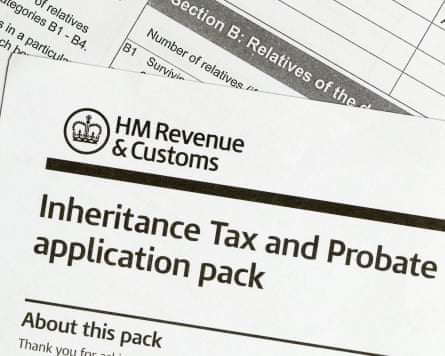
At the moment, pension savings are not normally part of someone’s estate for inheritance tax (IHT) purposes. But from April 2027, money left in a defined contribution (AKA money purchase) pension after your death will be pulled into the IHT net. Most workplace pensions and all private pensions are this type.
IHT is a tax paid on someone’s assets after they die if they leave enough to go above a certain threshold. The standard IHT rate is 40%, and it is charged only on the part of the estate that is above the tax-free threshold, which is £325,000. (There is an extra allowance for homes.)
The change means “unused” pension savings could be taxed as part of someone’s estate if they help take the total value of the estate over the IHT threshold. Unused savings are money that hasn’t been used to claim an income, such as by buying an annuity.
The IHT exemption for spouses or civil partners will continue to apply, so everything can be left to them without a bill. But other beneficiaries could face tax.
What should I do now?
There are various options for those who might be affected:
Spend more money For those well-off older people who can afford it, probably the easiest way to mitigate or reduce a potential IHT bill for their heirs is to spend more pension cash now – on themselves and/or their relatives.
Like many financial planners, Will Stevens, a partner at the wealth manager Killik & Co, has seen an increase in the number of older people withdrawing money from their pensions for the purpose of treating their family – for example, splashing out on a big holiday or taking everyone out for dinner and a show.
But everyone’s circumstances are different, and it is vital to ensure you have enough money to support yourself through the later years of retirement.
Buy an annuity One way to reduce the amount of unused money in your pension pot is to use some of it to buy an annuity. This is a product that gives you a regular, guaranteed income for the rest of your life (or for a fixed term). You can spend the money as you choose – including making a regular gift out of the income (see below).

Sales of annuities have soared: 2025 was a “record-breaking” year, and they now offer better value than they used to.
However, you will need to consider whether you want an annuity that covers just you (a single life annuity) or one that provides an income for your spouse, civil partner or another dependant after you die (a joint life annuity).
You will also need to choose whether you want a level annuity, which will pay you the same income each year, or an escalating one, which will provide an income that increases every year.
This week, a 65-year-old who uses £100,000 of their pension savings to buy a basic single life level annuity could secure an annual income of about £7,800, rising to about £8,500 and £9,700 respectively at age 70 and 75.
Give away money The new rules have triggered a wave of “gifting”.
There are various allowances people can use to give tax-free gifts. For example, you can give away assets or cash up to £3,000 in every tax year without them being added to the value of your estate. That £3,000 can be given to one person or split between several people. And you can carry any unused annual exemption forward to the next tax year – so two grandparents could give someone £6,000 each one year, says Stevens.
A separate small gift allowance lets you give as many gifts of up to £250 a person as you want each tax year, as long as you haven’t used another allowance on the same person. There’s also an allowance for tax-free gifts to people getting married or civil partnered.

In addition, the “potentially exempt transfer” rules allow you to give money or gifts of any amount or value to anyone, which will not attract IHT as long as you live for seven years after giving them.
Starting to give gifts out of regular income is another option. You can give away as much money as you want as long as it comes out of a regular income, rather than capital, and does not affect the giver’s standard of living. “Examples of this could include paying school fees for a grandchild or contributing to a Junior Isa,” says Helen Morrissey at the investment platform Hargreaves Lansdown. This isn’t a straightforward area, so you may want to take advice.
Pay down a grandchild’s student loan Amid the concern about millions of graduates saddled with ballooning student loan debts, you may want to help pay off a grandchild’s loan. “It’s a solution to two people’s very different problems at once,” says Stevens.
It is very easy to pay money off your child or grandchild’s student loan. You can make a repayment towards someone else’s loan without even signing in to their online account: you just need the surname and customer reference number.
However, if you do opt to do this, it would be considered a gift under IHT rules, Stevens says: even if you are not directly giving them money, you are paying off a debt they owe.

Take out life insurance Financial advisers are reporting a surge in sales of a type of life insurance that can be used to pay off a potential IHT bill and thereby avoid the need to sell the family home or other assets to meet the liability.
Whole of life insurance guarantees a payout to your beneficiaries on your death, regardless of when that happens, provided you keep paying your premiums, says Kevin Carr, director at the platform Protection Review.
There are various types of policy and it can be pricey, but Stevens says it needs to be something you know you can continue to afford as you get older. “If you end up missing payments at a later date, you can lose your cover, and if [that happens], you lose all the money you’ve made in payments so far,” he says.