5 hours ago
9
5 hours ago
9
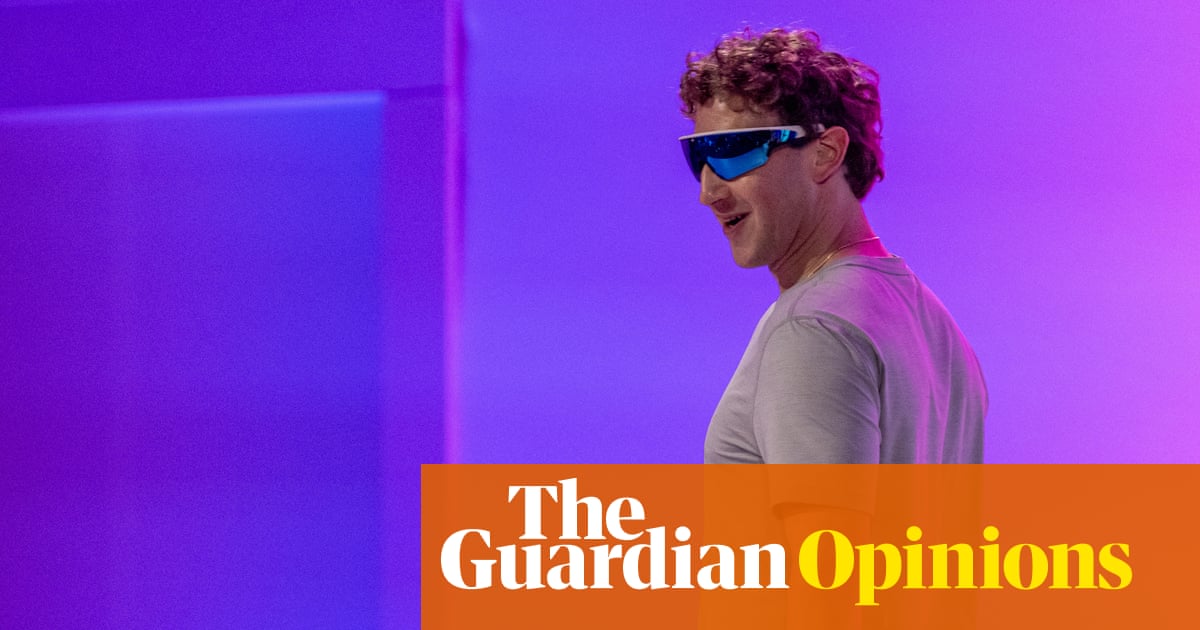
Mark Zuckerberg published a lengthy essay on Monday detailing his views on artificial intelligence and announced several plans for how Meta would develop the technology in the future. The CEO’s essay went online the same day as Meta released a new, open-source AI model that seeks to rival Anthropic and OpenAI’s products called Muse Glimmer.
Over the course of more than 6,000 words in a post titled “The Future is for Everyone,” Zuckerberg addressed a range of topics related to AI that included datacenters, government regulation, cybersecurity, the creation of bioweapons, labor market disruption, surveillance powers and more. The essay presented a utopian vision of AI as a personalized “superintelligence” – using the word 60 times.
“Some argue that superintelligence itself or a small set of experts who control it should decide what is best for humanity. We disagree,” Zuckerberg wrote.
Central to Zuckerberg’s post was an argument for free-to-download, open-weight AI models – like the kind Meta develops – and a lack of government regulation of artificial intelligence. Zuckerberg’s stance sets him and Meta apart from industry leaders OpenAI and Anthropic, which have argued that open-source AI is dangerous. The two frontier labs have released proprietary AI products and argued that cutting-edge models should remain tightly controlled by the companies that build them.
Zuckerberg’s post comes as Silicon Valley is engaged in a heated debate over how to regulate AI development, which has involved the creation of a secret White House framework for testing new models and an ongoing debate over whether to restrict the use of Chinese-made open-source AI. As Anthropic and OpenAI have surged ahead in the AI industry, competitors such as Meta have also grown wary of their dominance and sought to position their open models as alternatives.
Zuckerberg framed Meta’s pursuit of open-weight AI as a more democratic version of the technology and one that will create a “balance of power” between users, whether that involves states, companies or individuals. His plans also called for letting users decide what “values” an AI model should have, as opposed to a company encoding it with rigid guardrails and beliefs.
“If the power of superintelligence is held by a small number of individuals, businesses, governments, or AI itself, then that will naturally lead to outcomes that are less favorable for everyone else,” Zuckerberg wrote.
Tech leaders have made a cottage industry out of releasing broad, vaguely philosophical treatises on artificial intelligence, which tend to double as marketing materials for their own companies and products. Anthropic’s Dario Amodei, OpenAI’s Sam Altman, Palantir’s Alex Karp and the venture capitalist Marc Andreessen have all written long manifestos on the virtues and dangers of the technology.
In addition to weighing in on open source models, Zuckerberg also called for accelerating the buildout of AI infrastructure such as datacenters. The massive development of resource-hungry datacenters has become a divisive issue in the US, with rapidly growing public opposition and calls from politicians to issue moratoriums on their construction. Zuckerberg wrote in the essay that Meta would create a fund to invest more in local communities near datacenters, as well as cited an example from Louisiana where some teachers received a $50,000 bonus check as a result of increased sales tax revenue from the company’s infrastructure investment.
On government testing of AI models for cybersecurity risks, a tangible concern after rogue models have hacked outside organizations in recent months, Zuckerberg agreed that companies should share “intermediate training checkpoints and technical staff” but provided few details. He broadly warned that regulation would cause China to overtake the US in the AI race, where he claimed it already has an advantage in terms of building infrastructure.
after newsletter promotion
“Any policy that slows American model releases – even by a month – could add significant risk to American leadership while letting foreign models race ahead,” Zuckerberg.
Many of Zuckerberg’s policy plans in his essay lacked detail or reiterated previous claims about the abundant wealth and prosperity that AI would create, such as touting that everyone would have “invention superpowers” to create new businesses. His version of the future also is inherently tied to Meta products, such as the company’s AI-enabled smart glasses.
“Everyone will have an exceptionally capable personal agent that understands you, your goals, and everything you care about,” Zuckerberg said. “You’ll be able to interact with your agent through any device, including your glasses to keep you present in the moment with the people you care about.”
On thornier issues such as loss of jobs from AI, autonomous weapons and government surveillance, Zuckerberg mostly brushed them aside. Law enforcement and the military already possess greater intelligence-gathering powers than the average person, Zuckerberg argued, and this would continue with access to AI. Companies may shrink in size due to AI, he conceded, but the technology would create new economic opportunities.
“People will have to adapt, and this will be challenging,” Zuckerberg said about labor disruption from new technology. “But the more that everyone has a personal agent that is superintelligent at teaching us new skills and helping us adapt to change, the smoother this will be.”