3 months ago
125
3 months ago
125
In many ways, it looks like any other primary school. There is a library, a cafeteria, classrooms, and a noticeboard celebrating the star of the week. But it is different in one crucial respect: in 25 years, this London alternative provision has not excluded a single pupil.
As Labour pushes to bring more children with special educational needs and disabilities (Send) into mainstream schools and keep them there, questions are emerging about what this inclusion should look like in practice. Staff at TCES Nurture primary in Newham, east London, believe their model offers some answers.
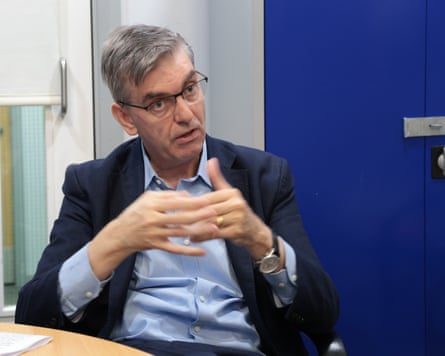
“We take children that society has given up on,” says Thomas Keaney, the founder and chief executive of TCES Group, which runs five schools in London as well as outreach, training and therapy services. “Many have been out of school for up to two years and have, on average, three permanent exclusions.”
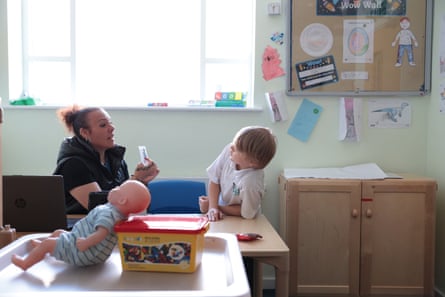
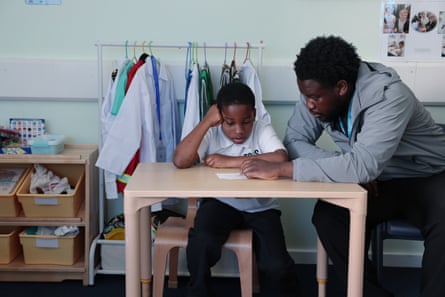
At TCES, pupils are taught in small classes, with therapy embedded into daily teaching rather than delivered separately. Staff say this allows children to rebuild confidence and trust after years of struggle in mainstream settings.
The school operates around three core principles: never exclude; ensure every child has a trusted adult by design; and work with families as partners. Demand has been so high that TCES is now building a second primary school in north London.
“When you look at who is being excluded, it’s always the same children,” Keaney says. “Disabled pupils, Black and minority ethnic children, Gypsy and Traveller children and those living in poverty. This is a social justice issue.”
While Keaney welcomes Labour’s emphasis on inclusion, he warns that the government’s £200m Send teacher training programme will fall short without deeper reform. He argues that training alone risks producing a “symbolic” version of inclusion that leaves children’s needs unmet.
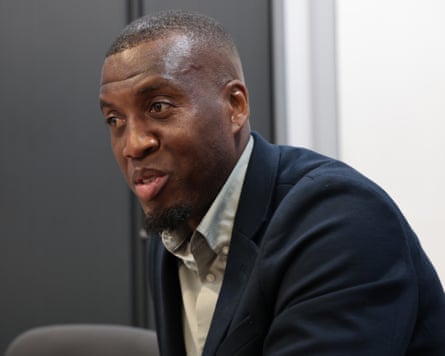
Ricardo Hylton, the headteacher at TCES Nurture primary, says the difference lies in how support is delivered. “In previous schools, a therapist would take pupils out for one-to-one sessions. Here, therapeutic principles are built into how teachers deliver lessons. We use daily intervention guidelines that shape how staff work with children.”
Simply placing another adult alongside a pupil makes little difference if teachers do not understand how a child processes language, sensory input or classroom environments, he adds.
In a year 3 classroom, two pupils who are safeguarding champions describe the contrast with their previous schools. “They help with speech and special needs here,” says Frankie. Ian puts it more bluntly: “They don’t just kick them out.”
Asked what else they like about the school, pupils talk about football, reading, celebration assemblies and the “dojo shop”, where points earned for effort and good behaviour can be saved or spent on small rewards. Keaney says these systems are deliberate. Giving responsibility and status to children who have often been punished elsewhere, he argues, can be a powerful way to re-engage them.
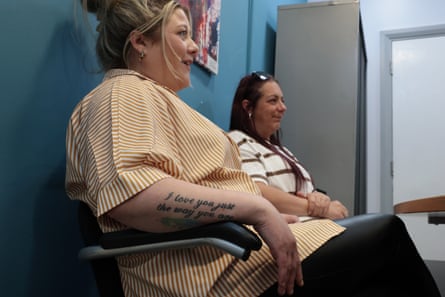
The impact is felt at home, too. Two mothers of pupils at the school, Bobbie and Jade, describe a dramatic reduction in stress.
“The absence of constant calls from this school is huge,” Bobbie says. “At our previous school I would see the number and panic. I was called in daily, climbing fences to get him down. Here, I rarely get calls. We are not living on edge.”
Jade recalls her son attending a previous school for just one hour a day, in a single room with multiple staff and little social contact. “All areas of my son are understood in this school,” she says. “And if they’re not, they work with me.”
At a time when many schools are fundraising simply to plug gaps in basic provision, approaches like this can be dismissed as too costly or unrealistic. But Keaney rejects that outright.
“This isn’t a financial issue,” he says. “But it does require investment in knowing how to do this properly.” What is needed, he argues, is a cultural shift after decades in which schools have been shaped to exclude children.
Instead of exclusion, Keaney advocates a “pause” before removal, exhausting low-cost interventions first, giving disengaged pupils responsibility rather than punishment, and combining firm boundaries with therapeutic understanding. He says schools need hands-on support and regularly staffed helplines to help change practice.
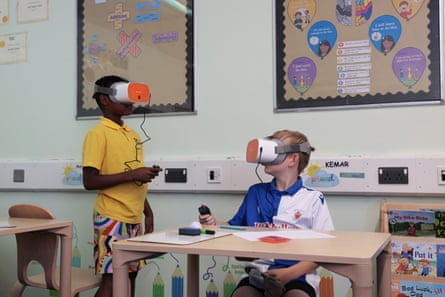
He is wary of Labour’s push to expand Send provision inside mainstream schools. Done badly, it risks becoming “exclusion by another route”, he warns.
“Children can’t be parked at the back of the school, out of sight and out of mind.” He says inclusion must be whole-school, not segregation under a different name.
Staff at TCES are clear that the cost of failing to intervene early is ultimately far higher, pushing children towards long-term exclusion and, for some, the school-to-prison pipeline.
Keaney ends with a recent case shared with visiting officials: a non-speaking autistic child who arrived at the school violent and overwhelmed, leaving his mother covered in bruises. Soon after starting at TCES, she told the room: “I have not had a meltdown in six weeks. He used to have six a day.”
As the meeting ended, her boy walked in, took her hand and said: “Home, Mum, home.” He now speaks in three-word sentences. For Keaney, it was the clearest illustration of what inclusion looks like when done properly.