2 months ago
82
2 months ago
82
One rainy afternoon last winter, sitting under a blanket with a cup of tea, I found myself Googling paintings by Chaïm Soutine. It’s a pastime I’ve indulged ever since visiting an exhibition of his portraits of hotel staff on the French Riviera during the 1920s – paintings that combine such a mixture of tenderness and debasement that it’s as if his brush is kissing and beating his subjects at the same time.
I flicked through images of hopelessly innocent cooks and bellboys, with complexions the colour of raw sausage and ears that look as if they have been brutally yanked. And as I did, I came across a review of the very show where I had first encountered Soutine’s works. Ah, I thought, looking forward to luxuriating in literature about his particular genius for kindly sadism.
Yet my plans to float away on Soutine’s twisted dreams came to an abrupt halt. For as I read, I realised that the tangled emotions and gnarly moral complexities that make his paintings so intoxicating had been erased from the picture. In their place was a sanitised vision of an artist with a “profoundly compassionate and humane eye” that “sympathetically drifted to the underclass”, who made paintings that celebrated “the richness of these otherwise forgotten lives”.
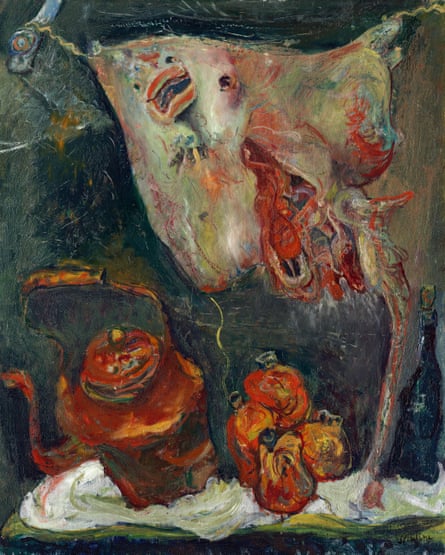
Why on earth, I wondered, would anyone want to reframe Soutine as a saintly advocate for social justice? (While little is known of his life, existing material paints a picture of a complex and difficult man with a profound disdain for the shtetl in modern-day Belarus where he grew up.) After all, this was the very same artist whose skill as a painter-cum-butcher inspired Francis Bacon’s magnificently nightmarish visions.
Like so many great artists throughout history – from Hieronymus Bosch’s holy perversions to Paula Rego’s knotty psychological dramas – it is precisely by channelling ambivalent emotions that Soutine is able to speak to the dark and complicated nature of being human. What makes his paintings of hotel staff so powerful, so moving, is that they mix brutality with affection – and in doing so, invite us to contemplate our own discordant drives and emotions. Few of us are outright psychopaths, after all, but all of us must reckon with the fine line between desire and exploitation.
I soon realised that the review itself was entirely unremarkable, insofar that it was typical of a way of discussing art that has become culturally ubiquitous. For the past decade, we have been living through an era in which art is required to conform to a moral code. Dead or alive, artists are increasingly expected to model righteousness and empathy, and their work asked to promote values that are feminist, anti-racist, anti-homophobic and committed to accessibility and inclusion.
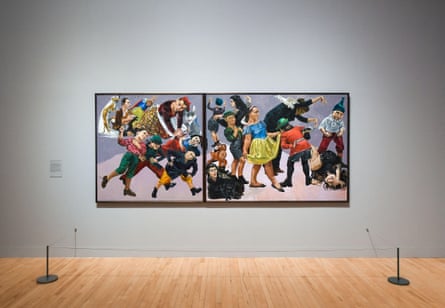
This “moral turn” is behind the tendency for exhibitions, reviews and books to edit artists’ biographies, retroactively framing them as social justice advocates and exemplars of community spirit. It can also be seen in the panic that ensues when institutions fear an exhibition may fail to explicitly promote these values, in some cases leading to their postponement or the removal of works.
Take, for example, Tate Modern’s Andy Warhol show in 2020, where the great vampire of the New York scene – a man who fetishised electric chairs, filmed fame-seekers high on drugs, and made art from an image of a young woman falling to her death – was described in an exhibition wall text as an artist who “provided a safe-space for queer culture”.
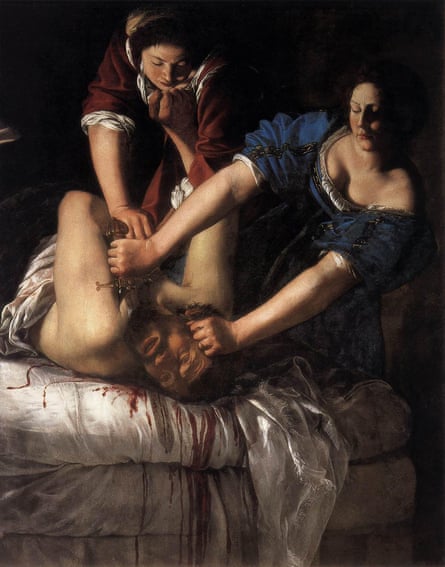
Then there is the baroque painter Artemisia Gentileschi, whose work has come into vogue in recent years. Her most famous work, Judith Slaying Holofernes (c 1620), which depicts the biblical heroine cutting off the head of an Assyrian general, is now widely interpreted as an autobiographical response to her own rape by the painter Agostino Tassi. When an exhibition of Gentileschi’s work was shown at the National Gallery in 2020, documents from Tassi’s trial for rape were placed in the opening rooms, positioning her assault as a key to understanding her work.
Who does this kind of historical revisionism serve? Not Warhol, whose art remains so charismatic precisely because of its amorality. Not “queer culture”, whose leading lights are reduced to moralistic teaching aids. Not female artists, whose works are seen as indivisible from their private lives. (The primary evidence for Gentileschi’s painting being autobiographical is that the artist appears to have based the figure of Judith on herself. Yet she often did this, because of the prohibitive cost of hiring models and the social conventions against women doing so.) And most of all, not audiences.
Because yes, the principles that underpin art’s moral turn are absolutely worth insisting upon in our personal and professional lives, and fighting for in political governance. But if we apply these same principles to evaluating all art, we compromise our ability to think critically and to engage with it on its own terms, in all its glorious ambivalence. Most of all, we lose the ability to be genuinely challenged and transformed by it.
Ambivalence, after all, has its political uses: being plunged into discomfort can push us to question our assumptions and sharpen our thinking. Take the paintings Philip Guston made during the 1960s of Ku Klux Klansmen: cartoon-like dreamscapes in which hooded figures – painted pig-pink in Guston’s childish style – are depicted smoking cigarettes, making art and driving. While Guston was a politically active figure, his paintings do not preach any obvious lesson or convey a clear moral message. Rather than letting viewers off the hook by instructing them what to think or feel, they immerse you in the deeply uncomfortable reality that racism is unexceptional, as much a part of the everyday as cars, cartoons and fags. “We never know what is in their minds,” said his daughter, Musa Mayer, of the images; “but it is clear that they are us. Our denial, our concealment.”
Yet such is the intolerance to anything approaching ambivalence that a touring show of Guston’s work across the US and UK was postponed in 2020. After Black Lives Matter protests following the murder of George Floyd, the organisers decided to delay the exhibition until Guston’s “message of social and racial justice” could be “more clearly interpreted”.
When the show eventually opened in Boston in 2022, then travelled to Tate Modern in 2023, efforts were made to position Guston’s work in the lineage of social justice movements. This hand-holding of audiences, as Paul Keegan noted in the London Review of Books, is indicative of an era in which “paintings and the public can no longer be left alone in a room together”.
Some on the political left may feel queasy about sticking the knife into a cultural model that shares many of their political principles. This is understandable, given that mocking lefty values has proved fruitful in the culture wars, and given the global rise of anti-trans and anti-immigrant views. In such a climate, patronising and reductive interpretations of artworks may seem a worthwhile price to pay for spreading political messages.
But what happens when the shoe is on the other foot? Across the world, the resurgent right is making inroads into the arts. Giorgia Meloni has appointed a rightwing president of the Venice Biennale. The Trump administration has placed allies in senior roles at arts institutions, attempted to block grants to arts organisations deemed to promote “gender ideology”, and taken aim at museums exhibiting work focused on the legacy of slavery. If we insist that art functions as a tool for promoting a limited set of political principles, what happens when an ideology that doesn’t share our values sweeps into power?
Learning to engage with complexity is a necessary skill if we are ever to drag ourselves out of the puerile swamp of the culture wars. But if we continue to reduce art to moralistic soundbites, we will only succeed in stripping it of its capacity to transform us, which would be a huge loss. Art can help us to better understand ourselves, and the world we live in, by expressing those things that words cannot. It exposes us to a vast range of experiences, and asks us to sit with the fundamental ambivalences, moral complexities and conflicting emotions that are a part and parcel of being human.
If only we are encouraged to look, we can often find these qualities in the art that is right in front of our noses – in the psychological chiaroscuro of Gentileschi, the profound voyeurism of Warhol, the troubling dreamscapes of Guston, the tender brutality of Soutine. Now is the time to argue for an art that can help us to feel more, think more, know more: if we don’t, we risk reducing art to mere exemplars of pre-approved ideas, and forfeiting our cultural intelligence.
Rosanna McLaughlin is the author of Against Morality (Floating Opera Press).