2 months ago
109
2 months ago
109
“It was a turning point for Marseille, and it spotlighted the politics of France’s second city. There’s still a lot of things that have been left unsaid, things that aren’t pretty. But it set things into motion too.”
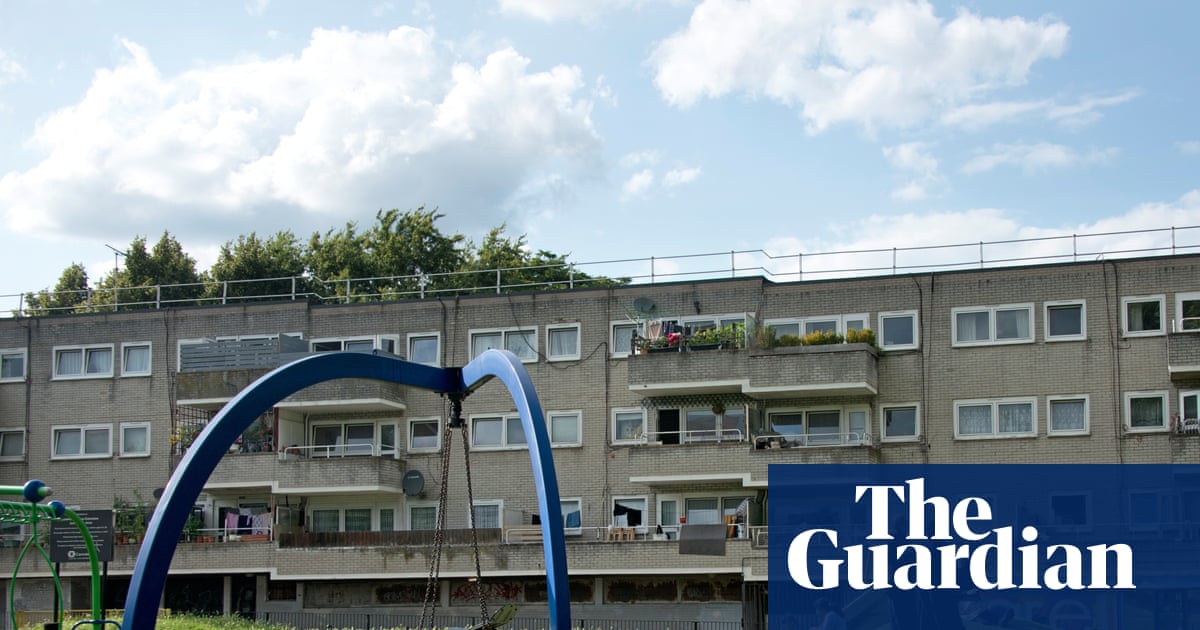
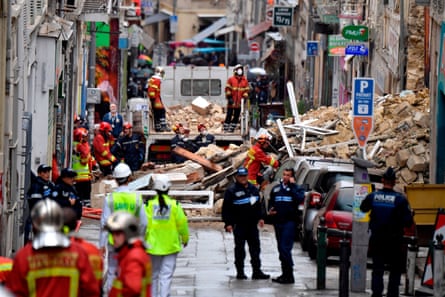
Playwright and director Mathilde Aurier is talking about what has been referred to as France’s Grenfell moment: the collapse of two dilapidated houses on 5 November 2018 on the Rue d’Aubagne in the Noailles neighbourhood, just a few hundred metres from the magnificent Old Port. Eight people were killed, causing a national outcry about urban inequality and social deprivation.
“All catastrophes are ambivalent, because they’re an opportunity for strength in a moment that is completely fractured and difficult,” Aurier continues. “That’s what amazed me: how the residents have been able to join forces, outside what the administration was offering them, and push things forward. What struck me was the solidarity and love.”
The 29-year-old flushes as she pronounces the word “love”, speaking over Zoom from her home in the city. She is referring to the likes of the 5 November Collective that brought 8,000 people out to protest two days after the event or the town criers loudhailing each day’s proceedings from the subsequent 2024 trials in the Marseille streets.
The play she has written and directed, 65 Rue d’Aubagne, is her contribution to this powerful civic response. Anchored in the experiences of Nina, a fictional resident of the building who happened to not be there on the night of the collapse, it spirals into a cacophony of Marseille voices encompassing different aspects of the tragedy. The narrative covers the shell-shocked aftermath, the evacuations of more than 4,000 people living in similarly rundown lodgings, the struggle with rigid bureaucracy and the halcyon Mediterranean existence that was shattered.
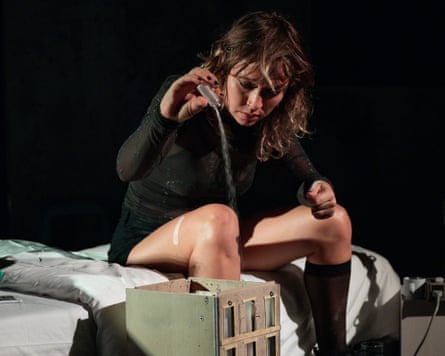
Marseille-raised, Aurier knows the Rue d’Aubagne well; her grandfather still lives a few doors down from the fallen buildings. But a chance encounter in 2022 on a Marseille beach with the woman on whom Nina is based gave her a crucial entry point into writing about it; her survivor guilt embodied the reckoning the city was going through. “When she told me her story, what struck me was the sense of psychological trauma,” says Aurier. “I wanted this to be the through-line of the piece – and how she was reaching out for a kind of healing.”
Aurier supplemented this lucky break with eight months of research, making her way “by ricochet” through a network of survivors and others affected by the disaster. She describes her approach as “documented” rather than strictly documentary as she was intent on also infusing this real-world material with her own sensibility. Hence the lyrical reveries in which Nina communes with her dead Italian friend, Chiara, or surrealist touches like the inflatable crocodile that represents Jean-Claude Gaudin, the long-incumbent mayor of the time, whose clientelism helped choke off the systemic change needed in Marseille infrastructure.
Critical to her approach was the play’s heavy fragmentation, hopping between different perspectives and times, and divided into five sections named for a wave’s breaking phases. “It’s the most chaotic thing I’ve written, which comes from the sense there was a before, a during and an after to this drama,” says Aurier. “I thought it would be interesting if the dramaturgy mirrored the housing collapses – that the form and narration of the play also seem to collapse.”
As she talks, the angle and magnification of her webcam keep shifting, as if, like the playwright, it’s searching for the right vantage point on the subject. But the tumult of the play has an unnerving still centre: the sense of being in limbo, dealing with indifferent officials, grasping at memories of the dead, struggling to give meaning to the cataclysmic.
Aurier has an unlikely lodestar in her exploration of trauma: the outsider British playwright Howard Barker, known for his “theatre of catastrophe”, which has prised open questions of power, violence and patriarchy, often in historical settings. Having written her Sorbonne dissertation on Barker, Aurier came to see him as a catalyst for her later dramatic work. “There’s something tough in the purity of his language. At the same time it’s very English – cynical and biting and satisfying. And also how he alights on strong female figures and approaches the subject of women’s bodies and other issues.”
65 Rue d’Aubagne is her third produced play, after her debut about the relationship between Salvador Dalí and his muse Gala, and a follow-up set in a children’s care home about the transition out of adolescence. The common thread through her work, Aurier says, is catastrophe. Was there a specific event that burned such a strong preoccupation into her? She doesn’t want to boil it down to a single thing. “Being a woman,” she says, flashing a dazzling smile. “And all the things linked to the fact of being a woman.”

A TV series of 65 Rue d’Aubagne is in development – it will expand the story’s scope to the court trial that took place after Aurier finished writing the play. Next to the vehemence of the public response, the verdict was not “up to scratch”, says Aurier. She points to the light prison terms, many under house arrest, and weak fines for the landlords and building inspectors involved.
The national and regional schemes to assess Marseille’s housing stock announced in the disaster’s wake seem to be deploying too slowly to address the social divide widening in the fast-gentrifying city. And, of course, political priorities change over time. “We’re about to elect our new mayor in March,” says Aurier. “And I don’t feel housing is such a fundamental thing now. It was, but other issues are taking its place.”
She admits she is no urbanist – and so not apt to assess whether meaningful reform is possible. But the psychic reverberations in Marseille, a city of failed promises, are definitely her ground zero. “I’ve always been a tragic author – and I think I’ll be one until the end.”
-
65 Rue d’Aubagne is at Théatre de la Criée, Marseille, until 18 January