2 months ago
95
2 months ago
95
For the first time in the UK, the photographer’s magnum opus is going on display in its entirety – introducing new viewers to New York’s edgy downtown scene and a generation lost to Aids. Here, she looks back at the ‘fearlessness and wildness’ of her life and times
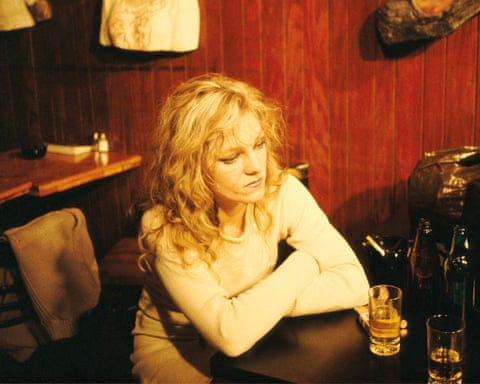
‘A world where friends could replace family’ … Cookie at Tin Pan Alley, New York City (1983).Thu 15 Jan 2026 08.00 CET
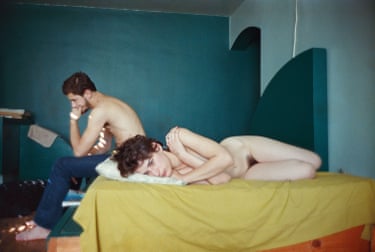
Couple in bed, Chicago (1977)
For the first time ever, the entire body of work from Nan Goldin’s genre-defining photobook The Ballad of Sexual Dependency will be shown in the UK. Featuring 126 photographs created between 1973 and 1986, the work is an incisive reflection on gender, intimacy and power, widely regarded as Goldin’s magnum opus. The Ballad of Sexual Dependency runs until 21 March at Gagosian, London. The book is published by Aperture. All photography and quotes by Nan Goldin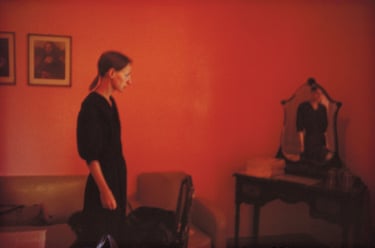
Suzanne with Mona Lisa, Mexico City (1981)
First conceived as a slideshow accompanied by a diverse soundtrack emphasising its operatic nature, the Ballad debuted in New York nightclubs and public art exhibitions before its publication by Aperture in 1986. Goldin described the project at the time as ‘the diary I let people read’. Forty years later, the photographs not only define the era of downtown New York in which they were made, but have also influenced decades of visual culture and artists around the world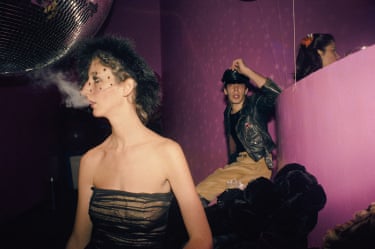
Robin and Kenny, Boston (1978)
Nan Goldin: ‘I love this book, it’s why I’m here now. It amazes me that it still resonates in the world. I’ve lived many lives since then. That was perhaps the lifetime that formed me the most, the years of the Ballad. I still believe these photos tell the truth of that time. It’s important, for me, to recontextualise the afterword every 10 years. The foreword is for ever, that’s the real narrative of this work. But just like I constantly re-edit my slideshows, I want to continue updating the record of my life’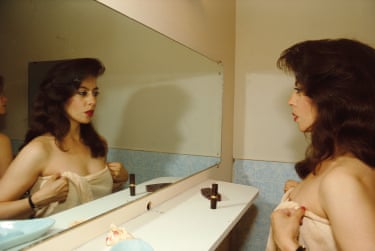
Sandra in the mirror, New York City (1985)
‘I took the pictures in this book so that nostalgia could never colour my past. I wanted to make a record of my life that nobody could revise: not a safe, clean version, but instead an account of what things really looked like and felt like and smelled like. I don’t think I could, at this age and in this body now, live the life that I lived then. It took a certain level of fearlessness, a wildness. Quick changes of clothes, of friends, of lovers, of cities’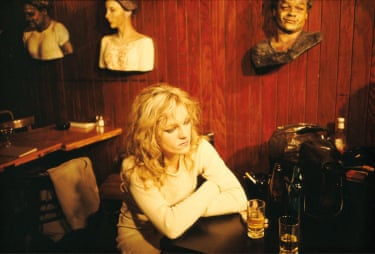
Cookie at Tin Pan Alley, New York City (1983)
‘In the old days, people told me they moved to New York because of the Ballad. They were introduced to other great artists, other great personalities, and a whole other world of brilliance and beauty. They found a world where friends could replace family, where the people who kept you alive were the ones you chose. Relationships weren’t based on toxic expectations of who you were. You were free to be anyone you wanted. Somebody told me recently my work averted their suicide. If I can help one person survive, that’s the ultimate purpose of my work’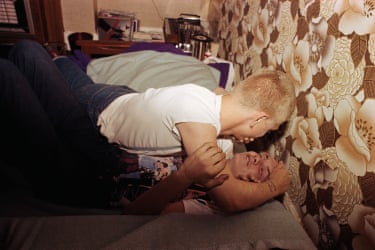
Warren and Jerry fighting, London (1978)
‘It’s commonly said that this book is about “marginalised” people. We were never marginalised. We were the world. We were our own world, and we couldn’t have cared less about what “straight” people thought of us. I made my people into superstars, and the Ballad maintains their legacy’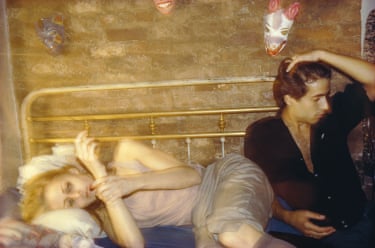
Greer and Robert on the bed, New York City (1982)
‘In the 80s, there was a certain freedom, and a sense of immortality, that ended with that decade. Aids cracked the earth. With everyone dying, everything shifted. Our history got cut off. We lost a whole generation. We lost a culture. We didn’t just lose the actors, we lost the audience. There are few people left with that kind of intensity. There was an attitude towards life that doesn’t exist any more, everything’s been so cleaned up’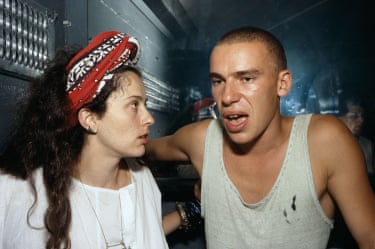
Kiki and Scarpota, West Berlin (1984)
‘I often fear that men and women are irrevocably strangers to each other, irreconcilably unsuited, almost as if they were from different planets. But there is an intense need for coupling in spite of it all. Even if relationships are destructive, people cling together. It’s a biochemical reaction, it stimulates that part of your brain that is only satisfied by love, heroin or chocolate; love can be an addiction. I have a strong desire to be independent, but at the same time a craving for the intensity that comes from interdependency’
Bruce on top of French Chris, Fire Island, New York (1979)
‘If men and women often seem unsuited to one another, maybe it’s because they have different emotional realities and speak a different emotional language. For many years, I found it hard to understand the feeling systems of men; I didn’t believe they were vulnerable and I empowered them in a way that didn’t acknowledge their fears and feelings’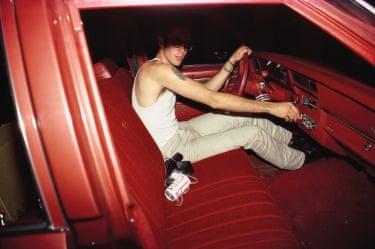
Mark in the red car, Lexington, Massachusetts (1979)
‘I want to be able to experience fully, without restraint. People who are obsessed with remembering their experiences usually impose strict self-disciplines. I want to be uncontrolled and controlled at the same time. The diary is my form of control over my life. It allows me to obsessively record every detail. It enables me to remember’
Empty beds, Boston (1979)
‘We all tell stories that are versions of history – memorised, encapsulated, repeatable and safe. Real memory, which these pictures trigger, is an invocation of the colour, smell, sound and physical presence, the density and flavour of life. Memory allows an endless flow of connections. Stories can be rewritten, memory can’t. If each picture is a story, then the accumulation of these pictures comes closer to the experience of memory, a story without end’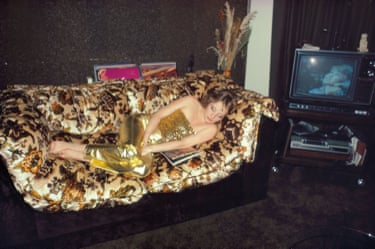
Shelley on her sofa, New York City (1979)
‘I don’t select people in order to photograph them; I photograph directly from my life. These pictures come out of relationships, not observation. They are an invitation to my world, but now they have become a record of the generation that was lost. To show the Ballad in its entirety, 40 years after I published the book, is to reaffirm that desire for transformation and the difficulty of connection and coupling are still true to our world. I’m still impressed that generation after generation find their own stories in the Ballad, keeping it alive’Explore more on these topics