3 months ago
133
3 months ago
133
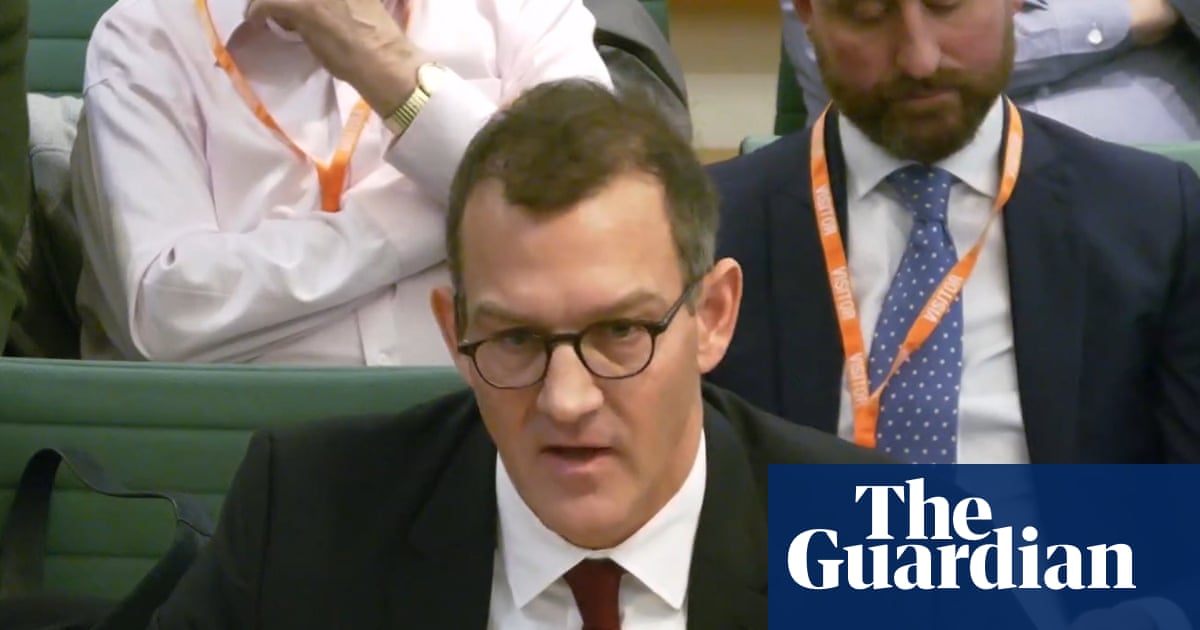
Bank of England testifying to Treasury committee
Senior members of the Bank of England are appearing before the Treasury committee now.
MPs will hear from deputy governors Clare Lombardelli and Sir Dave Ramsden, as well as two external members of the Monetary Policy Committee – Swati Dhingra and Catherine Mann.
The quartet are without governor Andrew Bailey, who isn’t available due to “an unavoidable international commitment”.
They will discuss the Bank’s decision to maintain interest rates at 4% in November, and also its latest Monetary Policy Report.
Key events Show key events only Please turn on JavaScript to use this feature
MPC's Dhingra:commodity price shocks are behind UK's inflation surges
The Treasury committee hearing wraps up with an explanation of the drivers behind the UK’s episodes of high inflation.
BoE policymaker Swati Dhingra explains she has looked at the impact of Brexit, the first Trump trade wars, and other times when inflation pressures rose.
And, she says, the “ones that really really matter when it comes to our inflation target is still commodity price shocks.”
Dhingra adds:
If you go back to the 1960s, the times when the UK saw high inflation episodes is precisely the times when there have been big global commodity shocks.
Bank of England deputy governor Clare Lombardelli also told MPs she is more concerned about the supply side of the labour market than demand for new workers.
Lombardelli tells the Treasury Committee there has been quite a large increase in youth unemployment, and also says the UK appears to have a unique problem with the impact of ill health on economic inactivity levels.
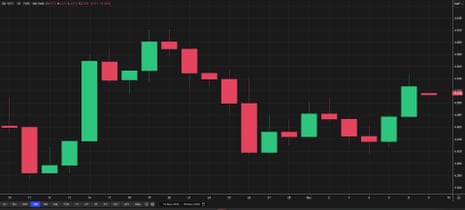
Although Dave Ramsden tried to swerve this issue, there was clearly a jump in UK borrowing costs on 14 November – the first day of trading after news broke that Rachel Reeves was not going to raise income tax.
That rise in 10-year bond yields reflected City worries that the chancellor might not expand her fiscal headroom as much as hoped.
But on 26th November, yields fell back after Rachel Reeves revealed she had more than doubled her headroom (to achieve a balanced budget).
Monetary Policy Committee member Swati Dhingra then tells MPs that overall, the impact of the budget on inflation is not large but it is “in the right direction”.
Mann: Budget uncertainty was detrimental to confidence and investment
BoE policymaker Catherine Mann is more critical about the build-up to the budget.
She tells the Treasury committee that the range of policy uncertainty, and the long period of time it dragged on for before the budget on 26 November, damaged the economy.
Mann explains:
I would make the point that the duration of uncertainty with regard to the budget and, I would argue, the policy prevarications and policy uncertainty, was detrimental to consumer confidence and to business investment.
We heard this from our agents. We can see it happening in research.
Bank of England: Budget could knock 0.5 percentage points off inflation
The Bank of England has estimated that Rachel Reeves’ budget last month will knock off around 0.4 to 0.5 percentage points from the annual rate of inflation, starting from around the second quarter of 2026.
Deputy governor Clare Lombardelli has told the Treasury Committee during today’s hearing that Bank staff have analysed the budget, and believe it will have a “mechanical effect” pushing inflation down. She cites:
The changes in energy prices, fuel duty, a bit less from electric vehicles and rail. So, you know, that will just shift inflation.
[That could help get inflation down to the Bank’s 2% target].
The impact of the budget on growth will be smaller, though, Lombardelli adds, explaining:
There is obviously a slightly looser fiscal policy, a bit more government spending, so that would push up on GDP in the short term. The effects are quite small.
Q: Bloomberg reported that gilts “plunged” at the start of bond trading on Friday 14th November, following the report in the Financial Times that the rise in income tax had been shelved. There was then a Treasury briefing that this was due to an improvement in the forecasts – so was the gilt market trading fairly that morning?
Deputy governor Dave Ramsden says there was “volatility", and a pick-up in bond yields (which rise when prices fall).
But he suggests it wasn’t particularly unusual – and not as worrying as after Donald Trump’s “Liberation Day” tariff announcements in April, when volatility turned into te risk of being disorderly.
Q: But is it fair that some market participants were getting more information than others?
Ramsden won’t comment or speculate on this.
Labour MP Luke Murphy then tries to get Sir Dave Ramsden to comment on the action in the gilt market since the budget, with little success.
“I don’t think it’s our job to give a running commentary unless there’s really something significant that might prompt us to have to intervene, which obviously we haven’t had to do for several years” Ramsden says, swaying away from giving a verdict (while also reminding MPs about the chaos of the 2022 mini-budget).
But more generally, he points out that the yield (interest rate) on UK 10-year bonds today is basically the same as at the start of the year, while other country’s bond yields have risen by more (such as Germany).
BoE's Ramsden: UK bond market was less volatile ahead of the budget than usual
Bank of England deputy governor Sir Dave Ramsden has dismissed claims that the uncertainty ahead of last month’s budget caused unusual volatility in the government debt market.
Ramsden has told the Treasury committee that there were moves in the UK debt markets in the run-up to the budget, due to both domestic and global factors.
He says BoE staff analysed if the movements in gilts in the three months up to the budget were any more volatile than in the rest of 2025, or in the run-up to previous budgets.
That work showed that the “10 day rolling average of the difference between the high and low yield on each day”. That volatility was actually lower than ahead of other fiscal events in recent years, Ramsden says, adding:
Volatility is a fact of life in the markets at the moment.
Q: What about the gilt moves on 4th November, when the chancellor gave her scene-setting speech (hinting at income tax rises) and 14th November (when news of a u-turn broke)?
Ramsden says:
It would be impossible to completely account for moves on any day. The moves on the 14th were reasonably large, but you’ve got to see that in the context of more general volatility.
Deputy governor Clare Lombardelli reminds MPs that there is always a lot of speculation and uncertainty in the run-up to a budget.
But she adds that Bank staff, and its agents around the country, saw that people were unsure what would be in the budget, and that had an impact on investment. But there is now certainty, as the budget has been delivered, Lombardelli adds.
Bank of England policymakers explain interest rate vote split
Bank of England policymakers have shown MPs why they were split 5-4 in their vote to leave interest rates on hold in November.
Deputy governor Dave Ramsden, one of the minority of four policymakers who voted to cut rates last month, said he placed weight on the Bank’s central projection, and also cites concerns that the labour market may be weakening.
Ramsden tells the Treasury committee:
I see the risks around the central projection for inflation returning to target at the start of 2027 as pretty balanced, but for me…I think the downside risks of inflation coming in below target over that horizon were more apparent compared to where they were in August.
Ramsden isn’t ruling out the wories about inflation persistence, though.
But external policymaker Catherine Mann – who voted to hold interest rates -says her key view is ‘inflation persistence’, and explains that the last few years of high inflation have led to ‘behavioural changes’.
She says:
They [those behavioural changes] come through firms being reluctant to reduce prices, even when sales are weak. We have household and business expectations rising, as opposed to falling, even as inflation itself falls.
It is “without doubt” that the private sector jobs market has weakened, Mann adds.
The dovish Swati Dhingra (who voted to cut) tells MPs that the disinflation process has been on track this year, although an “inflation hump” has been created by rising food prices and “administered prices” [ie, price increases for goods and services set by governments or firms].
On food inflation, she says:
But what’s happening in food price inflation is it’s basically ten items that are driving our divergence from the euro area. And those ten items are clearly not things that we grow. Chocolate is one of the primary ones.
[Reminder, we learned this morning that chocolate prices are up 18% in the last year!]
And finally, deputy governor Clare Lombardelli (who voted to hold rates) sums up the mood of the committee last month:
All of us are balancing risks….different people put different weights on those upside and downside risks.
Lombardelli adds that she worries more about the upside risk to inflation, but is also concerned about economic activity levels.
She also reveals she is “less convinced than others about how restrictive monetary policy is at the moment and how far we are from reaching the end of the cutting cycle”.