6 hours ago
16
6 hours ago
16
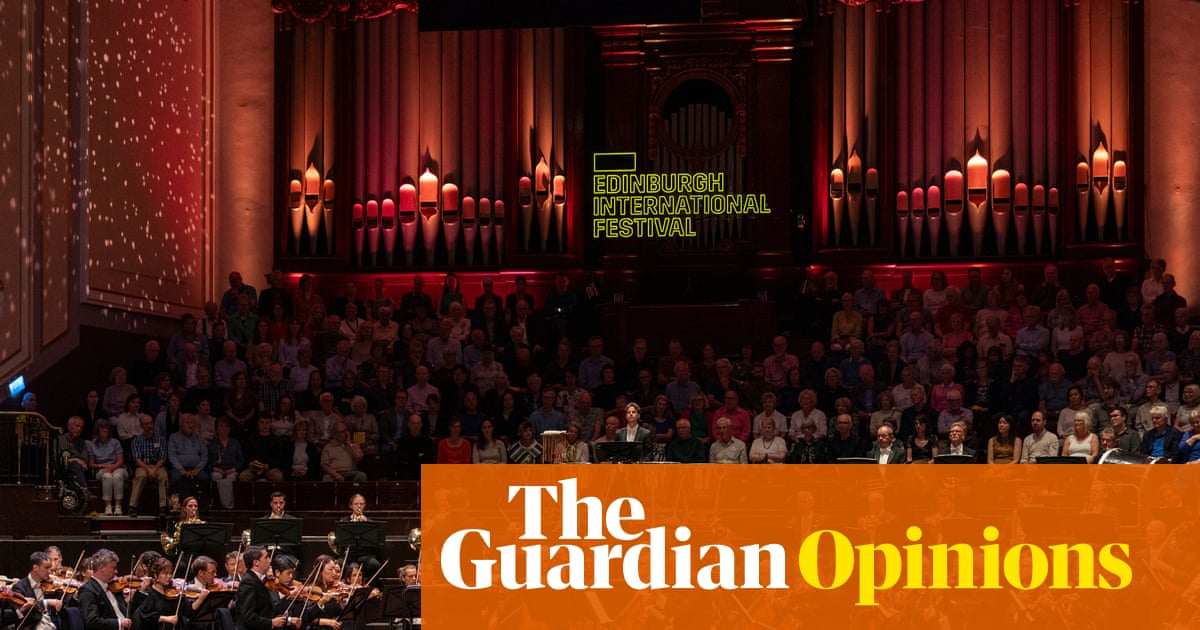
The State of Play inquiry, which is run by the UK House of Commons’ digital, culture, media and sport select committee, recently announced the five areas on which it will focus in 2026-27. One of these is: why are our Eurovision entries so bad? The word used by the chair, Dame Caroline Dinenage, was “dismal”, which is parliamentary speak for “shit”.
The evidence is all around. With the exceptions of Sam Ryder (second in 2022) and Jade Ewen (fifth in 2009), the UK has bumped along the bottom of the table in recent years, coming last in 2021 and 2026, second last in 2023 and 19th and 18th in 2025 and 2024 respectively. In four of those cases, the artist received no public votes at all.
Mindful that parliamentary inquiries always take roughly 10 times longer than seems reasonable and cost whatever number of pounds they ought to multiplied by a million, I’m going to suggest a couple of sub-categories. Why do all the other countries hate us, irrespective of the entry?And why do we seem to enjoy it so much that they do? Some of this is about core British values and some of it is about geopolitical orientation. Sometimes those things interact in such a white-hot and contradictory way that it’s amazing no one has devised a way to give us minus points.
A national underdog fetish drives the selection. Whomever we send, they cannot take themselves too seriously; they have to be self-mocking. But that’s not enough: they have to be so absurd that they can’t generate the level of ridicule required alone. Our entry this year – by Sam Battle, AKA Look Mum No Computer – was no less catchy and flamboyant than many Scandinavian entries past, but some combination of trying too hard for the laugh (which was knowing and ironic) and trying too hard to speak German (“look, Mum, I – a Briton – can count to three in a foreign language”) did not translate into popularity. While we love an underdog, we also hate sincerity, which presents confusingly. Come on, Britain, do you think you’re inferior or superior? Make your mind up!
Our refusal to pick a lane on this matter is another core British value. But however you articulate that – a love of ambiguity for its own sake? A reflexive, historical rebellion against being asked to emote sincerely? – other people don’t like it. Ryder is an interesting counterpoint. He slipped through the net by which we typically exclude anyone who can hold a tune, having garnered fame on the socials with his acoustic balladeering during Covid. The year in which he competed, 2022, was the tail end of a poignant time during which we briefly admitted to the experience of real feeling – loved each other, loved the NHS, loved society. That didn’t last, unfortunately.
Leaving aside the music, the UK is often awarded nul points to signal disapproval of its foreign policy. This seemingly began in 2003, because we had jettisoned European values (looking for evidence, considering consequences) in favour of American ones (going to war because, heck, we could). In 2008, our next brush with the dreadful zero, bestowed by 38 of the 42 voting countries, the objection was to the “big four” – the UK, Germany, France and Spain – getting automatic entry into the final stage of the contest. Eurovision was being used to symbolise the arrogance of these dominant countries after the financial crash. (No, I don’t have to prove that. It’s obvious.)
I want to say that the more recent low scores may be down to Brexit, but that would raise the question of why we did so badly in the years directly before it (17th in 2014 and 24th in 2015). It may just be collective muscle memory: “Hey, I remember these guys! They’re the ones we always give nul points.”
If I were involved in Eurovision, I would put together a counterinquiry to ask why the digital, culture, media and sport committee is so dismal. Alongside the cultural crises worthy of its attention this year – the structure of the football academy system, the role and funding of arts centres, the protection of journalists in conflict zones and inclusion in football management – it has chosen this matter of no consequence, this trifle, this contest we actually enjoy being bad at. It has managed to produce the inquiry equivalent of one of the UK’s Eurovision entries, which is, now I think about it, quite a British thing to do.
Zoe Williams is a Guardian columnist