6 hours ago
19
6 hours ago
19
Numerous last-minute entrants in the race to become the new UN secretary general are being discussed amid concerns that the world powers may not be able to agree a successor to António Guterres from the current field of seven candidates.
Three rounds of secret ballots have so far not produced an obvious frontrunner, with probably only three candidates regarded as still having a realistic chance of gathering the required support.
The new leader, due to take office in January, will face an organisation at the start of a cost-cutting overhaul programme and seen as marginal to the major global conflicts.
But surveys still show strong international support for the institution among a public that blames world leaders as much as the UN itself for its recent failing.
A survey by GeoPoll for the UN Foundation published last week found six out of 10 people trust the UN to deliver on the issues that matter to them, but 85% said they had heard nothing or little about the process to choose a new secretary general.
The successful candidate must win the support of nine current members of the 15-strong security council with no veto by any of the five permanent members of the council – France, the UK, China, Russia and the US.
Achieving consensus among the permanent five is fraught given the breadth of political divisions. Guterres’s term ends on 31 December.
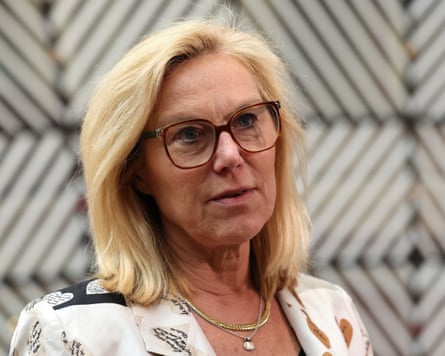
Names being mentioned as potential late drafts include Lana Nusseibeh, the minister of state at the United Arab Emirates and a former UAE ambassador to the UN, and Sigrid Kaag, a former UN assistant secretary and Dutch centrist politician. She was briefly the senior humanitarian and reconstruction coordinator for Gaza before joining the advisory committee to Donald Trump’s Board of Peace.
Other candidates mentioned include Kassym-Jomart Tokayev, the polyglot president of Kazakhstan, and, in deference to the US, Viktor Orbán, the former prime minister of Hungary, who is still much admired by Trump but reviled as a disruptive populist by many European leaders.
Vuk Jeremić, a Serbian former president of the UN general assembly who came second behind Guterres in the 2016 race, has also been mentioned.
A communique at the end of this month’s Brics summit attended by 21 countries, of which 10 are full members, said: “We note that no woman has ever been elected for the role of secretary general, and only one national from Latin America and Caribbean, and only two nationals from Africa and Asia each have ever occupied this position.”
Some would also resent a late candidate, regardless of their origin, entering the field since strenuous efforts have been made to democratise the selection process by holding regional and global hustings. The last general assembly president, Annalena Baerbock, has helped spearhead the attempt to open the selection process.
But the need to avoid alienating any of the five, internally divided, veto-wielding security council members inevitably incentivises the candidates to issue slightly bland consensus-seeking statements at a time when the organisation needs firm leadership. All the candidates have said they would like to see the UN return to an active role as a peacemaker – a task often demanded by amateur US diplomats close to Trump.
In the third and last straw poll of the 15 security council members on Friday, Rebeca Grynspan of Costa Rica regained the lead after receiving nine “encourage” votes from the security council. She got five “discourage” votes and one “no opinion”. Her fear is that the discourage votes came from Russia and China, an opposition she would need to overcome.
In the second straw poll on 21 August she had dropped behind Carolyn Rodrigues-Birkett, a Guyanese politician who then came first – receiving eight encourage votes, three discourage and four no opinions.
Last Friday, Rodrigues-Birkett maintained the eight encourage votes, but her discourage votes had risen from three to six.
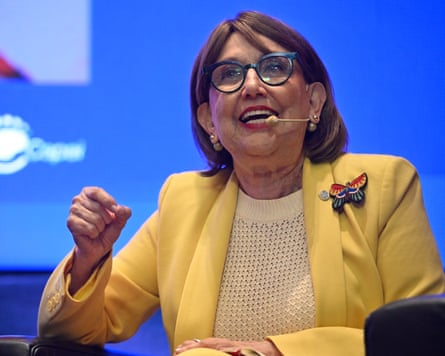
A third candidate, the Ecuadorian former finance minister María Fernanda Espinosa, is just about still a viable contender despite the numbers discouraging her reaching six last week, up from three in August. She has been calling for an early warning system inside the UN to help prevent wars, and for a secretary general more willing to take risks in mediation.
It will not be until later in the process – when colour-coded balloting reveals if a vote is from a permanent member of the security council or not – that it will be clear whether a candidate faces an insurmountable barrier.
In reality the decision may turn on the horse-trading between the US president and the Chinese president, Xi Jinping, and whether Trump accepts that China cares more about the UN’s future than him, and that may mean accepting a candidate that China wants and the US can tolerate.
The Trump administration appears to have softened some of its scepticism towards the UN under the US ambassador to the UN, Mike Waltz. The US not only provided $1.8bn (£1.35bn) in additional humanitarian funding in March but also recently sent $827m in dues, admittedly less than a quarter of what it owes the cash-strapped organisation.
Michelle Bachelet, a former president of Chile and a human rights campaigner, became the first candidate to drop out of the race at the weekend after she received only one encouragement in last week’s poll.