4 hours ago
8
4 hours ago
8
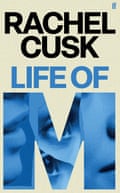
10 Life of M (2026)
In Cusk’s headline-grabbing latest, a writer invents the biography of a film star who sounds very like Natalie Portman. Set in the now standard late-Cusk sans serif typeface (no frivolous flourishes!), Life of M serves up observations on fame in a light fictional coating. “To always be playing a part is to have no home.” Having made her name as a devilishly good creator of brainy social comedies, Cusk’s pivot to wintry autofiction since the Outline trilogy appears to have reached its logical conclusion in this flat, abstracted portrait of empty celebrity. The New York Times called it “rarefied, cosmopolitan, self-serious”.
Sample line: “Everything I did or said in her company was false. It was as if I was acting, while M came across as authentic and real.”
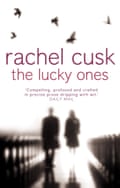
9 The Lucky Ones (2003)
A collection of stories about diverse characters who are linked by the influence of a newspaper columnist. They start weakly – Cusk struggles to embody a working-class female prisoner – but improve once she turns her caustic eye to ski trips and lawyers. The short form enables Cusk to show a narrative strength we don’t always see.
Sample line: “Jane and Thomas were ironing out their lives in preparation for parenthood, starching and folding and putting away their youth, their excitement, their spontaneity.”
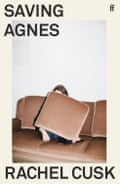
8 Saving Agnes (1993)
After a cracking first line (“The house, like the party, was subsiding”), Cusk’s cheerfully comic debut tickles the reader throughout, as Agnes Day looks for love in contemporary London. Published to acclaim (and a Whitbread award) when Cusk was 26, it has a young writer’s weakness for using elaborate locutions as a shortcut to comedy, but there’s energy on every page, and her phrasing is always perfect: Agnes’s friend Merlin has “a salary for which Elizabeth Bennet would have left Darcy’s dinner burning in the oven”.
Sample line: “Like a mirror he gave back nothing but what was already there; smash it and he would be gone, leaving her with nothing but a rearranged face and a few years of bad luck.”
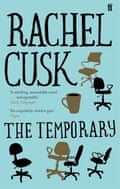
7 The Temporary (1995)
Cusk’s sparky second novel is a romantic dramedy. Two Londoners – publishing temp Francine and posh Ralph – bond over a dried-out risotto “like a dish of planetary matter brought back by an alien”. Francine’s house moves frustrate her mother (“You’ve quite ruined my new address book, what with all the crossings-out”); then Ralph wants to move on too. “I thought she understood it was just a temporary thing.” The story builds to an impressively messy climax, with Cusk switching between viewpoints and building tension.
Sample line: “‘I’m something of an intellectual myself,’ Neil had said, straightening a tie across which autonomous golf clubs roamed.”
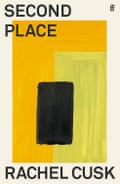
6 Second Place (2021)
A writer, M, invites the devilish painter L to live in her home, and some chewy stranger-in-our-midst stuff ensues, upending family life and giving the opportunity for some classic Cuskian observations. “I need to get at the truth of a thing and dig and dig until it is dragged painfully to light.” There’s drama – as L humiliates M and her husband – and comedy, as M’s daughter’s boyfriend reads everyone his terrible novel-in-progress. Inspired by DH Lawrence’s stay in New Mexico in the 1920s, Second Place is a curious novel, and it’s the weirdness that makes it interesting.
Sample line: “I’ve been criticised all my life – it’s how I’ve come to know that I’m there.”
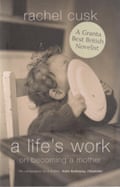
5 A Life’s Work (2001)
Cusk’s memoir of “all that love and terror and strangeness” of becoming a mother. It’s a book of scorched-earth candour: Cusk acknowledges her own misery at the drudgery of early motherhood and curses the asininity of childcare books. It was of course controversial, not for its writing – few could fault that – but for daring to challenge a Pollyanna-ish portrayal of parenthood. Cusk was unabashed: “This is not a childcare manual, ladies. In these pages you have to think for yourselves.”
Sample line: “When I found myself pregnant again when Albertine was six months old I greeted my old cell with the cheerless acceptance of the convict intercepted at large.”
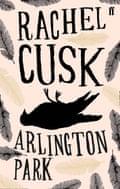
4 Arlington Park (2006)
This novel’s Joycean opening settles down to an exquisitely written social comedy. The story of five young mothers, it feels at times like a fictional extension of A Life’s Work: each resents the confinements of motherhood. Perhaps this is what gives the novel its jaundiced eye; not just snobbish (“Mandy Clapp – it was the name on the badge of someone working at a supermarket checkout”) but misanthropic: everyone gets it. “She’d get pretty damned jumpy if her husband’s salary didn’t come rolling in like a Pacific breaker every month, or if people stopped thinking she looked like Felicity Kendal.” But it’s brilliantly funny.
Sample line: “It was funny that she had ended up as a teacher, back at school. It made it seem that she wasn’t bright or gifted or exceptional at all. She was merely good at going to school.”
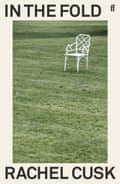
3 In the Fold (2005)
This novel is a perfect amalgam of the qualities of early Cusk: funny, cynical, rigorous and linguistically precise. Its narrative of characters who are socially and materially conformist but terrified of appearing conventional centres on a man who falls in with a wealthy family. But the upheavals of the plot – things collapse and break – are less important than the sinuous sentences and streams of dialogue. Hidden here, though, we can perhaps see early evidence of Cusk’s desire to break free of conventional fiction. As one character has it: “Better to be broken than to be a slave of method!”
Sample line: “[The schoolboys] make a list of the mothers they’d most like to sleep with. This is the first time she hasn’t made it. It’s so embarrassing for her.”
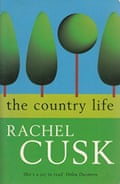
2 The Country Life (1997)
longest novel is the blackest of all her early comedies, the humour as often situational as verbal. Stella Benson abandons her job and boyfriend to become an au pair for a rural family’s disabled son. She’s not there long before strange, sinister things start to happen. She defaces the gardens by vomiting pink luncheon meat over them. She discovers a book titled The Runaway Bride by Stella Benson. This is a novel of broad and deep character insight, of social awareness – and of unexpected sexual awakening.
Sample line: “I am normally a slow and careful eater, having been schooled by my mother in the many social atrocities it is possible unwittingly to commit during the ingestion of food.”
1 The Outline trilogy (2014-18)
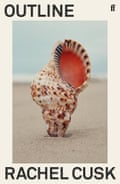
“I had no desire to prove that one book was better than another,” says Faye, the narrator. Well, we do! Outline’s revolution took Cusk’s art to a new place, wholly rejecting traditional character and description, and defining writer Faye – who bears similarities to Cusk – in relation to the people she meets on a trip to Athens. “I was beginning to see my own fears and desires manifested outside myself.” There are stories aplenty, but the overall tone is spare and cool, making something entirely original from the wreckage of Cusk’s need to dispose of her old ways. Two sequels followed – Transit and Kudos – but it was the first book that really shook things up. Critics argued that while it offered “few of the standard expected rewards of fiction”, it was nonetheless “a triumph of attitude and daring”.
Sample line: “But what other people thought was no longer of any help to me. Those thoughts only existed within certain structures, and I had definitively left those structures.”