2 months ago
104
2 months ago
104
Jenni Murray, who has died aged 75, was the longest-serving presenter of Woman’s Hour, bringing calm authority to the BBC Radio 4 weekday show for 33 years.
The programme that was launched in 1946 with cooking, cleaning tips and romantic serials had, by the time of Murray’s tenure (1987-2020), become a platform for subjects such as the menopause, domestic violence, genital mutilation and sexual politics. After a decade of Murray in the presenter’s chair, the programme was described by the Sunday Times in 1996 as “Radio 4’s sisterhood of the airwaves”.
Murray was fearless and thoughtful in her intelligent questioning of guests, who ranged from politicians, film stars, authors and poets to chefs, gardeners, lawyers and anxious parents.
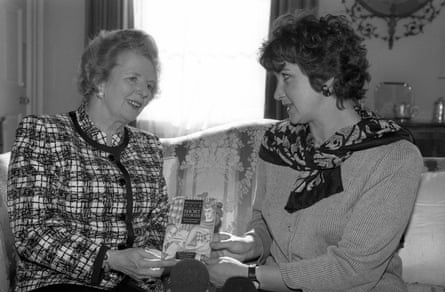
In 1990, in Margaret Thatcher’s final broadcast interview as prime minister, Woman’s Hour exposed the ideological differences between the feminist approach advanced by Murray, who advocated government ensuring accessible, affordable childcare to hasten gender equality, and the Conservative leader’s view that the issue was one for individuals, not the state.
Pointing out that the group from which Thatcher was losing most support was women, Murray asked if this could be down to a lack of understanding of their difficulties. The presenter later said: “It was the first time in her entire political career I ever heard her say: ‘I don’t know.’ She was not expecting this and she floundered.”
Later, following the former Conservative MP Edwina Currie’s revelation in the first volume of her diaries in 2002 that she had had a four-year affair with her colleague, John Major, later prime minister, Murray began her interview with: “Edwina Currie has been called a cheat, a grade-A trollop, a total cow and the cheapest kiss-and-tell hawker.” She then probed Currie on the ethics of the relationship, considering both of them were married, and the hurt caused to Major’s wife, Norma. “I think that’s an issue that she needs to take up with her husband,” Currie replied.
Four years later, Murray asked the Labour culture secretary Tessa Jowell: “As the feminist you are, are we to believe that you signed for a mortgage loan on your house for your husband without knowing exactly how it was going to be paid back?” Murray would have recalled her own experience in the 1970s of being refused a mortgage without first having obtained a father or husband’s signature.
Away from politics, she said she particularly enjoyed a flirtatious interview with the Hollywood star Jack Nicholson and described meeting the protest singer Joan Baez as “the peak of my career”, adding: “When I was at school in Barnsley, I wanted to be Joan Baez.”
In 1990, three years after Murray took over from Sue MacGregor in the presenter’s chair, Woman’s Hour was at risk of the axe as Radio 4 looked to replace the 2pm show with a new mid-morning one that would attract more men. In the event, it switched to a morning slot the following year – and built up a 40% male listenership – but at the time, Murray felt the programme was under threat.
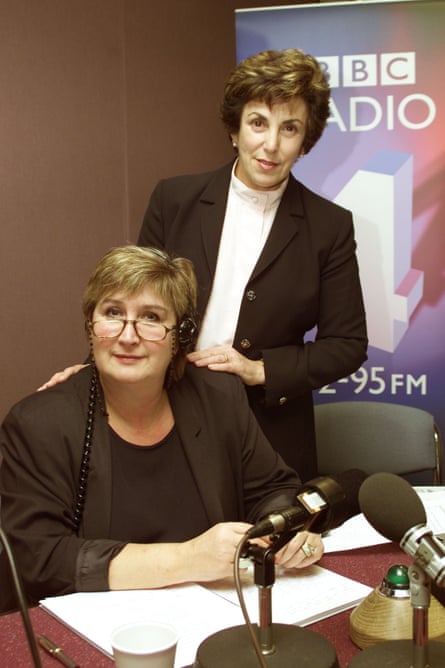
“I didn’t know who I was any more,” she said. “Doing this programme was the first time I’d felt completely in my skin. I’d done local radio, local TV, network TV, and this was like coming home. I liked the collusion with the audience, the kind of collusion all women have with each other.”
She shared on air with this fellowship her experience of the menopause, which was the subject of her 2001 book Is It Me, Or Is It Hot in Here?, and in 2006 the news that she had been diagnosed with breast cancer. A mammogram she underwent at the hospital where her mother was dying of Parkinson’s disease showed the prognosis to be good, she added. In 2015, she talked on the show about her weight-loss surgery.
In 2017 Murray drew criticism when an article she wrote for the Sunday Times Magazine was headlined “Be trans, be proud – but don’t call yourself a ‘real woman’.” While declaring herself not to be “transphobic or anti-trans”, and admitting to “diving head first into deep and dangerous waters”, she argued that men who undergo sex-change operations could not describe themselves as women, not having enjoyed the shared experience of growing up female, and that women should have the right to safe single-sex spaces.
The backlash was swift. A day later, the BBC warned Murray that “presenters should remain impartial on controversial topics covered by their BBC programmes”, effectively silencing any discussion of the issue on Woman’s Hour. Murray also had to pull out of a talk at Oxford University after students complained, and her subsequent anti-Brexit views expressed in print led the BBC to ban her from covering the 2019 general election on the show.
In 2020, on leaving Woman’s Hour, Murray wrote in the Daily Mail: “I made the decision a year ago when it became clear to me that it was time to move on and be free of the leash which, in recent years, had caused me to be what I can only describe as ‘cancelled’.” Her final episode of Woman’s Hour ended with Helen Reddy’s feminist anthem I Am Woman.
Jenni was born in Barnsley, in the West Riding of Yorkshire (now South Yorkshire), the only child of Win (nee Jones), a civil servant, and Alvin Bailey, an electrical engineer. Her mother, an avid Woman’s Hour listener, sent Jenni for elocution lessons at the age of five to iron out her Yorkshire accent.
When she was 11, her father landed a job in India and, refusing to go with her parents, Jenni lived with her maternal grandparents while attending Barnsley girls’ high school. Her mother divided her time between husband and daughter.
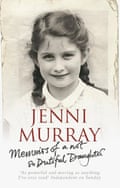
On leaving school, Jenni studied French and Drama at Hull University after abandoning plans to be an actor. During holidays, she worked as a packer at a Findus factory, recalling in her 2008 book, Memoirs of a Not So Dutiful Daughter that she had learned “more about feminist politics from [the fishwives of Hull] than I ever did from The Female Eunuch.”
She was a copytaker, then producer and presenter, at BBC Radio Bristol (1973-78), before going into television as a reporter and presenter with BBC South (1978-84) and a presenter on Newsnight (1984-86). Throughout this time, she hosted Friday editions of Woman’s Hour from Bristol (1976-86). She also co-presented the Today programme on Radio 4 (1986-87).
Woman’s Hour won the Television and Radio Industries Club’s award for best radio progamme in 2004, while Murray was honoured with two Sony awards, in 2010 and 2011.
On television, she made programmes for the BBC’s Everyman series of documentaries on ethical issues (from 1987 to 1991), including Stand by Your Man, in which she talked to wives loyal to husbands involved in robbery, rape, murder and espionage; Breaking the Chain, on a woman abused as a child who never married but adopted battered, neglected, orphaned and learning and physically disabled youngsters; As We Forgive Them …?, on the feelings of victims and relatives about heinous crimes; and No Great Trauma?, interviewing Jill Saward, raped in her father’s Ealing vicarage, and highlighting the responses by men and the legal system to such a crime.
Also on TV, she presented Women in Politics (1989), focusing on international figures such as Benazir Bhutto and Cory Aquino, and Dilemmas (1994), on fixing relationship problems; she also wrote newspaper columns for the Daily Express (1998-2000) and Daily Mail (2020-26).
Murray’s books included Woman’s Hour Book of Humour (1993), The Woman’s Hour: 50 Years of Women in Britain (1996) and Votes for Women!: The Pioneers and Heroines of Female Suffrage (2018). She was made OBE in 1999 and a dame in 2011.
In 1971, she married Brian Murray, a fellow student at Hull University – only, she wrote in her memoirs, to avoid “the fury on my mother’s part that would have been engendered had she found out Brian and I were living together”. They divorced seven years later.
Although then set firmly against the institution of marriage, Murray eventually wed her long-term partner David Forgham in 2002, for inheritance tax reasons. In the late 1980s, following the births of their two children, he left the navy to take on day-to-day parenting duties while she continued with her career.
David and their sons, Edward and Charlie, survive her.