3 months ago
127
3 months ago
127
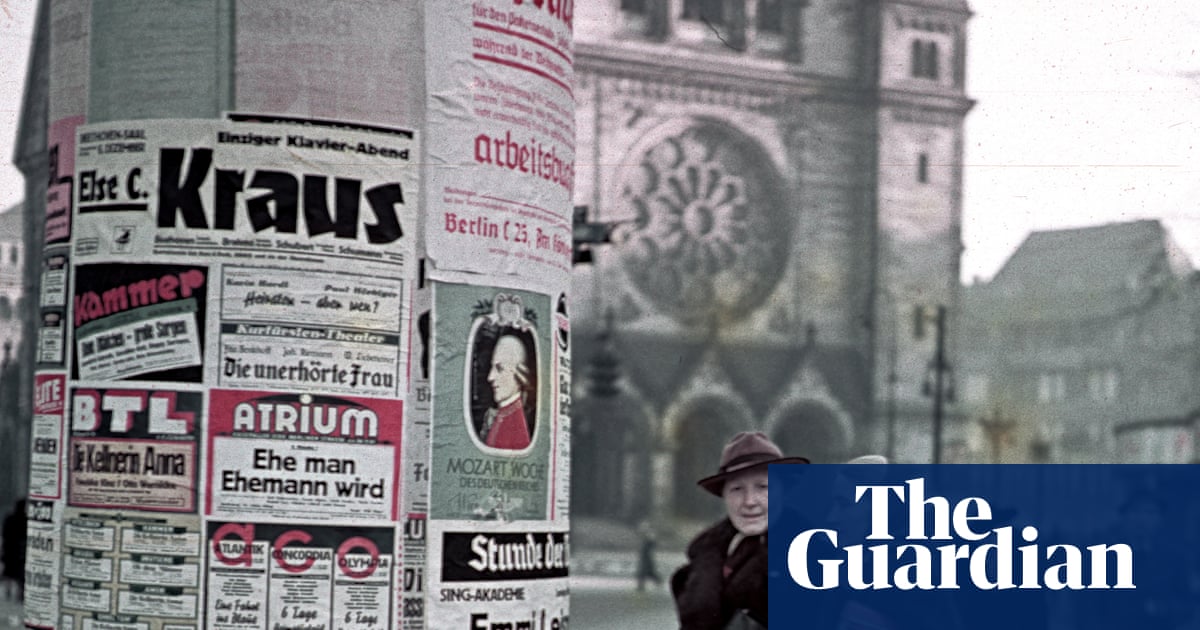
To break into Fleet Street’s national newspapers, the top tier of journalism, by the age of 21, without nepotism, patronage or a web of personal contacts, was remarkable in the 1940s, and it was downright astonishing for the upstart to be female. But Drusilla Beyfus, who has died aged 98, made it on to the Daily Express in 1948, game for anything, such as charming her way on to an RAF plane airlifting coal to the Soviet-blockaded city of Berlin. She landed smudged but triumphant.
She had been in print since 17, and remained in it almost to her death. That foreign assignment was a 40s “plucky girl reporter” stunt, but Beyfus’s jobs became both more domestic and more glamorous after, tracking women’s roles in newspapers and magazines.
They gave her access to observe modes and manners in a Britain that changed ever faster in the postwar period; the books on how women should behave, which she wrote and revised from 1957 to 1996, were meant as helpfully prescriptive, but now read as historically descriptive of a society year by year more class-mobile and experience-curious, less deferent to authorities, and sexually freer.
Beyfus’s view, developed over decades, was that courtesy was less about being correct – after about 1990, who made and monitored rules of rude? – than being considerate, easily putting others at their ease. In a democracy, people could be levelled up by a shared understanding of what were good manners in everything, including, as in her 1992 book Modern Manners, truthfulness about sexual health and competence.
She made herself the accepted dowager of etiquette, a funnier, defrosted Emily Post, appealed to as a referee, usually by other journalists in want of quotes. They boiled down to: “be kind, be interested in and careful of others, including employees, and always apologise, in writing where the offence is great”.
It helped that her own social status had been subject to shock. Born in London, she was the elder daughter of Norman Beyfus, a City wool broker, and Florence Barker, previously a dancer on the West End stage; they borrowed the name Drusilla from a tea room in Sussex.
The family lived well in Belgravia, and Drusilla and her sister Angela went to a prep school until their father suddenly lost family money in 1938. The couple separated, mother and daughters moved financially downwards and out to Henley-on-Thames, and the girls were educated at the Royal Naval school in Richmond, south-west London, and then at Channing school, evacuated from north London to Ross-on-Wye.
In 1944, the self-supporting Beyfus joined the Reading Mercury as a cub reporter, lodged with a local family, and wrote the paper’s women’s page all by herself.
Her first job on reaching the high-powered Daily Express, stunt stories aside, was as assistant to the paper’s star columnist Anne Edwards, recruited in 1947 by the owner Lord Beaverbrook to help attract female readers since advertisers spent six times as much on ads aimed at women than those aimed at men. An editor advised the Somerville-educated, ex ad-copywriter Edwards how to write – on fashion, celebrities and any other criticisable public female “so that every woman would say, what a bitch that Anne Edwards was”.
Beyfus was a generation younger, not so adept at bitchery, and was photogenic – she had caught Beaverbrook’s eye. There’s a shot of her by Eve Arnold from their joint expedition to New York for a story about dating, with Beyfus lovely against the Manhattan skyline. And she was single, soon boldly sharing her flat in louche Shepherd Market in Mayfair with the Express’s film critic Derek Monsey – a lifestyle far ahead of its time.
Beyfus had risen to be women’s editor by 1956, the year she married another Express journalist, the Canadian Milton Shulman. He had written admiringly of her beauty, pursued and courted her; he was unstoppably bumptious and facetious, but she was tolerant and determined to make marriage work within the conventions of the times.
Beyfus and Edwards set out those conventions in their book Lady Behave: A Guide to Modern Manners (1956), crisp pronouncements on how to receive telephone calls and how to play the wifely dual roles of devoted cook and gracious hostess giving dinner parties, without servants or husbandly help beyond pouring the drinks. They suggested guests might serve themselves with vegetables, letting the hostess off acting as waitress as well.
Though middle-class women no longer had to resign from their jobs on marriage, they were expected to exit when pregnant. In 1957, when her first child was born, Beyfus left the five long days a week Express desk for the nebulous hours of associate or full editorship on proliferating glossies – Queen, Brides, Daily Telegraph and Harrods magazines – plus regular writing for the Observer and columns in the Telegraph and the Mail on Sunday, and freelance journalism (Sunday Dispatch, Sunday Times, Daily Mail – and, later an obituary of the Vogue editor Audrey Withers for the Guardian).
She also wrote books; her first solo volume was The English Marriage in 1968, just as the institution was beginning to dissolve. She treated the births of her children, Alexandra, Nicola and Jason, as extra, slightly less predictable, deadlines, and did not stop typing until the waters broke.
Beyfus thought it bad form, not the done thing, to press on readers details of how she balanced the precarious pile of a working mother’s life, with dinner parties in the Shulmans’ Eaton Square flat, and the couple’s eternal attendance on all the arts – Shulman was for 40 years the London Evening Standard’s theatre critic, she his plus one. And from the 60s to the 90s she regularly turned up on television as a groomed talking head with a witty but not unkind tongue.
Beyfus remained curious about the new and the next, willingly keeping up with cultural modes and fashion itself, moving on even from styles she loved, such as Dior’s New Look and Givenchy’s 50s designs, which had so suited her young self, to whatever was their current equivalent in intelligent elegance (Issey Miyake, Jil Sander).
About her only concession to age was to leave off high heels for the coolest flats she could source. For nearly 20 years from 1989, she taught rigorous fashion journalism at Central St Martins, which awarded her an honorary degree that she valued, feeling her own education had been deficient without university.
All her brood were raised in, and went into, media: Alexandra became editor of Vogue, Nicola, a critic, and Jason a magazine art director turned photographer and painter. They survive her. Milton died in 2004.