1 hour ago
9
1 hour ago
9
Morning opening: EU holds talks on response to Leipzig attack
Jakub Krupa
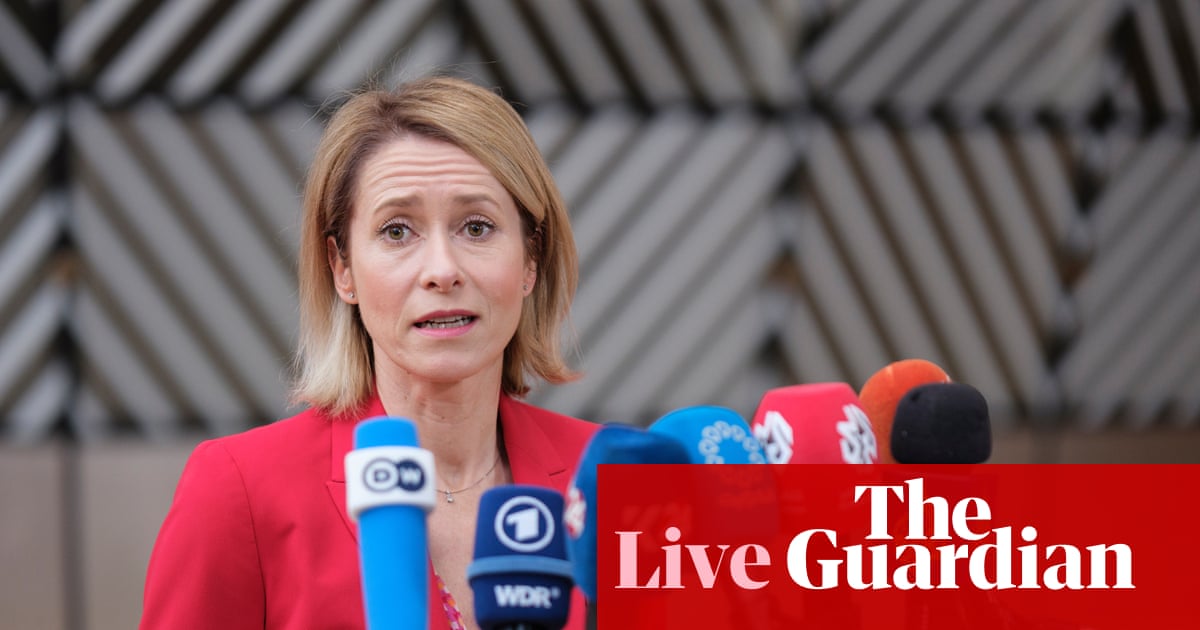
EU foreign policy chief Kaja Kallas said Russia’s attempted drone attack at Leipzig airport last month “had all the hallmarks of state sponsored terrorism,” as she prepares to lead talks on the bloc’s political reaction.
Kallas will host today’s informal talks between EU foreign ministers in Wicklow, Ireland, focusing on “what more we can do” after Germany formally blamed Russia for last month’s security incident.
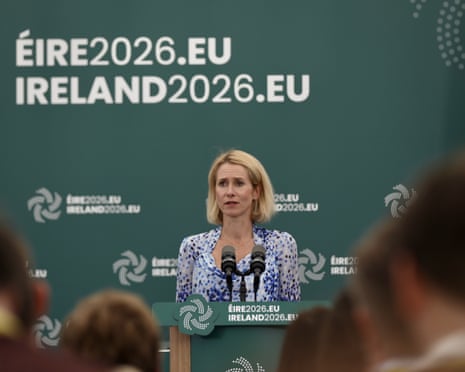
She said the incident should serve as a “wake-up call” for those countries that have been dragging their feet on further sanctions against Russia. “If we want to end this war, we all have to focus our efforts, take it to a new level,” she said.
Separately, the EU and France have summoned top Russian officials to protest against the attack.
Kallas said the discussions will also look at how the EU can further help Ukraine when “Russia is escalating and killing the civilians and causing as much harm as they can.”
Later today, European Commission president Ursula von der Leyen will separately meet with Nato’s Mark Rutte, with the Leipzig incident and Ukraine also set to dominate their talks.
I will bring you all the details here.
Elsewhere, Dutch prime minister Rob Jetten will host French president Emmanuel Macron today, who is then expected in Britain for talks with PM Andy Burnham.
It’s Wednesday, 2 September 2026, it’s Jakub Krupa here, and this is Europe Live.
Good morning.
Key events
Germany's move to blame Russia for Leipzig drone incident 'a grave mistake,' Putin says
Meanwhile, Russian president Vladimir Putin said the German decision to attribute the drone attack to Russia was “a grave mistake,” as he attempted to question the evidence behind the decision.
He also suggested that Berlin was blaming Russia to distract from its own domestic problems.
Former president Dmitry Medvedev lashed out against the German government on Telegram, accusing it of “neo-Nazi, rabidly Russophobic” policy and saying “they deserve a direct strike against all German facilities manufacturing military hardware” for Ukraine.
In an angry outburst on Telegram, Medvedev also appeared to suggest that a train carrying European leaders to Kyiv could become a target for Russian strikes if Ukraine were to follow through on its warnings about closing skies above Russia.
“Every act of terror has its sponsors. At present, that’s the leaders of western nations, primarily European ones, and they frequently travel to Kyiv by train,” he said.
Italy not opposed to using frozen Russian assets to support Ukraine, minister says
Lorenzo Tondo
in Palermo
After the EU said it was seriously considering using frozen Russian assets to support Kyiv following the hybrid drone attack in Germany, Italy’s foreign minister, Antonio Tajani, said on Wednesday Rome was not opposed to the idea, joining countries including the Netherlands, Spain and Poland.
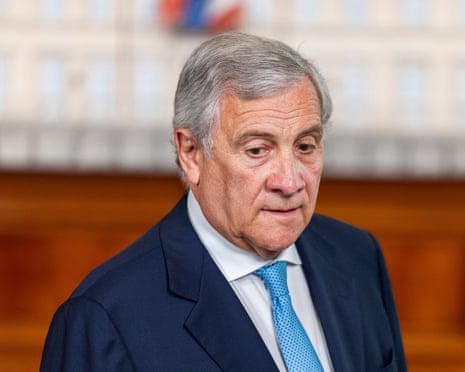
“We’re not opposed in principle, but we need to see whether there is a legal basis for doing so,” Tajani told state news agency Ansa, referring to calls from some countries to confiscate frozen Russian assets and use them to help Ukraine.
“The issue has always been that there may be legal problems with taking such action. We have discussed it many times, both within the European Union and in other international forums, and no decision was taken precisely for this reason – not for political reasons, but legal ones,” he added.
Tajani also warned that Russia could try to influence Italy’s general election next year, and contests in other countries such as France, Poland, and Spain.
“It cannot be ruled out that there may be attempts to influence elections in countries where voting is taking place,” he said on arrival at an informal meeting of EU foreign ministers in Wicklow, Ireland.
“I’m convinced it could happen, which is why we need to act early,” Tajani said, adding that Italy was already monitoring cyber threats and other possible forms of Russian interference.
Restarting talks on frozen Russian assets 'a fair approach,' Ukrainian minister says
Ukraine’s foreign minister Andrii Sybiha said on Wednesday it was a “fair approach” to renew talks on using Russian frozen assets for Ukraine.
“I think this is a fair approach to start serious discussion how we could use immobilised frozen assets,” Sybiha said at a meeting of EU foreign ministers in Ireland, quoted by Reuters.
Four European Union countries – the Netherlands, Poland, Spain and Sweden – earlier this month urged the EU to reopen discussion on using Russia’s frozen assets for Ukraine.
Russia's attempts to divide Europe will fail, UK's Miliband says
Britain’s foreign secretary Ed Miliband is also taking part in today’s talks in Ireland.
“We see an attempt by Russia to divide us in Europe and to deter us from our support for Ukraine. And I say very clearly today, on behalf of the United Kingdom, this attempt will fail.”
He says that the UK “will stand shoulder to shoulder with our friends with Ukraine,” as it has since the full-scale invasion in 2022.
He says the UK knows Russia’s tactics “from the past Russian attacks on our soil,” and “these attempts to divide us will not work.”
Russia 'must live with consequences' of its actions, German minister says
Wadephul says he is “impressed by the strong European support” for Berlin’s decision to attribute the Leipzig attack to Russia, with “a great deal of unity” from colleagues.
“It is very important that Russia clearly sees that Europe stands together,” he says.
He says Russia “must understand” that its approach will not work.
He says the German decision to attribute the attack to Russia was “a well-founded opinion and judgment.”
“Russia must now live with the consequences,” he says, pointing to “necessary and appropriate response” proposed yesterday.
Wadephul says that in the coming weeks the EU will be working on expanding its sanctions, which would target “a large number of individuals.”
Let’s go back to Wicklow and listen to German foreign minister Johann Wadephul, who will be briefing his EU counterparts today on the latest in the Leipzig investigation and Berlin’s reasoning for formally naming Russia as responsible for the attempted drone attack.
He’s speaking now.
Germany investigating suspected attempt to disrupt power grid at another substation
Separately, German police are also investigating another attempt to disrupt the country’s energy grid, this time at a electricity substation in Bergheim in the west of the country.
A local police spokesperson said they are “not assuming a technical failure but a deliberate act,” without revealing more details. The region’s power supply was not affected.
Again, like with yesterday’s incident at a substation near a coal-fired power plant in Brandenburg, the issue of attribution here is not straightforward.
AFP notes that German authorities are on high alert for attacks on vital infrastructure after Berlin blamed Russia for an attempted drone attack on a Ukrainian cargo plane at Leipzig/Halle airport last month and ordered a series of measures in response.
But Germany’s electricity grid has been hit by attacks before, including by suspected left-wing militants.
Again, I will keep an eye on updates on this.
Two people injured after an explosion near Augsburg train station
Two people were injured after an unknown object exploded near a train station in the southern German city of Augsburg.
A separate suspicious object was later found nearby, prompting police to temporarily suspend train services and close the station.
But, and that’s an important caveat, local media are reporting that the incident may be linked to organised crime rather than anything else, though authorities are yet to confirm a motive.
I will keep an eye on this for you.
Morning opening: EU holds talks on response to Leipzig attack
Jakub Krupa
EU foreign policy chief Kaja Kallas said Russia’s attempted drone attack at Leipzig airport last month “had all the hallmarks of state sponsored terrorism,” as she prepares to lead talks on the bloc’s political reaction.
Kallas will host today’s informal talks between EU foreign ministers in Wicklow, Ireland, focusing on “what more we can do” after Germany formally blamed Russia for last month’s security incident.
She said the incident should serve as a “wake-up call” for those countries that have been dragging their feet on further sanctions against Russia. “If we want to end this war, we all have to focus our efforts, take it to a new level,” she said.
Separately, the EU and France have summoned top Russian officials to protest against the attack.
Kallas said the discussions will also look at how the EU can further help Ukraine when “Russia is escalating and killing the civilians and causing as much harm as they can.”
Later today, European Commission president Ursula von der Leyen will separately meet with Nato’s Mark Rutte, with the Leipzig incident and Ukraine also set to dominate their talks.
I will bring you all the details here.
Elsewhere, Dutch prime minister Rob Jetten will host French president Emmanuel Macron today, who is then expected in Britain for talks with PM Andy Burnham.
It’s Wednesday, 2 September 2026, it’s Jakub Krupa here, and this is Europe Live.
Good morning.