4 hours ago
13
4 hours ago
13
Airbnb-type short-term rentals are being used as stash houses by criminal gangs for money, drugs, weapons and people, Belgium’s lead official in charge of countering drugs has said.
The booming e-commerce sector is helping “enormously” to facilitate organised crime, Belgium’s national drug commissioner, Ine Van Wymersch, said.
Authorities did not have a precise idea of the scale of the problem but criminals were taking advantage of the flexibility offered by short-term booking platforms, she told the Guardian.
“You need someone to pick up a cargo from the harbour. You don’t know exactly when the boat will arrive. Well, you can hire an Airbnb apartment or studio for three days. It’s very flexible. If the boat is not coming to Antwerp but going to Marseille, there is free cancellation.”
She said short-term rental companies had “a very good legal purpose” but needed to be more resilient to avoid abuse by criminals.
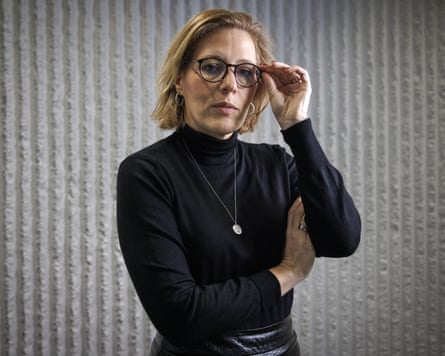
At the beginning of August, police seized 3.3kg of cocaine and €4,845 (£4,140) in cash from an apartment rented on Airbnb in central Brussels, which was believed to have been used for storing and packing drugs, the news agency Belga reported. In 2024 when 11 people were sentenced for their role in a vast drug trafficking operation between Belgium and the UK, it was revealed that drugs worth €21m were seized from an Airbnb rental in Staden, West Flanders.
A representative for Airbnb in Belgium declined to comment but directed the Guardian to recent remarks by Clément Eulry, Airbnb’s country manager for France and the Benelux.
He told De Staandard that such criminal bookings represented an extreme minority among the millions the company processes annually. He said every case was one too many and the company undertook various measures, including using artificial intelligence to identify suspicious bookings. He said reports of problematic renters were always notified to police and local authorities.
Short-term rentals are only one facet of the modern economy making life easier for organised crime.
Van Wymersch cited the ease of setting up anonymous email accounts, encrypted communications, cryptocurrency and the ubiquity of parcel delivery. “The fact that e-commerce is booming business is facilitating enormously organised crime.”
She said delivery firms were also “very at risk” of being instrumentalised by organised crime, because “it is not a suspicious situation any more when you see that there is a white van stopping at your neighbour’s house and … a small box handed over”.

Van Wymersch became Belgium’s first-ever national drug commissioner in 2023 after Antwerp was firmly established as one of Europe’s main gateways for cocaine.
Her appointment followed a wave of drug-fuelled violence and threats. In 2022 the then Belgian justice minister had to live under police protection after an alleged plot to kidnap him was uncovered. Antwerp endured a spate of grenade attacks and the fatal shooting of an 11-year old girl, the victim of a conflict between rival drug gangs.
Last year an anonymous investigative judge – who was forced to live in a safe house for four months – warned that Belgium risked becoming a narco state in an excoriating critique of the government’s response.
The narco state warning originated with Van Wymersch. She agreed, she said, with her earlier opinion that “if we don’t do anything, we are at risk to become a narco state … where you don’t know any more who are the good guys and who are the bad guys”.
Her priority is going after criminal money: “This multi-headed monster only has one heart and that’s the money.”
Her strategy means targeting small businesses – hairdressers, nail bars or night shops – used for laundering money. Her message to local authorities was that they needed to inspect and investigate “the dodgy shop” in their neighbourhood: “It matters because all these small businesses are one big network.”
after newsletter promotion
She said criminal gangs had changed their modus operandi, exploiting small business, rather than using the “big money-laundering constructions” of the past.
Organised crime had morphed from top-down pyramid hierarchies bonded by trust into looser anonymous networks where criminals “don’t know to which network they are belonging any more”, she added.
Illicit activities are outsourced to different gangs, who specialise in money laundering, procuring or using weapons. “It is really crime as a service and it’s very opportunistic,” she said.
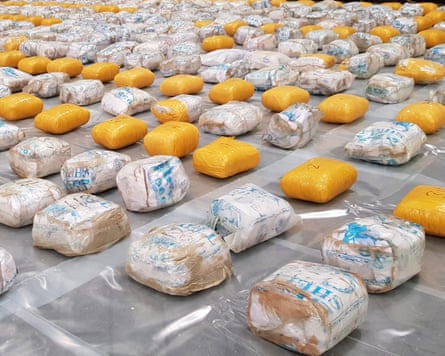
After a rapid rise through Belgium’s judicial system, Van Wymersch is known for articulating an “iceberg strategy” to combat organised drug crime.
The shootings and explosions are the visible part of the iceberg, she said, while below the waterline are harms not always linked to organised crime, from people killed by drivers under the influence, to victims of drug-fuelled domestic violence and sexual offences.
While stressing the importance of the police, she said society needed to guarantee young people a stake to prevent them being drawn into drug gangs – essentially melting the iceberg. “We need to invest in warming up the temperature of the water,” she said citing education, anti-poverty strategies, housing and adequate pay for delivery workers.
In Brussels, police recorded 101 shootings in 2025, reported by local media to be a record high, often resulting from turf wars between gangs. Van Wymersch sees a link between the increase in shootings and social problems, “because the people that are shooting are people without any perspective”.
In Brussels 12.8% of people aged 15-29 are not in education, employment or training – above the national average – although numbers have been on a downward trend since the millennium.
“It is naive to believe that a purely repressive approach will reduce the number of shootings,” Van Wymersch said. “We will see fewer shootings only when there are fewer vulnerable people. In fact, we need to strengthen the resilience of society as a whole.”
The European Holiday Home Association, which represents Airbnb and other platforms, said the companies were best placed to respond.
Van Wymersch said her team planned to be in touch with online booking platforms: “What we want to know now is what are the criteria for suspicious booking, what can we learn from that, how can we help you to be more resilient.”