3 months ago
123
3 months ago
123
The world’s first Transitioning Away from Fossil Fuels conference, co-hosted by Colombia and the Netherlands, takes place in Santa Marta, Colombia, from 24 to 29 April. A “coalition of the willing” – including 54 countries and various subnational governments, civil society groups and academics – will try to chart a new path to powering the world with low-carbon energy.
What is the transition away from fossil fuels?
With temperatures at land and sea breaking records, the prospect of limiting global heating to 1.5C above preindustrial levels looks increasingly remote. It is widely accepted that the only way of avoiding the worst ravages of climate chaos is to slam the brakes on fossil fuels and shift the global economy urgently to a low-carbon footing.
The technologies needed to do that – wind and solar power, electric vehicles, heat pumps for home heating, battery storage – are all available and increasingly affordable. But the inertia of the fossil fuel economy, and the vast vested interests of the oil, gas and coal industries, are working against the shift.
Is this a UN climate conference?
No. Under the UN Framework Convention on Climate Change, all global governments, bar a few failed states, have met for a “conference of the parties” (Cop) almost every year since 1992 to discuss the climate. But that process requires consensus, so oil-producing countries have been able to stifle debate on the role of fossil fuels. It was only in 2023, at the Cop28 conference in Dubai, that fossil fuels were addressed directly in a Cop outcome – countries pledged to “transition away from fossil fuels”, but agreed no timetable or blueprint to do so. In the Cops since then, attempts to work on such a framework have foundered.
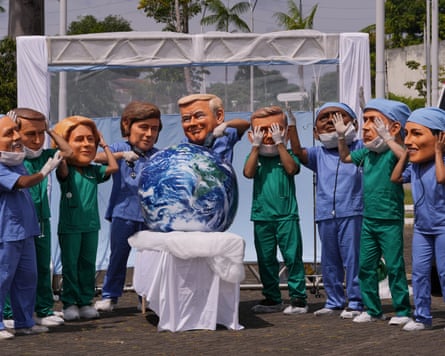
Colombia announced its intention to hold the breakaway conference last year, at the UN Cop30 climate summit in neighbouring Brazil, where the final outcome contained only an oblique reference to the phaseout of fossil fuels. Frustrated at the lack of progress, which was stymied by petrostates and their allies, Colombia proposed forging a “coalition of the willing” to discuss the detail of what such a transition would look like.
Who is taking part?
Fifty-four governments are registered, with most sending ministers or high-ranking officials, representing about a fifth of global fossil fuel production, and about a third of fossil fuel demand. They include EU member states, the UK, the co-hosts of the Cop31 summit Turkey and Australia, and dozens of developing countries, many of them small countries vulnerable to the effects of extreme weather. Major fossil fuel producers attending include Brazil, Mexico, Nigeria, Angola and Canada.
Who is not coming?
Many of the world’s biggest emitters of greenhouse gases will be absent, including China, India, the US, Russia, Iran and Japan. Irene Vélez Torres, Colombia’s environment minister, told the Guardian their absence was not a problem, as the conference would bring together countries that wanted to push for a new pathway. “Whatever nations have not yet taken that decision, then this is not the space for them. We are not going to have boycotters or climate denialists at the table,” Vélez said.
What is the impact of the oil crisis?
War in Iran and the closure of the strait of Hormuz, through which about a fifth of global oil and liquefied natural gas passes, have sent the oil price soaring, and all countries are feeling the shock. Rising prices for energy, food, fertiliser and other industrial products are a problem for consumers and businesses, while vulnerable people in poor countries are being pushed into hunger.
Renewable power generation, by contrast, offers a cheap and homegrown alternative, spurring some governments to push harder for an energy transition. As Bill McKibben, a climate campaigner, put it: “Sunlight travels 93m miles to reach the Earth – none of them through the strait of Hormuz.”
What will happen at the Santa Marta conference?
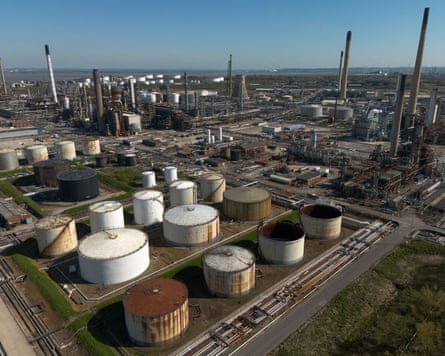
Fossil fuel producers will take centre stage. Vélez , one of whose previous jobs was minister of mines for Colombia, which is a big coal and oil exporter, said: “The first [priority for the conference] is: how can we be less economically dependent on the production of fossil fuels.” Finance for developing countries to switch, and debt relief, will be significant aspects of the discussion. Fossil fuel demand will also be addressed.
Will there be a concrete outcome?
Not quite. A global roadmap for a transition away from fossil fuels was one of the hottest subjects at Cop30, and though there was no formal resolution to begin work on such a framework, the host country, Brazil, agreed to start the process of helping countries to draw one up. Colombia’s conference will help those efforts, but does not rely on them.
Countries will draw up their own national roadmaps, and a group of renowned scientists – “rock star academics”, according to Vélez – will draft a report to help them.
Colombia’s conference is one of several overlapping global efforts to make the transition from fossil fuels a reality. One task for the Colombian and Dutch hosts will be to ensure these efforts work in harmony, rather than at cross purposes.
Is the world any closer to a phaseout of fossil fuels?
Renewable energy is surging ahead because of sharp falls in the cost of solar and wind energy components, and fears over national security raised by the Iran war and oil crisis. Last year, solar power generation increased by about a third globally, while generation from fossil fuels remained flat, according to the thinktank Ember. This year there has been a flurry of interest in EVs and solar panels in many countries.
Natalie Jones, a senior policy adviser at the International Institute for Sustainable Development, said: “Governments are now at a crossroads in responding to the current energy crisis: they can either double down on fossil fuels and entrench their vulnerability to future price shocks or they can actually build their way out by accelerating their transition to renewables efficiency and electrification.”
The real question is whether the transition can happen fast enough to avert the worst ravages of the climate crisis. Scientists fear the world may already have passed tipping points, when rising temperatures cause long-term changes that quickly become irreversible, such as the potential collapse of the critical Atlantic current system, the Atlantic meridional overturning circulation, which brings warm weather to Europe. The longer it takes to get rid of fossil fuels, the greater the danger.