9 hours ago
13
9 hours ago
13
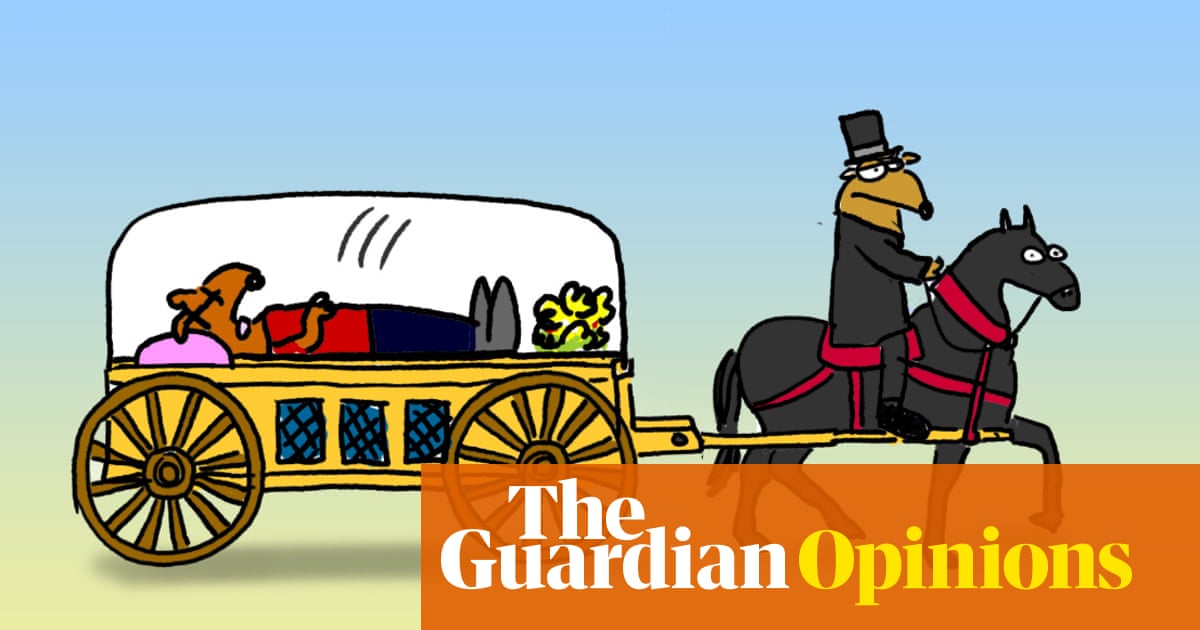
No 10: Full Confidence is the game all the lobby journalists and backbenchers are playing on their phones. Westminster hasn’t been so united by an app since the early 2010s, when everyone was trying to figure out what David Cameron saw in Angry Birds.
The game is quite engrossing: you are the prime minister, taking office, and your name is Yusuf Dunmore. Popularity starts high in all the important areas – cabinet, backbenchers, the media, the public. But from there, every decision you are called upon to make, from nominating a chancellor to your answers at PMQs, confronts you with an invidious choice between one crisis and another.
I was ready to resign in my third week – still technically the honeymoon period. The bad faith was all too overwhelming: an opposition that howled blue murder over things it didn’t even disagree with; a press that misconstrued for fun; a public with the aggregated emotional stability of a three-year-old who hadn’t had a nap. Marshalling all that while maintaining your own probity, when you had only intended to be 15% honest in the first place, seemed like more than any decent person could stand. None of this is to cast any shade on the game itself, which is very fun.
It’s always a useful corrective to put yourself in a prime minister’s shoes. Ten years ago, Peter Bull, a psychologist at York University, analysed the ways in which politicians avoid giving direct answers, and submitted that, at the time, Theresa May was our most evasive prime minister yet – in one interview, she answered a question straight only 14% of the time.
Bull was empathetic. Prime ministers have to protect their positive face (avoid making themselves look bad) at the same time as their negative face (avoid committing to anything, so they keep their freedom of action). The smart move in the immediate term is to say nothing of substance at all, but in the long term, that fosters an almost nihilistic alienation in the electorate. If you can’t trust someone to communicate something when they speak, what can you trust them with?
It’s only when you consider things from the politician’s perspective that you recognise we’re in a dynamic system of mutual distrust that spores and intensifies from one prime minister to the next: they’re evasive because they don’t trust our reactions; we lose trust because we can’t believe or make sense of their words. They then become ever more evasive, or alternatively, start to commit themselves wildly – to opinions, policies, values – in a bid for electoral popularity, which they then renege on.
It’s obvious, looking back, that May was simply the most evasive PM so far; you would definitely go to her for a straight answer before you’d go to Boris Johnson. Keir Starmer’s defenders always liked to point out, when his approval ratings tanked, that this wasn’t personal; this was politics – in the years since Brexit, every prime minister has faced severe unpopularity scores. We were meant to draw the conclusion that it wasn’t him, it was us, so we should just knuckle down and be governed; but the more devastating implication was that every time trust in a leader wanes, that lingers as a legacy for the next. In some recent cases, that was the prime minister’s only legacy (though, fair play to Liz Truss, my mortgage is also still incredibly high).
What a depressing thought, so let’s get back to your phone. The first decision to make as prime minister is who your chancellor should be, and never has the Brazilian philosopher Roberto Unger been more elegantly distilled: we think political ideas are realistic only to the extent that they match what we can already see, he argued. Your choice is between Reginald Forthwright, who the public loves and the markets hate, and Harriet Voss, ex-investment banker, who the markets love and the public has never heard of.
Forthwright’s actual economic policy, though, is a 3% flat tax on everything, and Voss has no policies at all. This reflects a truth even harsher than the mutual-suspicion doom loop, which is that we have absolutely lost the ability to conceive of the economic governance of the state, except in terms of the bond markets. Those who kowtow to them are realistic; those who don’t are living in a dream world, and the markets themselves are simultaneously omnipotent and labile – they don’t even know what they’re going to like until they see something they don’t – yet we must all, for the purposes of being grownups, surrender to them.
What pushed me over the edge as a new prime minister, though, was my “first howler” – in a press conference, I accidentally gave an answer that was the opposition’s policy, not my own. A gif had been made of my ensuing confusion before the event was over. In the 45 seconds I had to decide what to do next, I dwelt (unwisely, given the time constraints) on how the mistake would have come about. Either I was lukewarm about my policies and was only in the job because I thought I’d be good at it (Cameron-style). Or I was under so much pressure that my mouth was making noises without any input from my brain (could be May, Sunak, even Truss). Or perhaps I would literally just say anything to get out of a spot (a la Starmer).
after newsletter promotion
After a few hours of playing, though, I was sure of one thing: the new normal that is reflected in this game – that was co-created by us, the unforgiving voters – is prime ministers without a communicable sense of self and purpose. Recovery will, likewise, be a group effort, but will have to start at the top.
-
Zoe Williams is a Guardian columnist