2 hours ago
7
2 hours ago
7
“It’s really frustrating to be in this cycle of continuous surgery. It makes you feel helpless,” says Natalie Greenwood, of a condition that affects her so badly she is “non-functioning most of the time because of the constant fatigue”.
Greenwood, 36, needs to have an operation every few years to limit the impact of the endometriosis that gives her chronic pelvic pain, as well as extreme tiredness and brain fog.
She says the trouble with depending on surgery is not just having an invasive procedure and then having to recover afterwards. It’s more that the benefit gained – the relief from persistent pain – is brief.
She is not alone in her lack of belief in surgery and hormonal medication being effective for chronic pelvic pain. A study has found that dual approach, which is the NHS’s usual way of treating the condition, does not improve quality of life for female patients.
Greenwood was diagnosed with endometriosis 13 years ago, after leaving university. It is a condition in which tissue similar to the lining of the uterus – the endometrium – is found outside the uterus, most commonly in the pelvic cavity, and can cause inflammation and pain.
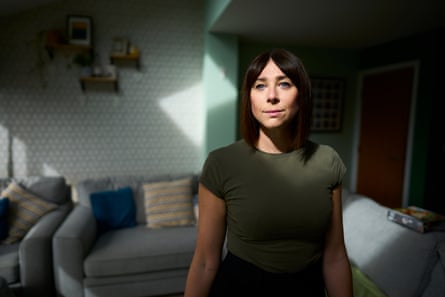
Greenwood, who is a languages teacher in West Yorkshire, has already had surgery three times: when she was 23, 28 and 32. In the first two operations she underwent ablation, in which the endometriosis is removed using heat or cold. The last procedure involved excision, in which the surgeon cuts out the endometriosis.
“The surgery is effective in that it can keep the pain at bay for a few more years. But I’ve never come out of it feeling better,” she said. “And in between surgeries I’ve still had to have hormone treatments, like a hormonal coil, or been put into chemical menopause. That keeps the endometriosis at bay by shutting down the hormones that cause it. But the endometriosis keeps growing. So you might feel better for a while but it’s always there in the background.”
Even after surgery, Greenwood has still needed what she calls her “pain management toolkit” – Tens machines, peppermint teabags, cooling patches, hot-water bottles and CBD oil.
Endometriosis is one of the main causes of chronic pelvic pain, a condition that affects between 6% and 27% of women worldwide. Others include vulvodynia and bladder pain syndrome.
“The surgery has never been a magic fix for me,” said Greenwood. “I don’t think it’s a magic fix for many people. You don’t just suddenly feel completely better. A life of surgery every five years is just not something you want to do. It’s not sustainable. It’s like a constant rut.”
Greenwood has a boy of five and is keen to have another child. But endometriosis has affected her fertility so much that she will soon start a course of IVF.
Whatever the outcome of that treatment, she is sure of one thing: “I won’t have surgery again. It’s not manageable to keep having surgery every five years. Whatever happens with the IVF, after it I’m going to have a hysterectomy and my ovaries removed because that might give me some relief from endometriosis.”
Dr Jasmine Hearn, a reader in health psychology at Manchester Metropolitan University who co-led the research in the new study, said: “Sadly patients are often left struggling due to current pain management strategies not sufficiently alleviating pain.
“Chronic pelvic pain is often invisible but its impact can be profound. Our findings highlight that women with pelvic pain report poorer quality of life when they’ve had surgery and hormonal medication for pelvic pain and better quality of life when psychological support is part of treatment.”
The 147 women in the study, who were aged 18 to 66, all reported that their pelvic pain had a major impact on both their physical and psychological quality of life and ability to function normally.
Surgery was found to be associated with lower physical quality of life while painkillers were associated with women having poorer physical, psychological and environmental quality of life.
In contrast, women who received psychological help as part of their treatment to help them manage their pain said their quality of life was better. The evidence for its effectiveness was so great that all those who suffer pelvic pain should be offered it, Hearn added.
Dr Lucy Whitaker, a researcher with the charity Wellbeing of Women and a clinical lecturer in obstetrics and gynaecology at Edinburgh University, agreed. She said the same suggestion was made in 2020 by Westminster’s all-party parliamentary group on endometriosis and by a confidential national inquiry into the condition in 2024.
Whitaker added: “Chronic pelvic pain conditions like endometriosis carry a well-documented psychological burden and integrating psychological support alongside medical management reflects a more holistic approach to a condition that has long been under-resourced.”
A spokesperson for NHS England said: “Chronic pelvic pain can have a significant impact on women’s lives and mental health. That’s why psychological professionals provide specialist pain-management support as part of wider physical health services – including for chronic pelvic pain – while women can also self-refer to NHS talking therapies for support with long-term physical health conditions.”