2 hours ago
9
2 hours ago
9
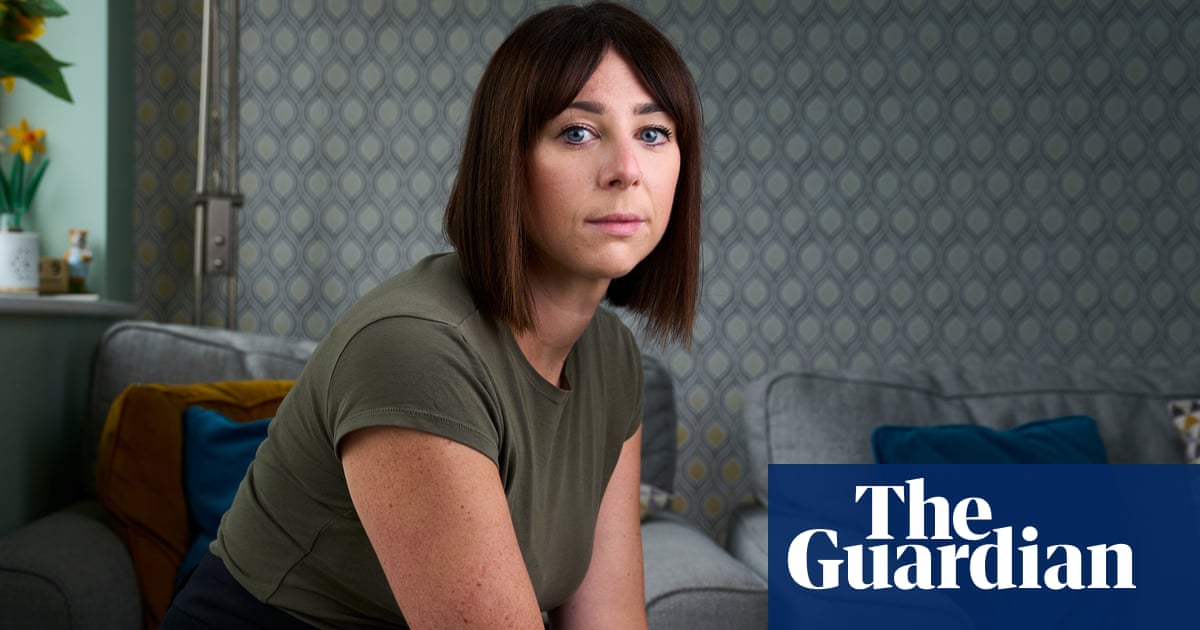
After Joe died, Jennifer Sellitti felt as though she were living underwater.
Other people became murky, their words muffled. She slept constantly; unconsciousness was a blessing. On the worst days, memories bowled her over.
“It was flashbacks, constantly,” she said. “I’d be having a conversation with you and look completely normal, but I’d really not be paying any attention because I’d be seeing these horrible images over and over again.”
Her brain replayed a grim carousel of intrusive memories from the morning of 29 July 2025. Pulling Joe out of the water, his limp body swinging from the hydraulic winch they normally used for retrieving deep-sea treasures.
Her, kneeling over Joe on the back of his boat, trying desperately to revive him. The death-mask look settling on his face as the life drained out of it. The two moles under his right eye, the ones she liked to kiss when she said goodbye.
She knuckled down, found tricks to stem the torrent. She had always been good at packing uncomfortable feelings into boxes; her job as New Jersey’s top public defender demanded it. But the problem with doing that, she knew, was the potential for those boxes to explode.
One night in early September, six weeks after his death, she stopped off at the dock to check on Joe’s boat – there had been a problem plugging into the shore power grid the day before. It was after a work event, and Jenn was in a ballgown and heels. She stepped aboard and immediately felt like someone had taken a baseball bat to her stomach.
“I don’t think I’d cried that hard since it happened,” she said. She lay down in Joe’s bunk. When she got up, somehow two hours had passed. “It was suddenly midnight and I’m on this boat, and it was like, what next?”
Joe Mazraani had died on a dive, seeking to identify a shipwreck the couple had discovered with their crew the previous summer. Both criminal defense lawyers by day, Joe and Jenn spent every waking hour outside the office plotting their next voyage, triangulating their next quarry. “We’re pirates,” Jenn likes to say.
More specifically, Joe and the crew of Tenacious were technical wreck divers, part salty sea dogs and part maritime detectives. Jenn managed the research and expeditions. She also ran point on hauling their discoveries into the light – not just organizing public appearances and liaising with museums, but connecting with the families of victims and survivors. Making sure their stories were told.
Their company, Atlantic Wreck Salvage, regularly made national headlines with their finds; as members of the crew will tell you, NBC’s Brian Williams interrupted the broadcast of an Olympic opening ceremony to announce they had discovered the last missing German submarine sunk off the coast of Nantucket during the second world war.
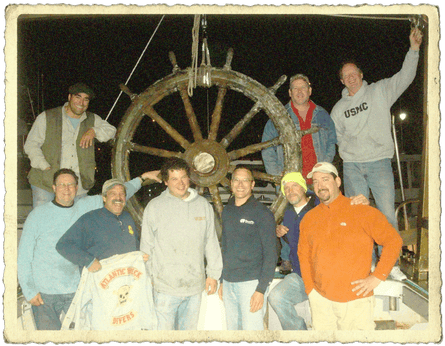
Both Joe and Jenn were load-bearing pillars of the operation, but she would be the first to tell you that Joe was the undisputed captain. He had built Tenacious himself, bolt by bolt; his knowledge of the boat had no backup.
So with his death, at 47, his crew, held together largely by his appetite for risk, love of adventure and force of will, was suddenly without an anchor. They drifted away, to other dive boats or towards retirement. Everyone assumed the boat would be sold to a man.
But Jenn had her captain’s license, too. Joe had given her Tenacious in his will. Even amid the grief, a plan was beginning to take hold in her mind. It was probably crazy. No, it was definitely crazy. But it might just ensure their survival.
“The way I see it, I have no other choice,” she said.
The popular image of a shipwreck hunter – a swashbuckler armed with a leather map and a bottle of rum – does not survive much contact with the actual thing. Ditto the shipwrecks themselves.
“Everybody thinks of a big pirate ship just sitting on the bottom of the ocean, perfectly preserved,” said Mike Dudas, a technical diver active since 1988. “It’s more like diving a junkyard.”
The linings of the east coast, particularly on the approach into New York Harbor, are littered with wrecks. These sites, each an alien world unto themselves, are far from hospitable to human intruders. Twisted steel and rotting timbers lie half-buried in a fine gray silt, rusted over or studded with anemones, pecked at by schools of fish, dragged about the sea floor by hapless fishers dropping their nets. It’s gloomy and still until a current materializes without warning, threatening to rip divers away from the debris field. The hulls have been rearranging their interiors for decades: collapsed passageways, fallen bulkheads, rooms you can no longer enter.
“A lot of times, you’re taking your bottles off, pushing them in front of you, and tearing your suit on the way in,” said Chris Ogden, a younger member of the Tenacious crew, “and just hoping you can get out the same way.”
Real shipwreck hunting is similarly unromantic. The vast majority of the process is made up of painstaking research, poring over historical charts, survivor accounts and archival clippings. Then comes the actual search itself, which largely constitutes arguing about sonar data. This phase involves towing a torpedo-shaped device called a towfish behind the boat on an armored cable, at three to five knots, sweeping back and forth across a predetermined search grid for hours on end. Divers call it “mowing the lawn”. If you’re lucky, out of the endless stream of acoustic images of the ocean floor, an anomaly will emerge.
Then you get in the water.
Recreational divers work to a limit of about 120ft (37 metres); technical divers like those aboard Tenacious regularly descend to 300, sometimes pushing toward 400 – squarely in what veteran diver Eric Takakjian calls the “don’t-try-this-at-home category”. That far down, the light disappears fast. Packer heard Simon and Garfunkel in his head every time he traversed an anchor line. Hello, darkness, my old friend.
The math also changes. A diver gets roughly 25 minutes of bottom time, followed by two to three hours of mind-numbing ascent to dissipate the nitrogen that’s accumulated in their blood and tissue. Ascend too quickly and that nitrogen can form bubbles inside the body, causing paralysis, brain damage or death.
The technical diving community of the eastern seaboard is small enough that everyone, at most, knows someone who knows someone who’s died on a dive. The Andrea Doria, a once gorgeous luxury liner, has claimed the lives of nearly two dozen divers since its sinking in 1956. The toll is accepted as the price of admission.
“Call it passion, maybe, but it’s more like a sickness,” Ogden said.
Jenn was standing with her back to the door, studying her bookcase, when she sensed someone was watching her.
It was 2014 and she had been in her new office for three or four days. Her bosses at the public defender’s office had sent her to take over a trial region that had grown, in their estimation, sloppy. The space reflected it, with jumbled records everywhere.
She turned around. A man she had never seen before looked back at her.
“How did you get in here?” Jenn demanded.
“I’m Joe Mazraani.” He seemed amused.
“That’s not what I asked.”
Her secretary materialized in the doorway, flustered – “no, no, he’s OK, he’s a pool attorney, I wanted you to meet him” – and Sellitti turned back to the stranger. He was looking her up and down with a frank appraisal. His eyes landed on her shoes.
“Are those Louboutins?”
“Yes.”
A beat.
“Are you going to shake things up around here,” he said, “or is it going to be status quo?”
Jenn stared at him. “I’m going to shake things up around here.”
He nodded once and walked out of her office.
They became friends not long after, the way two trial animals usually do, working a case together. They had similar philosophies – push, fight, do not make peace with the state on its terms.
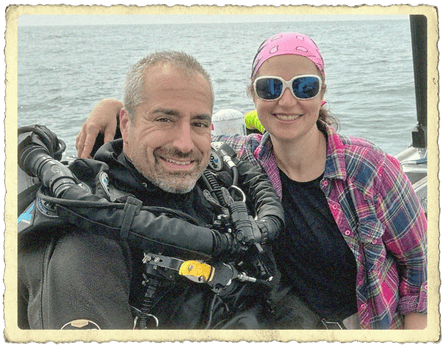
Their first date was in early 2015 at a place called Rat’s Restaurant in central Jersey. The maître d’ assumed Joe was Jenn’s professor. Joe, four years younger than Jenn, found this hilarious.
He had never been married, he told her. Every previous relationship had buckled under the weight of the same rival. “There was always the other woman,” Jenn said. Tenacious – the 45-ft fiberglass fishing boat Joe had bought in Maryland on a bitterly cold winter’s day in 2010. He had been diving for far longer, but the boat gave him what he had been missing: the ability to go where he wanted, when he wanted, for as long as the work required.
Joe Mazraani grew up in Beirut in the 1980s. He would tell anyone who asked, and plenty who didn’t, that he was Phoenician. “Our people are sea people,” he would tell Jenn. The Phoenicians were the great maritime civilization of the ancient world, the ones who first charted the Mediterranean, who had pushed past the Pillars of Hercules into open ocean. If you were going to be obsessed with the sea, you may as well have the blood for it.
He was 15 when his family sent him to America. He lived with relatives in New Jersey, then Florida. He went to college on Staten Island, where he lived for a time in a Lebanese church. He was 19, when he took his first dive class.
In the meticulous logs of his first 197 dives, which Jenn found only after his death – Joe had sworn up and down he hadn’t kept any such logs, he had never had the patience – he excitedly recorded horseshoe crab sightings and expressed fears about low visibility. The little PADI (Professional Association of Diving Instructors) booklet had a section for personal information. Under Distinguishing scars/marks, Joe had written: “I AM AN ASSHOLE!” Allergic to: “Idiots”. Medications I must have: “Knowledge”.
He became a lawyer primarily as a means of paying for his habit; an older diver had told him that only the law or medicine could support a serious diving hobby. Doctors, Joe thought, spent too much time on land.
Jenn understood this in a way his previous partners hadn’t: she was the same. The daughter of educators, she had spent years ice climbing, a pastime that involves clambering up frozen waterfalls at altitude. She was familiar with the patterns of being unable to commit to plans more than a day in advance; waiting all week for the temperature to plunge; checking forecasts obsessively; deciding on a dime to drop everything and drive three hours to New Hampshire. She knew what it was like to be in the grip of something that looked, from the outside, like a pathology.
Their first New Year’s together, Joe decanted wine into a barnacle-crusted vase he had raised from the SS Choapa, a Chilean freighter that sank off the Jersey Shore in 1944. They danced beside the kitchen table while Édith Piaf crooned La Vie en Rose. He whispered to her that he loved her, over and over again.
For Jenn, who had been married once before, “love” didn’t do it justice. “What we had was more intense than that,” she said. “It was like looking at another person and finally, fully understanding who you are.” It felt more like the two of them burned together.
Tom Packer, a veteran diver on the east coast scene who had known Joe for years, had taken to teasing him about the burgeoning romance. “When are you going to marry this girl? My God,” he remembered thinking. Joe and Jenn had already decided that marriage and kids weren’t for them, but in a few years’ time they would move out to a small Raritan Valley farm, filling it with marine artifacts at the expense of basic furniture.
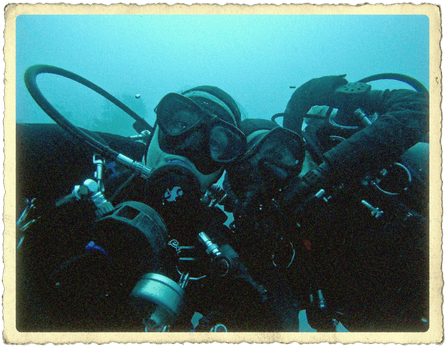
His friends could see it plainly enough – the way Joe looked at Jenn, the way she and the boat both fit perfectly into his life. “I was so happy for him,” Packer said. “We all were.”
The first time Jenn set foot on Tenacious was 18 June 2015. She didn’t have her diver’s certification yet, but there was no shortage of things to do on a working boat. She cooked. She led yoga sessions on deck. She learned the service support routines. She logged a daily 20,000 steps on a vessel she could cross in 30 paces.
By then, Joe had already built something of a professional reputation for himself. He was a world-class grump and could be fiendishly uncommunicative, particularly when it came to what he had planned for his next conquest. But he was also known to be one of the most capable and accomplished wreck divers in the region.
His was the crew that had recovered the auxiliary stern helm of the SS Ayuruoca, a Brazilian freighter that belches oil and lies in a deep, silty offshoot of the Hudson River aptly nicknamed the Mudhole. They had raised telegraphs and foghorns, portholes and bells, crockery and silverware and bathroom tiles, the instruments and ornaments of ships that were, in their time, the finest things men could make.
The crew was a rotating cast of around 20 regulars, handpicked by Joe and recruited through reputation and word-of-mouth, trips coordinated through a text chain and the occasional email. Among them was a diver called Tim Whitehead, who readily sold his 2003 Cobra Mustang to buy the right equipment for their expeditions.
“Anybody that dives in Jersey wants to dive on Tenacious,” Whitehead said.
Her first year, Jenn stuck to day trips. In 2016 she did one offshore run – the Andrea Doria, for the wreck’s 60th anniversary. She got her open water certification in 2017, her advanced certification two years later. But what bound her to Tenacious wasn’t the diving; it was the stories. The more she learned about the people on these ships – who they were, why they were there, what became of them – the less she could stop.
One ship in particular ensnared her imagination.
Le Lyonnais was a transatlantic passenger steamship that collided with an American sailing vessel in heavy fog off the coast of Nantucket five years before the outbreak of the civil war. The American ship, the Adriatic, left the damaged liner to sink and its survivors to fend for themselves. After a week at sea beset by storms and freezing temperatures, just 18 of 132 souls aboard survived. The Adriatic’s captain was put on trial, only for the proceedings to be swept aside by the onslaught of war. The victims’ families never received justice, and for more than a century and a half Le Lyonnais’s final resting place remained unknown.
It took eight years for Jenn to find the ship. By the time she was done, she had literally written the book on the subject.
She fell in love with Le Lyonnais in 2016, when a friend and shipwreck detective named Eric Takakjian mentioned its existence to her. “It quickly became my dream to find it,” Jenn remembered. “Every year, I would collect a binder full of the information I’d found and drive up to Eric’s house in Fairhaven, where we compared notes.” They called it, for reasons unclear, Project Mayonnaise.
By 2019, they had narrowed down the ship’s probable location to part of a rugged, uncharted underwater plateau called Georges Bank. Jenn’s hopes sank. Tenacious, plucky though she was, didn’t have nearly the horsepower required to motor all the way from the Jersey Shore to the bank, which lay 200 miles offshore of Fairhaven.
The nearest Coast Guard station may as well have been on another planet. And then there were the conditions. “Everything is just wilder there,” a sea captain once told Jenn. A popular route from America to England in its time, the Bank was a veritable graveyard of ships – but knowledge, even anecdotal, about dive conditions was virtually zilch.
Joe went silent on the matter. Jenn figured it was a lost cause. Then he came back with a plan. New engine. Double the fuel capacity. Side-scan sonar. Give him the winter of 2021 to upgrade Tenacious, he said, and maybe they could find Le Lyonnais.
The crew motored out to Georges Bank for the first time the next summer, “mowing the lawn” and taking measurements of anomalies they didn’t have the conditions to investigate further. In August 2024, they finally identified one of these blips as their culprit, diving down and matching a part of her rigging and engine cylinder to Le Lyonnais’s recorded specifications.
“Being able to find this ship, I felt like I was giving closure to the people who suffered there,” Jenn told the New York Times.
Their celebration was purposefully short-lived, however. “We never rested on our laurels,” Packer noted. “As soon as we’d accomplished something, it was behind us and we were on to the next thing.”
“The problem is how quickly the moment fades,” Jenn said. “The only way to get it back is to find something else. The search never ends.”
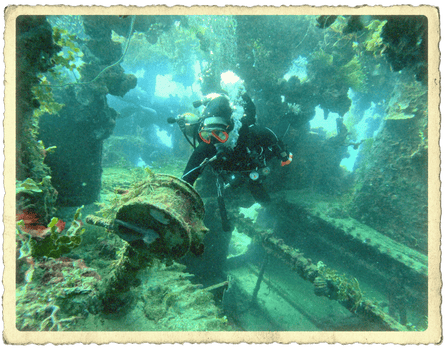
The Times’s report noted the crew had one false start on that expedition, first diving down to a “completely different wreck” they suspected might be Le Lyonnais. This Jane Doe ship they dubbed the Big Engine Steamer. They vowed to return and identify her the next year.
It would be Joe’s last dive.
Joe died on a Tuesday. The night before, he and Jenn had stood on the back of Tenacious and talked about how far they had come as the light faded around them. The ocean around them felt like it was all theirs – it would be their playground for the next 10 years, at least. She would retire first, maybe work part-time at his firm. He put his arm around her.
“We were very much in this moment,” Jenn said, “on the edge of everything that we had dreamed of. Truly.”
Jenn didn’t tell Joe, but she had been trying to stifle an uneasy feeling since Thursday, the night before they had struck out for the Bank. Their Portuguese water dog, Pirate, had laid down in the driveway and didn’t get up. Pirate had been old and sick, long since retired from sea life, but his death still came as a shock.
“Joe was really upset,” Jenn recalled, but delaying the trip was out of the question. “He was also a good compartmentalizer,” she said. “Once he got his head in the game, that was it.”
Between her own waves of grief, Jenn tried not to think of Pirate’s death as an ill omen. But her apprehension didn’t abate as they drove up to Nantucket and pulled out to sea. The sky over the ocean looked ominous and foreboding in a way it never had before.
Keeping watch and listening to music on Monday night, she couldn’t ignore it any more; she looked up at the stars and asked for a sign. The next song that started playing was I Am Disappeared by Frank Turner, which is about open seas and pirate ships and people “wrapped up tight in the things that will kill them”. Jenn ripped her headphone jack out so hard that she almost lost her phone overboard.
She tried to tell herself it was only the approaching storm. There is little room for superstition or doubt on a 45-ft boat. Fear is contagious in an environment that small. You keep your worries to yourself.
Joe was in a good mood that next morning, which for him meant garden-variety grumbling instead of barking out rapid-fire orders. Jenn always told him the same thing before he splashed: “Have fun.” Never: “Be careful.” You don’t speak like that on the water. But on 29 July 2025, at 10 in the morning, she kissed him and said: “Be careful.”
He looked at her strangely.
“Of course,” he said, and dropped out of sight.
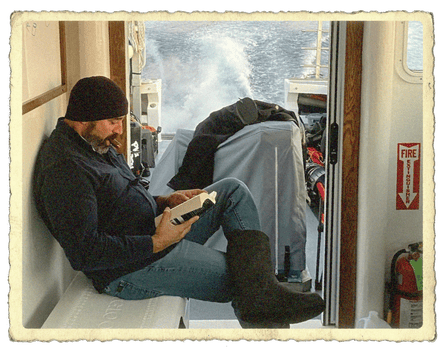
Seventy-five minutes later, Jenn was pacing the deck, watching the clock, waiting to feel the tell-tale sensation of their hook being freed from the wreck. Four divers, including Joe, were below, and they were behind on schedule, which she remarked on to Eric Takakjian, who was working calmly in the galley at his laptop.
That’s when she spotted Joe’s fins, breaking the surface behind Tenacious’s transom.
He wasn’t supposed to surface for another hour and a half. The nitrogen he had accumulated at depth was still in his body, expanding faster than his body could expel it, a potentially lethal state.
Jenn screamed. Joe, disoriented but conscious, seemed to moan and reach for the equipment line. Takakjian was in the chase boat before Jenn could move. He grabbed Joe, flipped him on to his back. Joe made one more sound and then went still as Takakjian started slicing his gear off. Jenn was half in the water, tugging at his equipment from underneath as Takakjian cut above.
Somewhere in those seconds she understood: it was already too late. There was no getting Joe back down deep enough for the decompression he would need to survive.
They got him onboard with the hydraulic winch and started performing CPR until Jenn said: “Eric. If you’re doing this because you think I don’t know he’s dead, you can stop.” Takakjian took his hands off Joe’s chest. They looked at each other. They were both crying.
It took hours for the three other divers – Packer and two longtime Tenacious crewmates named Andrew Donn and Rick Simon – to surface.
Only Simon had seen anything wrong underwater.
He had run into Joe while ascending, 50ft down, his eyes closed and his tether unclipped from the anchor line. Simon grabbed Joe and performed the standard first move for an unresponsive or distressed diver at depth, hitting his bailout valve, a mouthpiece switch that pulls a diver off the recycled gas loop he has been breathing and on to a shot of open-circuit gas from a dedicated emergency tank.
Joe’s eyes opened. It wasn’t clear if he was fully conscious, but he shot up toward the surface, too quickly for Simon to safely follow. Simon lost sight of Joe in the murky water overhead, but figured he might be heading for the emergency oxygen bottle they had hung at 20ft.
Back on the boat, they radioed the Coast Guard, who told them to bring Joe’s body in. There was no point in sending officers out if he was already gone. “In that moment,” Jenn said, “that felt like the worst thing in the world.”
The crew put Joe in a sleeping bag and zipped it up. The 200-mile return journey was 16 hours of tortuous silence, punctuated only by the sounds of someone breaking out in sobs. At some point, Jenn crawled into the top bunk, unable to bear her usual berth, which faced Joe’s empty one.
It’s over, she remembered thinking. It’s all over.
Jenn spent years learning how to find what was lost. She hadn’t yet learned how to be one of the people left behind.
As she moved through life underwater, the rest of the crew was undone in their own ways. Packer, 67 years old this summer, found himself unable to move for days at a time. He would get dressed to work out, sit down to put his sneakers on, and find himself unable to rise again, let alone walk the 10ft to his basement gym.
Whitehead was ready to sell his rebreather and give up technical diving entirely. Ogden, who had pushed through his grief by immediately getting back in the water, told him to stop being stupid. “I was like this insane cheerleader for three months,” he said.
An autopsy report ruled Joe’s cause of death as barometric trauma: the bends. What actually caused him to go into paroxysms underwater, before he shot to the surface, will probably never be known. The Coast Guard investigation, which stretches on, found that his equipment hadn’t failed. “I’m a nervous diver, so Joe always used to tell me, ‘If you can breathe, you can think,’” Jenn said. “I saw him calm and collected underwater in the most catastrophic situations. So the only conclusion I can draw is that he couldn’t breathe.”
But she could breathe. She could think. She started seeing a therapist for the first time in her life. She was diagnosed with post-traumatic stress disorder, which, yeah, that felt about right.
Her plan began to take shape in the weeks after she collapsed aboard Tenacious in her ballgown and heels. Two trusted friends in the diving world, Dudas and Harold Moyers, came over to install a television at the farm one night, and she decided to lay it all out for them then and there. It was an exacting 10-year plan to rebuild the operation to what it had been, this time with Jenn at the helm, culminating in the scattering of Joe’s ashes on the U-550, the sub whose discovery had interrupted the Olympics on NBC.
Moyers, a captain himself, got a funny look on his face. She waited for him to tell her she was insane, advise her to sell Tenacious.
“I don’t think it’s going to take that long,” he said instead.
In early October, they held a memorial at a friend’s restaurant called the Shipwreck Grill. They sounded the foghorn of the Andrea Doria, one of Joe’s most prized treasures. In front of the crew, colleagues, friends, and Joe’s family, including his parents, who had flown out from Lebanon, Jenn gathered herself to tell them about the dive they had done the previous weekend, their first expedition since Joe’s death.
“The weather was rough. We learned the other boats had turned back …” she said. “It was scary. And just then I heard a voice. It was the first time I really felt him. The first time he had really talked to me since he died. That voice whispered one word: ‘Forward.’ So I put the throttle down, and it wound up being a beautiful day.”
Though she didn’t say it at the memorial, what they had accomplished on that single dive – retrieving the anchor of the Maurice Tracy – had been her plan for the entire fall. As soon as Ogden surfaced with the anchor and the lift bag, he looked to Jenn. So did the rest of the crew. What next?
They went diving again the next day.
In January, the crew of Tenacious held an all-hands muster at her house – still without furniture – and unanimously voted her their captain.
“You just inherited a huge, huge family of brothers,” Takakjian told her, “who are going to help you for ever.”
She told them how it would work with her in charge. She would make the calls on things she was certain about but, unlike Joe, she wanted their input. They would all carry on Joe’s legacy together.
This summer, the plan revolves around the Carolina – Joe’s favorite wreck. No one has found her bell yet. Jenn has a good feeling about it.
“All I know is,” she said, “that the further from shore I am, the closer I am to him.”