3 months ago
104
3 months ago
104
As a recent study revealed almost half of UK adults now spend less than three hours a week in natural settings such as gardens, parks, fields or woods, we asked readers to tell us about what being outside means to them.
The replies – heartfelt and passionate – came flooding in, with some admitting they just did not have the words to say how important it is.
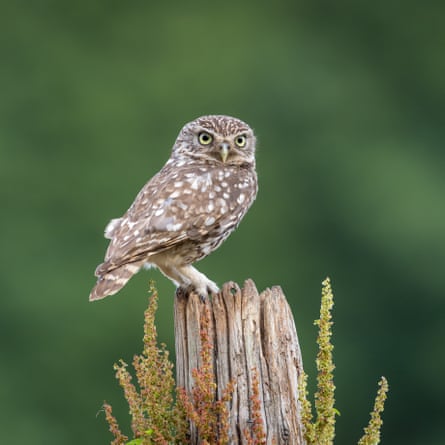
“It’s my happy place, my therapy and a reason to slow down and pause during my busy week,” wrote Hannah Powell from Perrywood garden centres. “I HAVE to look at plants every day. I notice every change in the garden. I sit facing the garden for my breakfast. I look out for nature on the way to work (recently seeing a little owl, red kites, foxes, hares, and more). It helped me get better when I had burnout and FND in London. I wouldn’t (couldn’t) be without it.”
“I am more fully human, my whole self,” David Lynch said about his love of being outside. “Anxiety levels drop, all worldly concerns are put in perspective and [I] feel younger.”
He agreed with others that there was plenty of recent science explaining the health benefits, but added: “I also read about ancient wisdom of Buddhism, which advocates solitary time in nature. All sources uphold the truth that better connection with nature brings better self-awareness and increased sensitivity to the needs of our ecosystem, plus better connection with each other.”
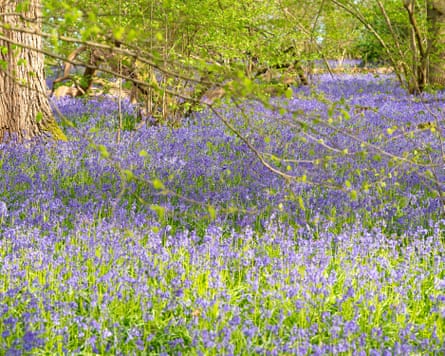
Isabel Romaniw, who is working towards becoming a forest bathing guide, wrote passionately about the basic human need to be outside and to connect with nature. “We are animal, a simultaneously ordinary and yet utterly remarkable part of the great, miraculous tapestry of life on Earth. We have done much to shape our world and influence the fates of almost all other species we share our world with, but we must remember that we are but a tiny chapter, perhaps a footnote, in the ongoing story of the universe, in order to start to heal the damage and repair our relationships with ourselves, with each other, with our other-than-human kin, and with our one precious home.” For Romaniw, as for many others, our disconnection with nature is closely linked to “the worsening physical, mental and spiritual health crises that seem to be going on”.
Many of you had wonderful memories of times outside. “I was a sickly, pasty, shy, anxious kid,” wrote Mat Jordan. “In the early 70s my parents couldn’t afford to take us to the seaside one year so we went camping in the Peak District instead. It was a revelation. I absolutely loved it. The landscape and dry-stone walls of the white peak are still a favourite, although I spent some years in my 20s living in the Lake District too. One of my favourite memories is driving out of Sheffield into the Peaks with my then baby son to get him to fall asleep and still being awe-struck at the beauty on our doorstep.”
Gabrielle Kirby remembered being “aged three or four, stepping with open sandals into long wet grass: the wild camping spot that we drove through the night to get to near Fort William. Regular camping there in rain or midge-clouds, next to a fast-flowing stream where I got water in my wellies, spending hours mucking about, building dams and harbours. Cycling around country lanes – falling off. Going into the woods and making dens. Quite a lot of time alone but not lonely.” Clare Moss wrote about how she grew up near Tunbridge Wells in Kent, and “would spend hours on my own exploring the vast commons: building dens, climbing the strange sandstone outcrops and hiding away in the middle of nowhere with just a bottle of squash and a Marmite sandwich. It built a sense of independence and adventure that has stayed with me.”
Another reader, who was a frontline worker during the pandemic and asked to remain anonymous, remembered her “first swim in Glen Faba [near Harlow in Essex] in summer 2020, when my usual swimming places were still out of bounds. A huge lake, an open expanse. Watched little grebes carrying their young on their backs, saw a heron swoop to catch fish. Dried out in the sunshine by the side of the lake after my swim and enjoyed the peace. Cycled home and slept better that night than I had for several months (sleep had been poor due to impact of being in workplace as keyworker).”
The gratitude and humility that our readers feel when they think about green spaces were evident. As Yve put it: “I believe that nature and being outdoors is a great healer. I became very ill with psychosis in my late 40s and had to give up work. It was being outside, gardening and becoming interested in birdwatching that eventually enabled me to come off my antidepressants and antipsychotic medication. Walking early morning as close to dawn as I can is calming and therapeutic and decreases any anxiety. Walking through woodland or moorland or just over rural footpaths fills the senses with birdsong or smells or just observing the subtle daily changes of the seasons.”