5 hours ago
18
5 hours ago
18
Good governments have a vision. They know what they want to achieve, can articulate why, and work out in public how to get there. They don’t just spout slogans about economic growth – because growth is meaningless unless we know what it is for. They understand that there is no trade-off between solving social problems and boosting the economy, and aim to do both, while avoiding rigid fiscal rules that defeat their own purpose by strangling public investment.
If this sounds like a critique of what went wrong with Keir Starmer’s government, it is also a lot more. Mariana Mazzucato, a professor in the economics of innovation and public value at University College London, is a world-renowned economist, adviser to governments, chair of international commissions, prolific author, and PhD supervisor to at least one poet. She was the thinker who inspired Starmer to fashion his political project around five key “missions”, now largely forgotten in the mire of scandals, U-turns and infighting that beset his premiership.
Her judgment on Labour, and its lack of obvious direction, is withering. “Fine, come in, say the Tories were shit, but once you’ve said it, move on!” she cries from the sunny garden of her north London home. “You’ve got five years, so what’s your plan? What’s the positive narrative? It was always half baked … [now] it’s half assed.”
But while Mazzucato is horrified at what Starmer’s government has become, her aim is global. In her new book, The Common Good Economy: A New Compass, she wants nothing less than a remaking of economic theory and government practice, around a new set of purposes that would tackle the global scourge of inequality and the existential threat of the climate and nature crises. Current economic models have failed us. She argues that the world needs to rediscover the idea of the common good, our shared fate that depends on equitably nurturing the bounty of our only planet.

To do that, governments need, in Mazzucato’s blunt telling, to “get back their mojo”. Far from being passive fixers in thrall to market economies, as the neoliberal consensus would have it, in reality they are the supreme actors, shapers of markets, arbiters of the economy. They need to start believing they can govern, wield their power without apology, and stop cringing in the face of the bond markets.
“If there’s no purpose or direction, then what the hell are we doing? And who sets that purpose? It has to be co-created through real participation, not tokenistic,” she says. “[We need] an objective-oriented economy, where how we all relate to each other matters as much as what we’re doing.”
As for paying for it? “There’s plenty of money, it’s just not directed towards anything, and government’s part of the problem.”
It is thrilling, at a time when global problems seem too big to solve, or too frightening to contemplate, to be told that governments hold such sway.
“The reason I’m hopeful is that all of this is possible,” says Mazzucato. “[You need] a happy narrative [for the common good] that would inspire young people. Like the Artemis going to the moon – it doesn’t have to be space, but really ambitious missions make people dream. They’re all looking up at the sky.”

The common good went missing from political discourse in the early 1980s. Under Reagan-Thatcherism, people became consumers instead of citizens, “customers” on transport rather than “passengers”, clients of social services rather than families. Governments recast themselves as administrators, focused on efficiency and cost-cutting instead of civic wellbeing, and adopted business school paradigms of catering to their customers rather than caring for their citizens.
That was supposed to bring private-sector discipline and efficiency. Instead, it brought the debasement of the public sphere. Mazzucato has already written of the disasters that ensue when governments renounce the practice of governing. In her 2013 book, The Entrepreneurial State, she exploded the neoliberal myth that only the private sector can innovate, demonstrating that economic success comes as much from the public sector as from captains of industry. (To take one ironic example, the internet, ultimate power source of the libertarian tech billionaires, started out as a government project.)
In The Big Con, published in 2023, Mazzucato and co-author Rosie Collington exposed how the reliance of governments on the consultancy class “weakens our businesses, infantilises our governments and warps our economies”.
These are the kind of messages that may resonate with Labour’s expected next leader, Andy Burnham. But will it frighten the bond markets? “I don’t know any government in the global north that has ever been penalised by the bond markets through a smart strategic investment strategy,” says Mazzucato. “Liz Truss was not penalised for that, she was penalised for having the most idiotic tax policy ever, it had nothing to do with investment.”

Mazzucato may be technically an economist but she takes her ideas from everywhere, from biology to Indigenous knowledge and how carnivals can build a more creative common good economy. This helps her to see things differently.
Economists have mostly thought about the climate – when they have thought about it at all – in terms of a sort of planetary balance sheet of credits and debits, environmental goods balancing out environmental harms.
after newsletter promotion
Some activities – burning fossil fuels, overextracting water, logging forests – have unfortunate consequences for the natural world and these are known as “externalities”, problems that exist outside the system of goods that the market provides a price for. Because the market does not explicitly value “public goods”, such as clean air, clean water, a livable climate, these are not taken into account. That is a market failure, and market failures are supposed to be corrected by market methods, pricing in the externalities, such as by putting a tax on carbon.
This also fits with seeing the climate crisis, as decades of economists have been trained to do, as an example of the “tragedy of the commons” – anyone can pollute the atmosphere, just as anyone can exploit the common land, and no one bears direct individual responsibility for the resultant harm, so fossil fuel companies carry on making money while the planet burns.
These ways of thinking, according to Mazzucato, get the problem the wrong way round. “In the old economics, doing good is a correction,” she says in her latest book. “In an economics of the common good, it is an objective we design and work on together.”
Other radical economists, facing the same conundrums, have argued for scrapping the capitalist and “extractivist” fixation on unending economic growth altogether. The “degrowth” and “post-growth” movements have gained traction, with proponents arguing that on a planet of finite resources, reducing production and consumption is the only rational, and possible, way forward.
Yet Mazzucato plants her ideas firmly under a capitalist umbrella. “The problem is not growth, but that we’ve been growing in the wrong way.” And if the climate crisis cannot be solved within capitalist systems, as some have argued, then “we should all go to bed and not wake up”, she says, because the kind of revolutionary political reforms required would take too long to avert catastrophic heating.
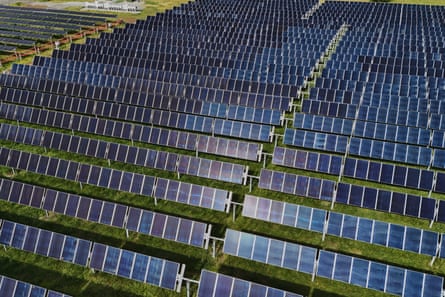
Nevertheless, there is mutual respect among those radical economists and they essentially have the same aim in mind – a more equal and functioning society and economy that rescues the planet from ecological catastrophe – when their real enemies, the populist politicians who care nothing for either goal, are so much in the ascendant.
Mazzucato takes pains to distinguish between her definition of the common good and what economists refer to as public goods – services that are, in economic jargon, non-excludable, in that people cannot easily be prevented from using them, and non-rivalrous, meaning one person’s use does not reduce the amount available to others. “Public goods are merely corrections for what the private sector won’t do; the common good, however, is a shared objective,” she writes. She also warns governments that “pre-distribution” – ensuring that citizens get a fair share in the state’s investments from the outset – is better than attempts at redistribution through taxes and benefits.
Underneath the hard economics and abstruse discussions of Aristotle and Adam Smith, her ideas are based on simple aims that spring vividly from her outpourings of ideas in conversation: human flourishing, and joy. She speaks with passion about human self-expression and creativity – “we unfortunately talk too much to economists, too little to poets” – and gets even more excited talking about swimming and football. Her beloved Arsenal won the Premier League shortly before our interview, sparking a spontaneous gathering at the team’s north London stadium that she saw as an outpouring of community spirit. For Mazzucato, if we are to save ourselves, the place to do so will be in public places, in the fun of carnivals, in the community spaces where the common good is expressed, though not always articulated.

She points to work in Camden, north London, turning food banks into food cooperatives, where people can pool resources to buy food in bulk at lower prices. “Just literally the facial expression that I’ve seen in women – it’s mainly women who use it. There’s a Somalian women’s food cooperative near here where they just feel good. Look at people walking into a food bank – they don’t feel good. It just goes to our human soul.” Community involvement is not just essential to the common good, it is the common good. “The reason I wrote the book is not just academic, I literally believe people want that [involvement], they feel better about themselves, it’s joyful.”
Only community with other people can bring that sort of joy, and rightwing governments in the UK and around the world that have focused on cost-cutting and running down the public sphere in favour of private provision have neglected and in some cases destroyed community amenities, and communities with them. Shared spaces, Mazzucato makes clear in her book, are at the heart of any idea of the common good. “It’s investing in those collective structures,” she says.
Arsenal FC also run children’s football teams and training sessions around north London, an example of the common good in action. “My kids all used to play [at nearby pitches] there on Friday nights, and I used to almost cry when I’d go there. You just see hundreds of kids and their parents, lots of them from the local estates, and I used to think, imagine if this was normal, imagine if this was everywhere, people had a place to go,” she says. “It’s not that it would solve crime, but I literally would bet that if you made a kind of Marshall plan investment in soccer pitches, public libraries, public pools, and made it beautiful, you would see health benefits and lower crime and a lower cost to the state. We shouldn’t just do it because it’s good for people – which is the reason to do it – but it also costs you less, ultimately.”