1 month ago
66
1 month ago
66
Iran's military warns it will attack if US forces enter Hormuz strait
The head of the Iranian military’s unified command has said US or any other foreign armed forces will be attacked if they enter the strait of Hormuz.
The command warned US forces to stay out of the strait and said its forces would “respond harshly” to any threat, telling commercial ships and oil tankers to refrain from any movement in the absence of coordination with Iran’s military.
Ali Abdollahi, head of the forces’ unified command, said in the statement quoted by Reuters:
We have repeatedly said the security of the strait of Hormuz is in our hands and that the safe passage of vessels needs to be coordinated with the armed forces.
We warn that any foreign armed forces, especially the aggressive US army, will be attacked if they intend to approach and enter the strait of Hormuz.”

Key events Show key events only Please turn on JavaScript to use this feature
Iran confirms US counterproposal to end war is being 'reviewed'
The Iranian foreign ministry spokesperson, Esmail Baghaei, has been speaking to journalists in a media briefing. According to Al Jazeera, he confirmed officials were reviewing a US counterproposal to end the US-Israeli war on Iran.
“The US message was received through Pakistan, and I will not discuss the details of the issues raised at this time because these issues are still under review,” Baghaei said. It is not clear what terms the US demanded Iran accept in its counterproposal.
“The issues raised about enrichment or nuclear materials are purely speculative and, at this stage, we are not talking about anything other than stopping the war completely, and the direction we will take in the future will be determined in the future.”
Iran foreign ministry says US must abandon its 'excessive demands'
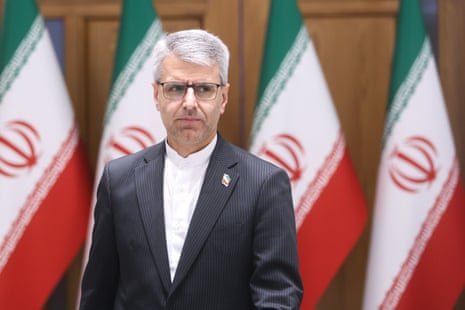
Iran’s foreign ministry spokesperson Esmail Baghaei has suggested that the US must reduce its “excessive” demands in negotiations if the US-Israeli war on Iran is to be brought to an end.
“At this stage, our priority is to end the war,” he said in a briefing broadcast by state television. “The other side must commit to a reasonable approach and abandon its excessive demands regarding Iran.”
Iran has reportedly received a US response to its latest peace proposal, which is said to have focused on an initial agreement to open the strait of Hormuz, for the US to withdraw its forces from near Iran’s borders, pay compensation for its attack on Iran and for Israel to end its war on Lebanon.
The US president, Donald Trump, claimed on Sunday that his representatives were having “very positive” discussions with Iran but also reportedly told Israel’s Kan News on the same day that the Iranian proposal was unacceptable to him.
The US has repeatedly said it will not end its war without an agreement that prevents Iran from ever obtaining a nuclear weapon. The regime in Tehran insists the programme is for civilian purposes and it has no intention of making a nuclear weapon.
It is possible that an agreement for the strait of Hormuz to reopen is reached before Iran’s nuclear programme is discussed at a later stage of negotiations but, as my colleague Julian Borger notes in this story, there is growing speculation over the possibility of another round of US airstrikes against Iran aimed at forcing concessions faster.
The internet blackout in Iran has entered its 66th day, according to internet monitoring group NetBlocks. It said in a social media post:
It’s now the 66th consecutive day of Iran’s internet blackout with the censorship measure surpassing 1560 hours.
Despite the distribution of some international access via pro-regime channels, metrics confirm that there is still no restoration of service to the general public.
Certain journalists, businesses and politicians are allowed access to the internet. But the vast majority of Iranians have been completely cut off. There was an earlier internet shutdown in January during nationwide protests, which helped obscure extreme violence against Iran’s population.
We have a bit more of the statement from Maj Gen Ali Abdollahi, the commander of Iran’s Khatam al-Anbiya central headquarters, who said earlier that the US or any other foreign armed forces would be attacked if they entered the strait of Hormuz (see post at 07.39 for more details). Abdollahi also said:
We will maintain and vigorously manage the security of the strait of Hormuz with all our might, and we inform all commercial ships and tankers to refrain from any attempt to transit without the coordination of the armed forces stationed in the strait of Hormuz, so as not to jeopardise their security.
Israel has also established a “yellow line” in southern Lebanon where Israeli troops are active, comprising at least 55 villages. They have continued to demolish homes there and the establishment of what is framed as a security zone has stoked fears of a long-term occupation.
The renewed Israeli war on Lebanon started when Hezbollah launched missiles at Israel on 2 March after the US-Israeli bombing of Iran in late February.
In its latest update, the Lebanese health ministry said since 2 March Israeli attacks have killed at least 2,679 people in Lebanon, including many women and children.
The Israeli military’s subsequent evacuation orders covering huge swathes of southern Lebanon and the southern suburbs of Beirut displaced over a million people, and many have not been able to safely return despite diplomatic efforts from the Lebanese government. Israel’s forced displacement of civilians in Lebanon is a possible war crime, according to the UN and Human Rights Watch.
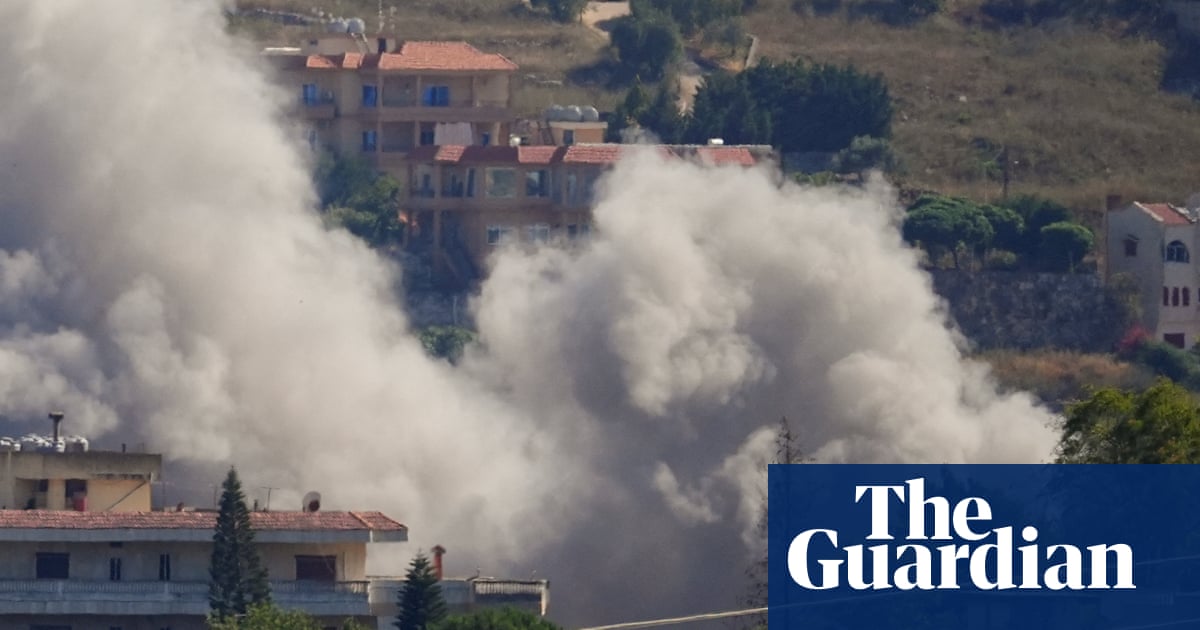
The IDF has said it has begun a wave of airstrikes on what it claimed was Hezbollah infrastructure in southern Lebanon, after issuing evacuation warnings for four villages in the south.
The ceasefire in Lebanon came into effect on 17 April after the US requested Israel come to the negotiating table with the Lebanese government, in an apparent attempt to ensure peace talks with Iran were not disrupted by the renewed Israeli invasion of Lebanon.
But since then Israel has been accused of violating the agreement many times, with strikes killing civilians and homes continuing to be demolished despite the military saying it is only targeting Hezbollah sites.
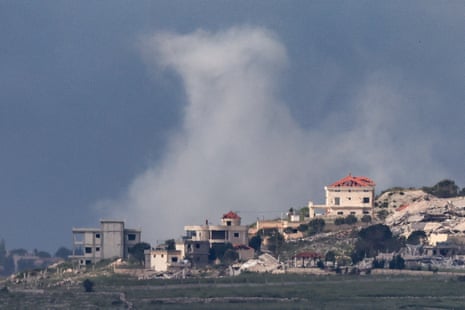
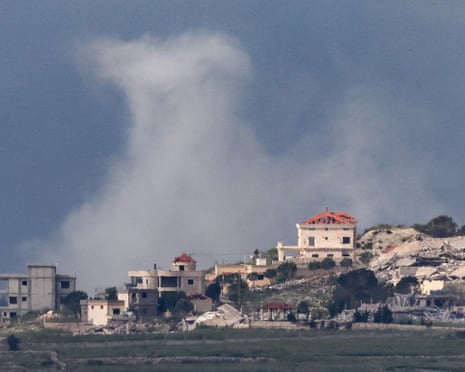
Lebanon’s national news agency said Israeli forces carried out bombing operations in Khiam and Qantara in southern Lebanon overnight.
Israel has said its attacks are in response to what it describes as violations of the deal by Hezbollah, the Iranian-backed Lebanese militant group and political party, which was not involved in the ceasefire agreement.
Hezbollah, which has been striking Israeli troops in Lebanon, says it will not cease its attacks on Israeli troops inside Lebanon and on towns in northern Israel as long as Israel continued its ceasefire violations. Under the agreement’s terms, Israel retains its “right to take all necessary measures in self-defence, at any time, against planned, imminent, or ongoing attacks”.
US evacuates crew on seized Iranian ship to Pakistan, says Islamabad
The US has evacuated 22 crew members held aboard an Iranian container vessel to Pakistan and will hand them over to Iranian authorities on Monday, Pakistan’s foreign ministry said, calling the move a “confidence-building measure”.
“The Iranian ship will also be backloaded to Pakistani territorial waters for return to its original owners after necessary repairs,” the ministry said in a statement cited by Reuters.
Iran's military warns it will attack if US forces enter Hormuz strait
The head of the Iranian military’s unified command has said US or any other foreign armed forces will be attacked if they enter the strait of Hormuz.
The command warned US forces to stay out of the strait and said its forces would “respond harshly” to any threat, telling commercial ships and oil tankers to refrain from any movement in the absence of coordination with Iran’s military.
Ali Abdollahi, head of the forces’ unified command, said in the statement quoted by Reuters:
We have repeatedly said the security of the strait of Hormuz is in our hands and that the safe passage of vessels needs to be coordinated with the armed forces.
We warn that any foreign armed forces, especially the aggressive US army, will be attacked if they intend to approach and enter the strait of Hormuz.”
Iran’s military is reportedly saying US forces will be attacked if they enter the strait of Hormuz.
Iran warns US against entering strait of Hormuz
Iran has warned the US navy against entering the Hormuz strait, according to a statement from the unified command of Iran’s armed forces reported by state media.
The warning came after Donald Trump announced the US would start an effort on Monday to free ships stranded in the waterway.
The Iranian statement, cited by Reuters, added:
We have repeatedly said the security of the Strait of Hormuz is in our hands and that the safe passage of vessels needs to be coordinated with the armed forces.”
Hormuz strait's security threat level 'critical'
The Joint Maritime Information Centre says the maritime security threat level in the strait of Hormuz remains critical due to ongoing regional military operations.
The centre’s advisory note – posted on X by the United Kingdom Maritime Trade Operations centre – said on Monday that mariners were advised to coordinate with Omani authorities via VHF channel 16 and should consider routing via Oman territorial waters south of the traffic separation scheme, where the US has established an enhanced security area.
The note said:
Transit via or in close proximity to the Traffic Separation Scheme should be considered extremely hazardous due [to] the presence of mines that have not been fully surveyed and mitigated.”
Tanker reports being hit by projectiles after Trump announcement
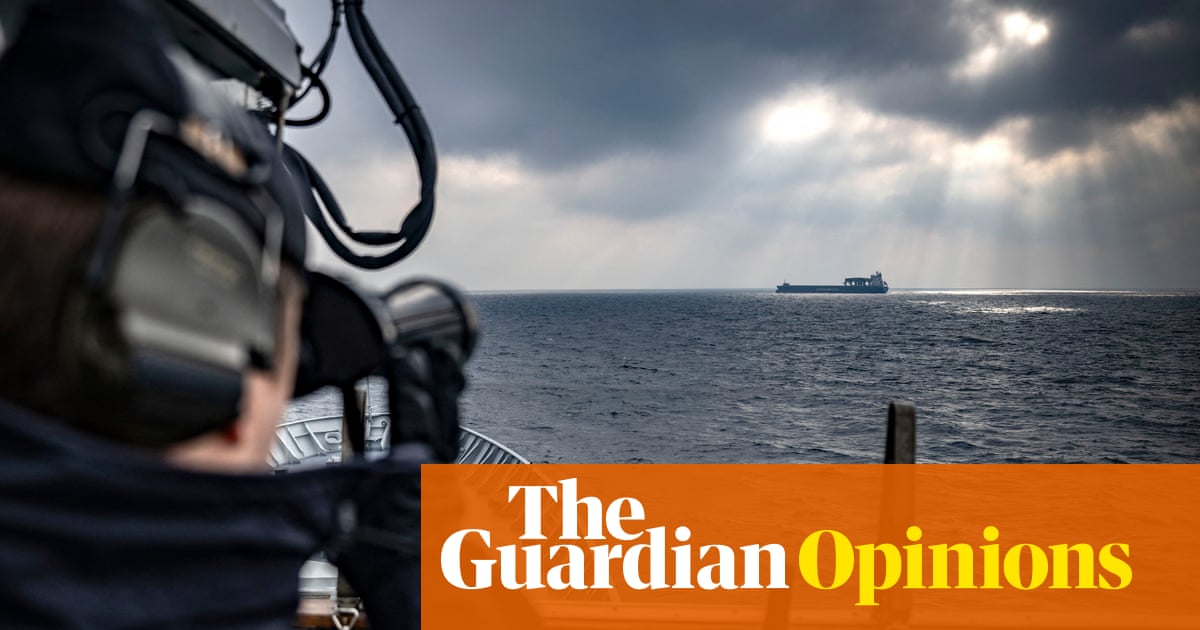
A tanker reported being hit by “unknown projectiles” in the strait of Hormuz soon after Donald Trump announced the US would help trapped ships through the waterway.
The United Kingdom Maritime Trade Operations agency said all crew were reported safe in the incident, which occurred 78 nautical miles north of Fujairah in the United Arab Emirates.
Authorities were investigating, it said, adding that vessels were advised to “transit with caution”.
Opening summary
Welcome to our live coverage of events in the Middle East.
Donald Trump has said the US will start an effort on Monday morning to free ships stranded in the strait of Hormuz as a “humanitarian gesture” to aid neutral countries in the US-Israeli war against Iran.
The US president provided few details about the plan, which he said would aid ships and their crews that have been “locked up” in the strait and are running low on food and other supplies as Iran blocks access through the crucial waterway.
“We have told these Countries that we will guide their Ships safely out of these restricted Waterways, so that they can freely and ably get on with their business,” Trump said in a post on his Truth Social site on Sunday.
He threatened that any interference with the US operation would “have to be dealt with forcefully”.
It was not immediately clear which countries the US operation would aid or how the operation would work. US Central Command said support would include guided-missile destroyers, more than 100 land- and sea-based aircraft and 15,000 service members.
A report from Axios later claimed the navy would not necessarily escort ships through the strait.
In other key developments:
-
Iran said on Sunday it had received a US response to its latest offer for peace talks a day after Trump said he would probably reject the Iranian proposal because “they have not paid a big enough price”. Iranian state media reported that Washington had conveyed its response to Iran’s 14-point proposal via Pakistan, and that Tehran was now reviewing it.
-
“At this stage, we do not have nuclear negotiations,” state media quoted Iran’s foreign ministry spokesperson Esmaeil Baghaei as saying, an apparent reference to Iran’s proposal to set aside talks on nuclear issues until after the war has ended and the foes have agreed to lift opposing blockades of Gulf shipping. Iran has been blocking nearly all shipping from the Gulf apart from its own for more than two months. Last month the US imposed its own blockade of ships from Iranian ports.
-
Israel on Sunday ordered thousands of Lebanese people to leave 11 towns and villages in southern Lebanon, an escalation of a war between Israel and Iran’s Hezbollah allies there that has run in parallel to the Iran war and could further complicate wider peace efforts.