5 hours ago
8
5 hours ago
8
ET is my favourite Spielberg film. It was the first I ever saw at the cinema, when I was eight years old, at Bolton Odeon in 1982. It was also the first film that made me cry – not just cry, but sob all the way home on the bus. I remember feeling completely confused by the fact that I was so happy and yet so sad at the same time. I watched the film with my mum and some of her friends from the Gingerbread Club, a single parents’ organisation that arranged social events and outings, mainly for single mothers. At a time when there was still a stigma attached to being a single parent, it provided a sense of community and support.
Looking back, I think part of the reason I connected so strongly with ET was that it featured a single mum rather than the perfect nuclear family that dominated so many films and TV programmes of the time. It felt much closer to my own reality, and that made me love the film even more. That Christmas, my favourite present was an ET doll with a light-up stomach and glowing fingertip. I adored it. More than 40 years later, I still love the film dearly and never hesitate when someone asks me what my favourite film is. Even now, hearing a few notes of John Williams’s score is enough to bring tears to my eyes within seconds.
Andrea, 51, Manchester, UK
Hook (1991)
Universally touted as a Spielberg flop. So much so, that even Spielberg himself started to regret ever making the film. All of this is inconsequential to its meaning for me as a child of the 90s. The film is a trusted comfort. I can quote all the dialogue, and even use phrases from it in my day-to-day life. The casting, the effervescently sad Robin Williams as the boy who accidentally grew up, the lawyer jokes, the warm haze that permeates the film. I remember it being played on free-to-air many times as a child and having my own – pardon the pun – pirated copy. I returned to this film often as a child, and still return to it at least once a year now, when a dose of nostalgia is needed. So despite Spielberg’s protestations, it is my favourite of his oeuvre for many selfish reasons.
Rhea, Melbourne, Australia
Close Encounters of the Third Kind (1977)
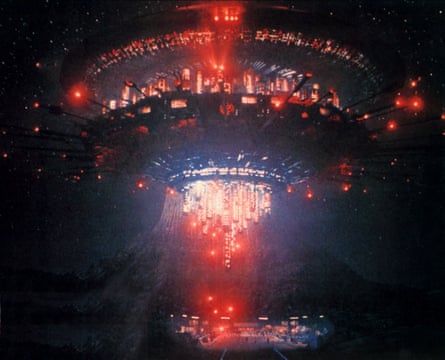
Close Encounters of the Third Kind will always be the Spielberg movie that means the most to me, as much for the circumstances that led to me seeing it as the wonderful film itself. I was five years of age and my mum decided to take my sister and I to see a movie double bill at a cinema in nearby Chester. From memory, the films we were meant to see were a Spider-Man movie that was actually made for TV, and a much older, Ray Harryhausen-animated, Sinbad film. Long story short, my dad dropped us at the wrong cinema, on the opposite side of town, and my mum decided we should see whatever was showing there rather than venturing through an increasingly dark, wet evening.
The only “suitable” movie was Close Encounters, although my mum said numerous times before buying the tickets that she was worried I might find it scary. Needless to say, her saying that made me feel very nervous indeed! Up until that point, my only issue with seeing a movie with the words “of the Third Kind” in the title was that I hadn’t seen the first two films (I was similarly confused when the crawling text at the beginning of the original Star Wars movie referred to it as “Episode IV”).
Anyway, I sat in the cinema next to my mum, quaking like crazy at this scary movie she was making me watch. But not for long! About 15 minutes in, I famously announced that my tummy had stopped shaking and from that point on I was utterly absorbed by this film of such mindblowing scale, spectacle and wonder. I vividly remember going to bed that night and asking my mum to leave the curtains open so I could see the stars. Spielberg’s genius had opened my very young mind and made it suddenly more curious as to what magic there might be out there. More importantly, I wasn’t afraid to look for it.
Scott Harrison, 54, north Wales, UK
Always (1989)
Always, starring Holly Hunter, Richard Dreyfuss and John Goodman, is my feelgood movie. Funny, heartbreakingly sad, great action and classic dialogue: “Girl clothes!” Holly and Richard at their peak, their chemistry was excellent and that they are not your typical Hollywood handsome made you love them more. I have to watch this film every couple of years and I always laugh and always messy-cry and it never fails to reaffirm my faith in people. Spielberg made the perfect love story, but its joy is so often overshadowed by his summer blockbusters.
Karen Cusick, 61, Devon
Raiders of the Lost Ark (1981)
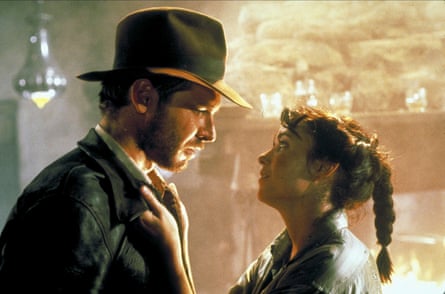
Raiders, for its propulsive energy and giddy excitement as Indiana Jones cracks his whip through a booby-trapped temple in the South American jungle. Also choosing Nazis as the villains (and snakes!) was a masterstroke that helps keep the plot itself timeless. Steven Spielberg tips his fedora to the cliffhanger serials of the 1930s and the Tintin stories to bring us the adventure of a lifetime!
Spielberg’s name translates as “play mountain” in German and he brings that playfulness to the screen from the opening shot of the Paramount logo transitioning into a mountaintop in the Peruvian jungle as Indy searches for hidden treasures, before getting caught in snowbound Himalayan bar fights, foot chases through Cairo and an exhilarating truck chase through the desert. As you catch your breath, the chemistry between Indy and Marion has the alchemy of a 1930s screwball comedy.
Niall Laverty, Dublin, Ireland
Empire of the Sun (1987)
For me, it is Empire of the Sun. It was one of the first major Hollywood productions allowed to film in communist China, in Shanghai. It is also faithful to JG Ballard’s excellent book. In fact, I can’t read the book now without seeing young Christian Bale as Jamie/Jim. The imagery is extraordinary, the acting feels real, and John Williams’s score is beautiful. The opening scene, with coffins floating down the Yangtze as Suo Gân plays in the background, hooked me immediately. I think I first saw it in year 11, towards the end of term, when our history teachers played it for us.
I already loved history, so the setting was the perfect recipe for me. But what really stayed with me was Jim himself. I was only a few years older than him at the time, and I remember wondering how I would have coped in his situation: separated from his parents, forced to fend for himself and having to grow up amid some awful scenes. I didn’t much like the conclusion I came to. There are scenes I still think about: the young Japanese pilot, the “difficult boy” scene, the atom bomb, and that extraordinary “Cadillac of the skies” moment. War might be the backdrop, but I don’t see it as a film about war. It is about imagination, resilience, choices and consequences. That is why it has stayed with me.
Matthew Vandermeer, 50, Brisbane, Australia
The Fabelmans (2022)
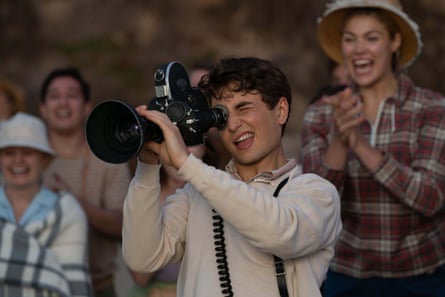
I’m a high-school English and film studies teacher. I’m 49 – just a few months older than Close Encounters. The Fabelmans is my favourite film of all time, and is the capstone film we watch to finish my film studies class at Appleton West High School. In it, Spielberg explicitly tells the story of his own childhood and adolescence and his family’s influence on him becoming a film-maker, but he also uses that story to reveal the “how” and the “why” of a lifetime influencing the emotions of his audiences.
Watching The Fabelmans for the first time is an almost religious experience for Spielberg fans around my age. It’s a meditation on growing up with the movies and a sincere attempt to show the next generation of film-makers and enthusiasts all they need to take up the mantle themselves. For fans of Spielberg and the rest of the “New Hollywood” visionaries, there is no better (or more accessible) film to demonstrate how the movies that move us are built on foundations of both science and art, how Spielberg is an absolute master of both, and how his parents’ influence in those polar-opposite arenas made him (and us!) capable of dreaming so vividly on screen.
The Fabelmans also features the most joyous final shot you’ll see in a movie. It made me leap out of my seat in 2022 the same way I did as a kindergartener when ET’s heart started glowing again 40 years prior. The whole film is an elaborate magic trick, and nothing is spoiled when Hollywood’s master emotional illusionist reveals his – and his family’s – biggest secrets.
Nathan Ossmann, Appleton, Wisconsin, US
The Color Purple (1985)
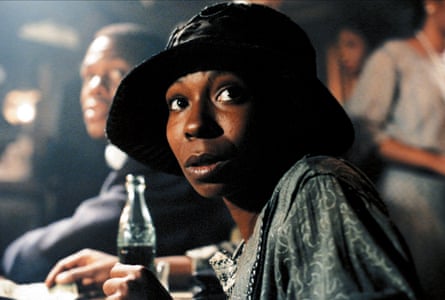
The Color Purple tells the stories of sisters separated and of women who help each other through hard times and characters who grow and mature. It shows the downtrodden rising, features fantastic singing and love lasting through decades of separation. The Color Purple is Spielberg’s best film because it shows the strength of women to overcome their circumstances when they support each other. It also has an amazing soundtrack of gospel and jazz and blues. The scene that sticks in my mind is Shug singing gospel demanding her father forgive and accept her.
Mandy Purcell, 54, Melbourne, Australia
Duel (1971)
I first read Duel as a very enjoyable short story in Playboy magazine early 1970s. I was elated to learn it had been made into a film and first saw it on UK Channel 4 TV. Now have it as a DVD, regularly watch it, pleased that the lead is played by Dennis Weaver whom I recall from 1950s TV as Chester in Gunsmoke, an American western series. I am mesmerised by the way Spielberg captures the menace of the anonymous driver in the equally anonymous, oversized, unmarked, rust-brown truck, repeating the same conceit – the truck appearing from nowhere to intimidate, bumper to bumper. It’s a one-trick pony but Spielberg makes it fresh every time the bullying takes place. And the ending. Literally a cliffhanger, as an intimidated car driver abandons his vehicle at a cliff’s edge while the truck follows, over the edge and to oblivion. Very clever for a directorial debut.
Mike Abbott, 83, London, UK