2 months ago
108
2 months ago
108
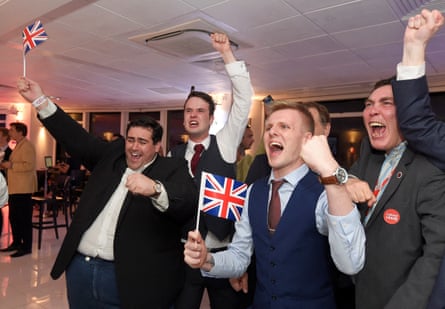
On the night of 23 June 2016, a storm broke out over Brussels. Rain poured and lightning flashed over the European Union headquarters. The next day dawned grey and calm, but the political weather was raging. Britain had voted to leave the EU.
Nigel Farage, then leader of the UK Independence party (Ukip), declared the EU “finished” and “dead”. France’s Marine Le Pen, the Netherlands’ Geert Wilders and Italy’s Matteo Salvini were among the far-right leaders who called for their countries to have a referendum.
“Only Bulgaria, Romania and Greece will remain when the domino effect is set off,” declared Bulgaria’s then prime minister, Boyko Borissov.
Despite heated talk of Frexit, Nexit and Swexit, however, not a single country followed the UK. “Brexit changed the EU in one fundamental way,” Michael Roth, Germany’s former Europe minister, told the Guardian. “Leaving the club is no longer seen as a solution. It’s seen as a warning.
“The Brexit experience was so damaging, so costly, so complicated, so complex, that the appetite for that across the EU is very, very, very, very, very, very little.”
Instead countries are queueing to join, impelled by Russia’s full-scale invasion of Ukraine and Donald Trump’s threats to seize Greenland. The EU started detailed membership talks with Moldova and Ukraine this month, while accession prospects for western Balkan countries look more promising than at any time over the last decade.
Iceland plans a referendum on resuming EU accession talks, and support for membership is growing in Norway, though it remains a minority view there. “The UK [is] one of many countries seeking a closer relationship,” said Heather Grabbe, a former adviser to the European Commission.
As a result, she added: “The UK has slid down the list of priorities,” as the EU confronts Russia’s war, Chinese economic competition and “whatever crazy thing Trump has done today”.
After the storm
Charles Michel, the former Belgian prime minister who was leader of the European Council from 2019 to 2024, still feels sadness at the British decision, but concluded: “Brexit made decisions easier … no doubt.”
He told the Guardian the Brexit vote made it easier for the EU to “be more engaged” in defence and security policy, which was “useful preparation” for Russia’s full-scale invasion. For example, in March 2021, the EU created the European Peace Facility to fund military equipment and operations abroad. Originally worth €5bn, the pot has grown to €17bn (£15bn) and has been supplemented by far greater financing to rearm the continent and support Ukraine.
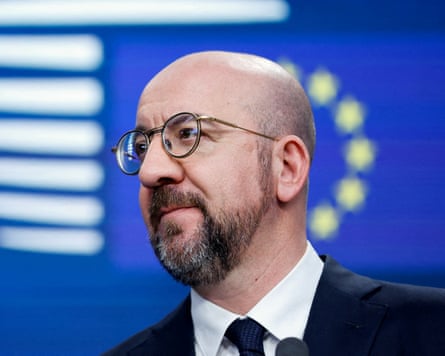
When Russia launched its full-scale attack on Ukraine in February 2022, Michel recalled, the EU and UK were united on support for Ukraine and sanctions against Russia. “We were systematically, spontaneously, very close to each other, without the need for complicated preparatory tools,” he said.
However, Michel also said he missed British influence on economic policy and regulation of technology, such as AI.
Some Eurosceptics also regret Brexit. Nicola Procaccini, co-leader of the European Conservatives and Reformists, the Eurosceptic faction in the European parliament, said: “We miss them, but at the same time we respect the decision of the British people.”
Procaccini, a member of the nationalist Brothers of Italy, said he had “no lessons to take” from the Brexit experience. Italy, he noted, was a founder of the European project and “we can’t imagine Italy out of Europe”.
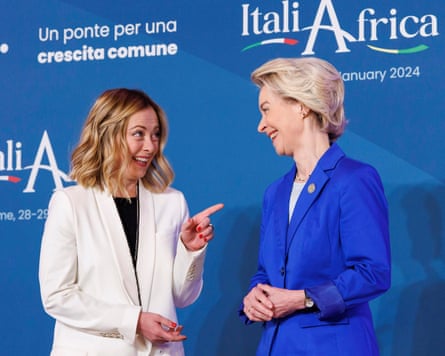
His party leader, Giorgia Meloni, once called for Italy to leave the euro, which Procaccini claimed was “fake news”. Now, as Italy’s prime minister, Meloni has long since changed tack to work with EU centre-right leaders, such as Ursula von der Leyen, on support for Ukraine, migration and deregulation.
One decade after Brexit, Procaccini believes Conservative forces have the momentum, citing the EU’s tough new law on deportations, which he attributes to “the Giorgia majority” – a big-tent coalition spanning liberals, traditional conservatives and the far right.
But many of the EU’s key figures are in relatively weak positions, making it hard to claim any firm ideological shift.
The German chancellor, Friedrich Merz, has seen his support fall to historic lows one year after taking office. The French president, Emmanuel Macron, has been in domestic political stasis after a snap election in 2024 yielded a French parliament with no majority. Spain’s prime minister, Pedro Sánchez, has won plaudits over his foreign policy stances, but his minority government is mired in corruption scandals.
In Poland, a president opposed to the agenda of the prime minister, Donald Tusk, has made it hard to fulfil campaign promises, while in Italy, even Meloni, who leads one of the EU’s most stable governments, has been damaged by losing a referendum on judicial reform.
Ready to reset?
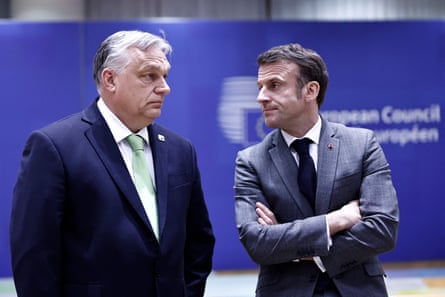
For a long time, the EU’s vulnerabilities were exposed by Hungary, as its leader, Viktor Orbán, served as disruptor-in-chief, exercising vetoes over big decisions. With Orbán now defeated at the ballot box, the bloc’s officials are considering contingency plans to prevent future vetoes by new joiners who turn rogue.
Grabbe, now based at the Bruegel economic thinktank, has long argued that authoritarian insiders pose a bigger threat to the EU than Brexit. “The UK was an awkward partner, but it was a reliable partner,” she said, contrasting British implementation of EU decisions with Orbán’s broken promise to back a €90bn loan for Ukraine.
Now, after a stormy period, EU-UK relations are fairly calm. The two sides will hold a “reset” summit on 22 July, with the aims of striking a veterinary deal to ease checks on food and drink, linking emissions trading schemes and forging a youth mobility programme.
Roth, a self-described “Brexit hawk”, said EU-UK relations were “quite OK – actually better than many expected”, because the EU “no longer has to deal with British exceptionalism” inside its institutions.
Michel said he expected the EU would react with “a positive spirit” should the UK ever seek to rejoin – “if and when there is there is the readiness for a serious domestic debate”.
He said it was for the UK to decide whether “global Britain” had made the country more influential, though his personal belief was that the UK was “weaker” than when it was a member of the EU.
For now, no one sees the UK rejoining as a serious prospect. One senior EU diplomat told the Guardian: “On many issues, when the Brits were a part of the EU, we were very like-minded – on the internal market, on free trade, on the transatlantic relationship – and there we miss the UK.
“But it is a fact of life, so there is no nostalgia.”