3 months ago
127
3 months ago
127
Scotland is leaning into one of its most treasured traditions: embracing the hope and anxiety of a football World Cup, with a healthy dose of self-deprecating style.
There are brash new tartans, an Edinburgh bar offering free Irn-Bru-infused “fiery ginger” beers for patrons with red hair, a collaboration between Scottish whisky firms and a Brazilian distiller, and all-night parties in nightclubs repurposed as fanzones.
Supporters flying off to the US at Edinburgh and Glasgow airports were serenaded by pipers in the check-in halls; at Edinburgh it was the full military tattoo marching band, with a troupe of Highland dancers.
Sprinkle all that in with a traditional row with the English – this time over disparaging remarks on Good Morning Britain by Ed Balls, Susanna Reid and the pundit Kevin Maguire about the extra bank holiday for Scotland sanctioned by the king – and the scene is perfectly set.

It has taken Scotland 28 years to qualify for a World Cup, nearly three decades of grinding defeats and disillusionment, all while enduring its bitterest rival, England’s, repeated qualification for the tournament.
The wait will end at 2am UK time on Sunday, when the team play underdogs Haiti in Boston. And despite the hour, perhaps a million or more Scots will be awake, watching at home, at friend’s houses, in bars and at fanzones dotted around the country.
The first minister, John Swinney, will be at the game – a guest of the Scottish Football Association. He is mixing sport with opportunistic Brand Scotland trade, and cultural meetings at Harvard University and with local political leaders.
The fanzone at one of Scotland’s cooler venues, SWG3 in the post-industrial west of Glasgow, has already sold out for that match and the following ties against two challengers for the trophy, Brazil and Morocco, with 1,300 people to gather for each of those two overnight games.
“The venue’s certainly no stranger to a party atmosphere at 2am,” said its operations director, Bob Javaheri. “However, we’re usually looking to start winding down by that time, not ramping up.
“I have a few friends that are heading Stateside for the tournament and, as disappointed as I am to not be joining them on the road, I’ve absolutely no doubt they’ll be keeping me well posted about their time away, so I’ll be living it all through them.
“The last time Scotland were in the World Cup I watched the Scotland v Brazil game with my mum at home. I think I’ll have to get her in so we can relive that magic here on the big screen this time.”
The anticipation has been amplified by the drama of Scotland’s final qualifying game against Denmark at Hampden Park, where two stunning goals that book-ended the game sent fans into raptures.
It was a must-win match for Scotland. Within three minutes of kick-off, their talismanic midfielder Scott McTominay scored a remarkable overhead goal and then, after Denmark were reduced to 10 men yet levelled twice, Scotland’s 4-2 victory was capped off by an audacious goal from the halfway line.
As Kenny McLean looked up from his own half in the dying seconds of extra time, teeing up his shot, the loud shouts of “shoot, shoot” from the stands were audible on television. The goal landed, and Hampden erupted.
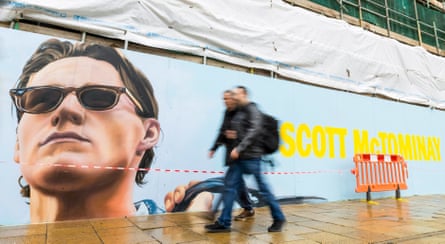
Those four goals enjoy iconic status in Scotland. McTominay’s overhead kick is immortalised by a vast gable-end mural near Hampden stadium; there were posters, hoodies, mugs and T-shirts printed with all four scorers in action.
Yet for older fans, that game is a reminder of other times when the nation was aroused by naive dreams of success. The most famous was Archie Gemmill’s solo goal against the Netherlands in Argentina in 1978, where he dribbled balletically past three defenders. Scotland won that game 3-2 but failed to progress, while the Dutch reached the final.
The team then was managed by Ally MacLeod, who told the world Scotland would win the tournament. The country called his team “Ally’s Tartan Army”; the team’s song, written by Andy Cameron and performed on Top of the Pops, is still sung by fans who lived through that time.
Hamish Husband, a lifelong Scotland fan and spokesperson for the Association of Tartan Army Clubs, remembered the “mass over-confidence generated by the over-exuberant, quite naive, manager, Ally MacLeod. And the nation bought into it.”
The country was more measured now, said Husband, who flew out to join Scotland’s fans in Boston on Thursday, but fatalism was now part of the collective memory: “There is still the sense there’s something going to go wrong.”
Gerry Hassan, a political commentator and academic who has studied Scottish football, said he was singing Ally’s Tartan Army to himself during a walk last week, and was looking forward to watching the game at a friend’s house in Kirkcudbright, a small market town in Dumfries and Galloway.
“That sense of what happened there, the whole sense of hope and then disappointment, disaster, near redemption – near redemption is possibly more poignant than actual redemption,” Hassan said.
Given the extremely volatile world, the financial pressures and political upheaval the country is living through, this World Cup was a moment of collective celebration and community for fans.
“It is a bit of a scarce commodity in modern life, that you are part of something bigger than yourself, that you’re connected to other people, that we’re not just atomised human beings. There’s a community here, there’s friendship, there are collective memories, and some of that we have agency in.”