3 months ago
242
3 months ago
242
Who would you rate as the world’s most unlikeable tech tycoon? Elon Musk is obviously a major contender. The digital warlord Palmer Luckey is also up there.
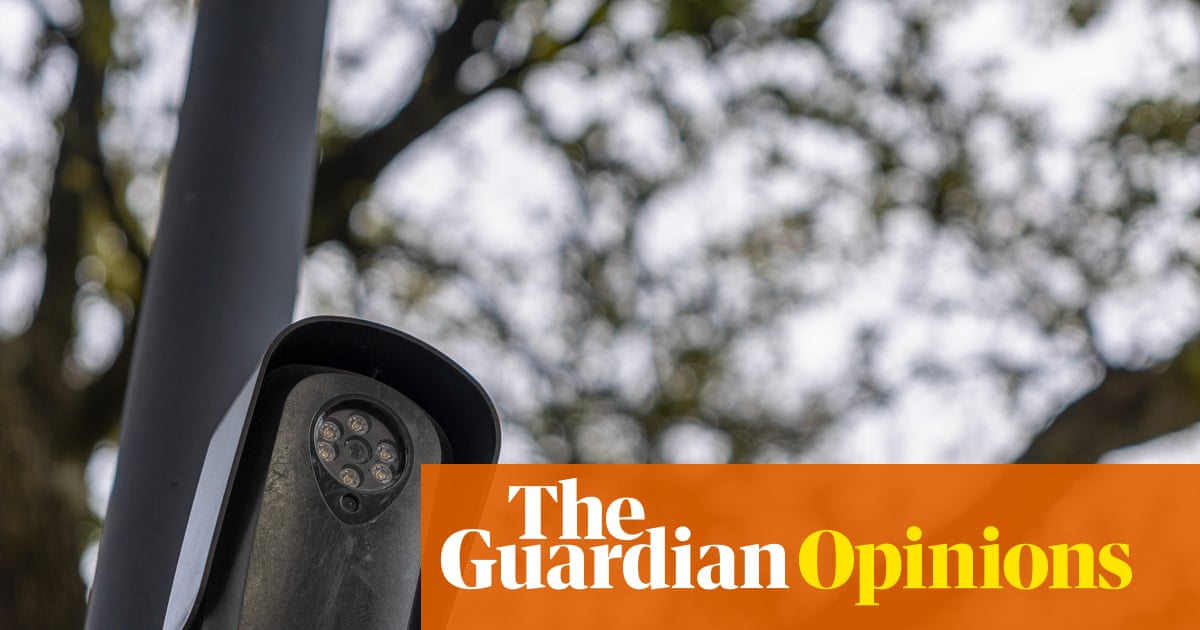
While there’s a lot of competition, Garret Langley also deserves a shoutout. The CEO of the tech company Flock may not be a household name, but his controversial surveillance technology is rapidly worming its way into daily life. If you live in the US, there’s probably a Flock product on a highway or parking lot near you. The company, which largely sells its products to law enforcement, makes automated license plate readers (ALPRs) which capture license plate data and help track where a vehicle has been. (If you want to check if your license plate has been the subject of a Flock search you can do so at haveibeenflocked.com)
Capturing driver data doesn’t sound terrible on the surface. But what makes Flock alarming is the scale of its surveillance network – there are more than 80,000 Flock cameras across the US – and the ease with which data can be accessed. An ACLU investigation last year found that Flock’s default agreement with police departments gave the company the right to share people’s license plate data with federal and local agencies for “investigative purposes”. Various police departments have reportedly shared driver-surveillance data with ICE as part of Donald Trump’s deportation push. (Flock claims it “does not work with ICE”, though its website says that federal agencies it partners with “can establish 1:1 sharing relationships” with other law enforcement agencies.)
Some police officers also seem to be using Flock data to stalk their exes, partners and potential love interests. The Institute for Justice, a public interest law firm, recently conducted an analysis of media reports and found at least 14 cases across the US where cops are alleged to have accessed ALPR data to “to keep tabs on their romantic interests, including current partners, exes, and even strangers who unwittingly caught their eye in public”.
While nearly all the officers involved were criminally charged and lost their jobs, it’s highly likely that there are far more than 14 examples of this sort of behaviour. According to the Institute for Justice, only a few of the analyzed cases were discovered through internal police investigations; one officer’s alleged misconduct only surfaced after a victim searched their license plate on HaveIbeenflocked.com. And I’m sure you can imagine just how many other victims might have been too afraid to report a police officer to authorities.
One could argue that all systems have the potential for abuse and it is unfair to blame Flock for a few police officers behaving badly. The company has said it supports “democratically authorized governing bodies” determining how its technology is used. But as Michael Soyfer, an Institute for Justice attorney who is representing residents in lawsuits challenging their cities’ ALPR surveillance network, has noted: “The fundamental problem with these systems is that they place private information about people’s movements over time in the hands of every officer.” There is huge potential for abuse.
Flock has arguably also made it far too easy for officers to tap into a powerful database without warrants. A 2025 Electronic Frontier Foundation (EFF) analysis found that some police departments have been using the Flock network to surveil activist groups and investigate protests. EFF and other civil liberties groups have argued a search warrant should be required for such searches; with Flock, however, police only need to enter some text into a “reason” field in the system.
Similarly, 404 Media revealed last year that a sheriff’s office in Texas searched ALPR data to track down a woman suspected of self-managing an abortion. The officer searched 6,809 different camera networks, including in states where abortion access is protected by law. The search record just listed the reason as: “had an abortion, search for female”.
This year Flock announced updates to incorporate safeguards that limit federal access and restrict some data sharing. Nevertheless, dozens of towns have ditched the company because of concerns about how broadly its technology can be used.
Pushback isn’t going to stop Flock’s lofty ambitions, however. Langley, Flock’s CEO, has painted himself as some sort of real life Batman and has said that he thinks his surveillance tech will help eradicate almost all crime in the US in less than 10 years. And after putting license plate readers on roads across the US, Flock is now expanding its drone program. “I think we can have a crime-free city and civil liberties,” Langley told Forbes, optimistically. “We can have it all.” I don’t know about that. If surveillance drones being weaponized by an increasingly authoritarian regime in cahoots with morally bankrupt tech tycoons is what “having it all” looks like, I think I’ll pass.
Some urban birds are more afraid of women than men
In a recent study looking at European Great Tits and 36 other bird species, men could get about a meter closer to birds than women. Scientists have no idea why.
A Trump immigration judge thinks some women are just a ‘warm, wet hole’
Melissa L Isaak is a temporary immigration judge who was recently appointed by the justice department. She’s also a “men’s rights” family law attorney with some very questionable views. During an interview with the pickup artist Anthony Dream Johnson in 2021, for example, Isaak claimed that there are two types of women. “There are good, solid, valuable women who are major assets to men, if you’re a good woman,” Isaak said. “And then there’s a warm, wet hole.”
UN warns women in public life face increasingly sophisticated online violence
A new UN Women report has found that the internet continues to be a hotbed of misogyny and artificial intelligence has made online abuse much easier. Of more than 600 women in public life, 6% said they had been victims of deepfakes; nearly a third said they had received unsolicited sexual advances online.
Iran war has already cost US $25bn, says Pentagon
If that’s the official figure, then you know that the real cost is likely way more.
Press freedom at lowest level in 25 years
A new Reporters Without Borders (RSF) report has warned that growing authoritarianism and a difficult business model means journalism is “being asphyxiated”. The report also noted that, since October 2023, more than 220 journalists have been killed in Gaza. Even with a supposed “ceasefire”, journalists still aren’t allowed to enter and report from Gaza independently.
Abortion bans likely associated with increases in pregnancy-associated deaths during
There’s a possible 9.2% increase in pregnancy-associated deaths during or within one year of pregnancy in states with abortion bans, according to a study published in the American Journal of Public Health. While this research comes with a caveat that data limitations make definitive conclusions difficult, various other studies have similar findings, and show that states with a more restrictive abortion policy climate have higher total maternal mortality.
The week in pawtriarchy
San Francisco’s newest sea-lebrity is a massive sea lion nicknamed Chonkers who has been lounging around on Pier 39. While Chonkers loves a snack, he’s not actually unusually large; he’s a Steller sea lion, which means he is built differently from the smaller California sea lions that are more typical around the area. It’s not clear why Chonkers, who likely came from up north, decided to venture all the way to San Francisco. Perhaps he wants to bootstrap his startup. Or maybe he’s just fishing for compliments.
-
Arwa Mahdawi is a Guardian columnist