4 hours ago
13
4 hours ago
13
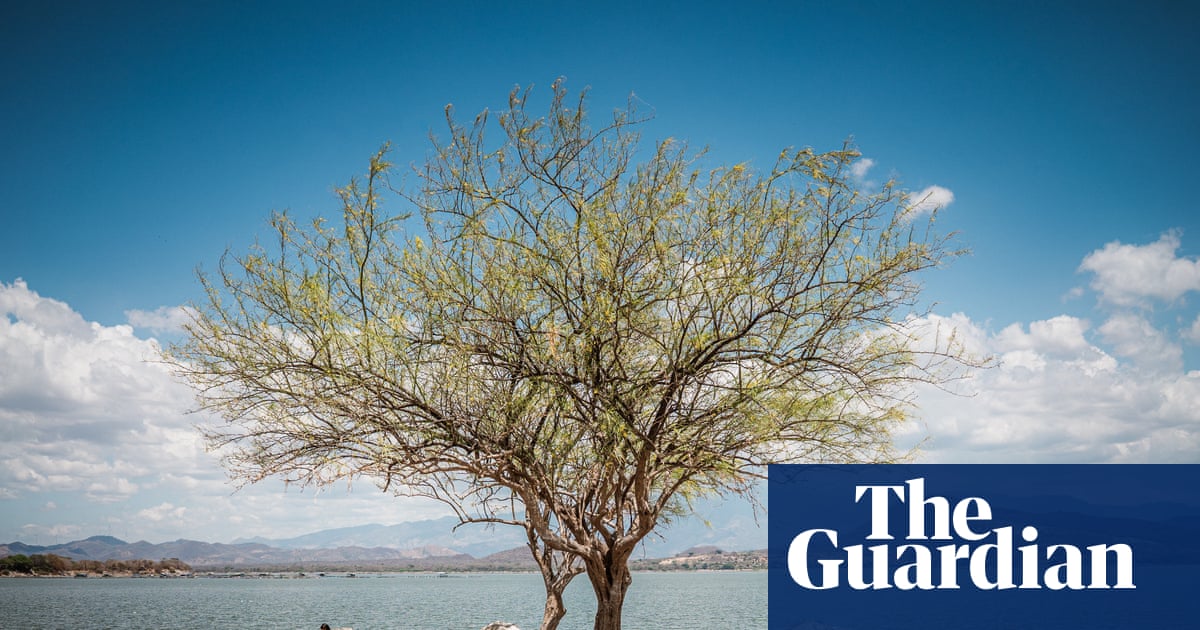
The unequal impact of the climate crisis on the world’s poorest people, including those in tropical areas, has been highlighted by new research that finds they will be among the last to feel the benefits if global greenhouse gas emissions are cut to net zero.
Temperatures have risen more significantly in tropical areas relative to their historic range than at higher latitudes, including in wealthier countries in Europe and North America.
A team of Australian climate scientists found this inequality would not be reversed if global emissions reached net zero – the implicit goal of the landmark 2015 Paris agreement – and could take “many decades to begin to reverse” if carbon dioxide was drawn from the atmosphere under a “net-negative emissions” plan.
The research coincided with the UN’s refugee agency releasing a report showing how the climate crisis was increasing the risk of people becoming stateless.
The climate inequality study, published in the journal Environmental Research Letters, was led by Dr Andrew King and colleagues at the University of Melbourne. They looked at three sets of computer modelling experiments of the likely temperature changes if global emissions reached net zero and overlaid the results with countries’ gross domestic product.
“If we follow a path that is close to net zero, then the inequality we see in present day warming persists indefinitely,” King said. “The wealthier countries that have caused more of the problem are not those that are the most exposed, even beyond net zero. The regions that have not caused the warming are those that experience the most warming.”
King said the fate of the planet’s poorest regions, which tend to be concentrated closer to the equator, would depend on how much greenhouse gas was emitted before the world reached net zero.
“Even when we get to net zero, we have still emitted an enormous amount of carbon into the atmosphere and its effects will continue for centuries. We can’t easily undo all that damage,” he said. “Getting to net zero sooner means we are less likely to have that long-term warming after net zero. We need to get to net zero sooner to limit that inequality.”
King said tropical ecosystems, such as some coral reefs, had mostly evolved to exist in a narrower temperature range than ecosystems at higher latitudes and would continue to be heavily affected for longer as the world cut emissions.
A separate report on the impact of climate change on the stateless, commissioned by the UN refugee agency and released with the Peter McMullin Centre on Statelessness, called on nations to support “the continuity of statehood” for countries facing extreme climate damage. It said those at risk included Pacific islands that were losing land to rising seas.
The agency estimated about 4.5 million people were stateless but said it accepted the number was probably much larger as stateless people were “invisible to official statistics”.
after newsletter promotion
The report said the climate crisis risked creating more stateless people through displacement after climate-driven disasters such as fire, flood and sea level rise.
University of Melbourne Associate Prof Radha Govil, a report co-author, said there was a correlation between the regions most affected by climate change and statelessness.
The report recommended countries should be helped to digitise citizenship records, and steps should be taken to ensure children were afforded citizenship if they were left without parents after a disaster.
It said the risks to children were increased if mothers were not given the same rights as fathers to confer their own nationality to their children.
“The recommendations we have set out are absolutely doable,” said Govil. “They can stave of this risk of statelessness and get ahead of this problem.”