3 months ago
142
3 months ago
142
There is nothing quite like that first bite after a long day of fasting. It’s quiet, intentional and deeply comforting. The stillness just before sunset gives way to movement – the table being laid, the clinking of glasses, the pause as everyone waits for the call to prayer. Then, with a date in hand and water on the tongue, the fast is broken. That moment never loses its meaning, no matter how many times you experience it. Iftar doesn’t begin with a feast, but with small, simple things, such as these two soups.
Shurbad (lamb, oat and barley soup – pictured top)
Shurbad exists across many cultures, especially in east Africa, the Middle East and north Africa. The word comes from the Arabic shariba, meaning “to drink”, and it refers to something light and warming. This is often served at the start of a meal and, while the ingredients and methods vary across the different regions, the feeling is the same. This is a dish that many, myself included, make only during Ramadan, because it feels tied to the rhythm of the month. This version is gently spiced and comforting; if you prefer, use chicken instead of the lamb. The soup freezes well, too, so you can make it weeks in advance.
Prep 10 min
Cook 2 hr 45 min
Serves 8-10
500g lamb shoulder on the bone, diced
2 vegetable stock pots
400g tin finely chopped tomatoes
180g pearl barley
4 tbsp rolled oats
½ tsp ground cumin
½ tsp ground coriander
½ tsp curry powder
5 tbsp olive oil, or sunflower oil
½ large brown onion, peeled and chopped
4 garlic cloves, peeled
1 small bunch fresh coriander
Lemon juice or apple cider vinegar, to serve (optional)
In a large deep pot, combine the lamb and stock pots with 2½ litres of cold water. Put the pot on a medium-high heat, bring to a boil, then turn down the heat to medium-low and simmer uncovered for about an hour and a half, until the meat is tender.
Lift out the meat with a slotted spoon, then shred it into small pieces; discard the bones. Return the shredded meat to the pot and stir in the chopped tomatoes and barley. Cook uncovered for another 45 minutes on a medium-low heat, stirring occasionally, then stir in the oats, cumin, ground coriander and curry powder. Cook for 20 minutes, then take off the heat.
In a separate saucepan, heat the oil on a medium heat. Add the onion and fry, stirring, until browned. Put the garlic cloves and fresh coriander in a mortar, then grind to a paste. Stir this into the fried onion and cook for another minute. Carefully pour the hot onion and oil mixture into the soup, then stir to combine and simmer for a further 10 minutes.
This is best served hot with a squeeze of fresh lemon juice or a teaspoon of apple cider vinegar on each portion. The soup can be kept in the freezer for up to three months. To serve, just defrost, warm through and finish with a quick herb oil. Don’t forget the vinegar or a squeeze of lemon to bring it all together.
Addas (red lentil soup)
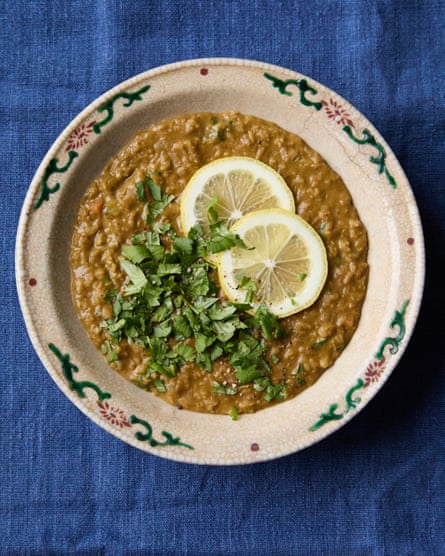
This lentil soup, known simply as addas, is made from the most basic pantry ingredients, but somehow always tastes like more than the sum of its parts. I’ve been eating it since I was little, and it was one of the first meals I weaned my daughter with once we introduced spices. It was only recently that a good friend from Algeria introduced me to the addition of ras el hanout, the north African spice blend. The soup thickens beautifully by the next day, almost like a soft dal, so I’ll often serve that over rice; otherwise, I’ll gently loosen it on the stovetop with a splash of water and enjoy it as soup again.
Prep 10 min
Cook 55 min
Serves 4-6
2-3 tbsp olive oil
1 large onion, peeled and finely chopped
4-5 garlic cloves, peeled and crushed
1 large carrot, peeled and finely chopped
300g red split lentils, rinsed
1 heaped tbsp vegetable bouillon powder
1⅓ tbsp ground cumin
⅓ tbsp ras el hanout
1 tsp salt
400ml coconut milk
1 large handful chopped coriander, plus extra to garnish
Lemon slices, to serve
Heat the olive oil in a large saucepan, then add the onion and saute for three to four minutes, until translucent. Add the garlic, leave it to soften slightly, then add the carrot. Stir everything together and saute for a minute or two.
Add the rinsed lentils and stir well – the mixture might clump, but keep stirring. Add the bouillon powder, cumin, ras el hanout and salt, and cook over a low heat, stirring occasionally, for 30 seconds. Add the coconut milk, 1.3 litres of cold water and the fresh coriander, and adjust the salt to taste. Cover the pan, bring to a simmer and cook on a medium-low heat for 20 minutes.
Half-blend the mixture with a stick blender to give it a creamy texture while keeping some chunks intact. If need be, add more water, and remember to check the salt. Simmer for another 15 minutes, then serve hot garnished with extra coriander and the lemon slices.
-
These recipes are edited extracts from The Ramadan Kitchen: Nourishing Recipes from East to Feast, by Ilhan Mohamed Abdi, published by Pavilion Books at £26. To order a copy for £23.40, visit guardianbookshop.com