3 months ago
168
3 months ago
168
‘Curry might have come from India, but balti was born in Birmingham,” says Zaf Hussain. The 40-year-old’s family business, Shababs, has been on this site on the bustling Ladypool Road in south-east Birmingham since his father opened it in 1987. Settled in between the Indian sweet shops and south Asian bridal boutiques, Shababs is one of the last remaining restaurants in the city that still makes an authentic balti curry – a dish that, if Hussain and other campaigners have their way, could be officially certified as an element of Britain’s living heritage inventory, a preservation scheme established in 2025 by Unesco and the British government.
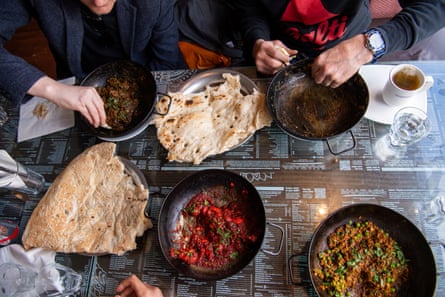
The problem, says Hussain, is that “people don’t know what the real thing is any more”. True balti, he says, is all about “the bowl in which it’s cooked and served”. The dish is cooked in a steel bowl on a high heat and served straight away, sizzling on the table for the customer. “Lots of people say they do balti, but they actually cook it in a frying pan before dumping it into a bowl,” says Hussain. “The proper thing is fast and it’s very flavoursome.” Balti has become a catch-all term for anything vaguely resembling curry flavour, from curry-flavoured snacks to mass-produced bottled sauces.
I’m in the kitchen in Shababs, a cafe-style eatery with giant menus tucked beneath glass tabletops and walls stencilled in mandalas. In a blackened carbon-steel balti bowl, Hussain fries off onion, chopped tomatoes and a pinch of garlic in vegetable oil. He adds a ladle of tomato gravy that has been bubbling on the stove since the previous evening. Cubes of raw chicken, then pinches of chilli powder, garam masala and ground coriander, are stirred into the sauce. Flames lick the edges of the bowl and the kitchen fills with smoke. The mixture boils violently for a few moments before the bowl is pulled from the burner and placed on a heatproof ceramic dish, ready for service.
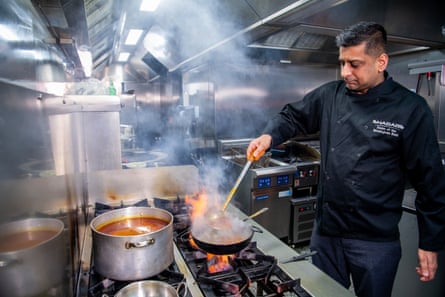
The entire process takes only seven minutes, partly due to Hussain’s practised efficiency – he estimates that he has cooked tens of thousands of these since he started working here in 1998. The result is a dark, unctuous curry with a thick, zingy sauce that caramelises at the edges, adding a hint of sweetness to an otherwise piquant dish.
“We don’t have the romance of Liverpool or the football teams of Manchester, but we have the balti,” says Andy Munro, an enthusiast of this dish who is campaigning for balti to be given living heritage status. “It was born here and it needs to be attributed to the city. London’s got jellied eels and pie and mash, but balti knocks that right out of the water.”
Munro tasted his first balti in 1985 and has eaten at least one a week ever since. A former civil servant, the 75-year-old was born and raised in the city and has made it his life’s mission to find the best Birmingham restaurants that still make the curry the traditional way. He has published a book on the topic and founded the Association for the Protection of the Authentic Balti to promote local balti houses; he is leading the living heritage bid by gaining endorsements from Richard Parker, the West Midlands mayor, and Brad Carter, a Michelin-starred local chef.
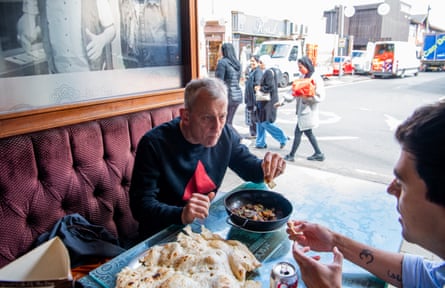
“When I first moved out of home, I wanted to try something new. After a night out one evening, I had a balti and was converted,” says Munro. “Back then, people would go for a curry after the club and behave badly by trying to eat the hottest one, but balti broke down barriers. It was one of the first dishes the white community here really appreciated. It’s just a shame that so many of the old balti places have closed down now and been replaced by burger or dessert shops. We need to celebrate the places we have left and encourage a new generation to get involved.”
In many ways, the rise and fall of the balti reflects the fortunes of the city that gave birth to it. When the Pakistani chef Mohammed Arif first came up with the dish in 1975, it was created in collaboration with a Sikh metal engineer, Tara Singh, who worked at one of the many nearby artisanal steel manufacturers for which Birmingham was famous. Arif was keen to serve a greater volume of customers in his restaurant, Adil’s, so he made a time-saving recipe that could be dished up in a single pot; Singh created the thin, pressed bowl that could conduct the heat needed to fire off the dish at speed. They named it “balti” after the Urdu word for bucket.
Located on Stoney Lane in south-east Birmingham, Adil’s was one of a handful of Pakistani, Bengali and Kashmiri restaurants serving punters who wanted a meal after pub closing time in the mainly Irish area. As the balti became better known and more popular, other restaurants sprang up between the nearby areas of Sparkhill and Moseley. The area became known as “the balti belt” or “the balti triangle” and the local population transformed from largely white to south Asian.
Munro describes the 90s as a “balti boom”, with locations such as Church Road housing 20 or 30 balti restaurants. Competition was fierce. But by the early 00s, business was starting to decline. “It was prices of produce going up, staffing issues or nationwide recessions,” says Hussain. “Things got tougher and it hasn’t been an easy ride ever since.” Then Covid struck. Many restaurants never recovered. In 2022, Adil’s closed. In 2023, Birmingham city council declared bankruptcy. In January 2025, the city’s bin workers began a strike that is yet to be resolved, leaving streets overflowing with rotting rubbish.
“The city centre is like a bomb site – no one is coming into town any more,” says Zakerul Islam, the owner of the Digbeth-based balti restaurant Manzil’s. “We’ve been in this spot near the centre of town since my father opened in 1966. People used to come here as the last stop on their night out, but now they’re staying home more often and the balti thing is basically dead. Me and my two brothers took the place on from our dad, but our children aren’t going to get involved, as business is too tough now. If things don’t change, we’ll be the last generation to do this.”
The balti triangle stalwart Azhar Mahmood, of Shahi Nan Kabab in Sparkbrook, expresses a similar worry. “When we opened in 1989, the street we’re on used to be full of Asian banks and this was one of the few places that accepted their workplace luncheon vouchers. It meant we used to have queues down the road,” he says. “Now, all those businesses have closed and we have bridal clothing shops, a few cafe-style places and not much else. After Brexit and Covid, the cost of produce in the cash-and-carry has gone from £1,100 every week to upwards of £1,900.”
Munro estimates that the hundreds of authentic balti restaurants in the city have dwindled to about 20. This is why he tried to have the Birmingham balti certified by an EU scheme in 2014, before Brexit rendered it void. When the British government announced a callout last December for its own Unesco‑backed scheme to register the country’s cultural heritage, he saw his chance. “You have to keep food relevant and trendy to get new generations to enjoy it – it has to change with the times,” he says. “Once we can authenticate the real balti, more people will want to try it and these family businesses might feel free to experiment and evolve with tradition, since it’s just a style of cooking, rather than a strict recipe.”
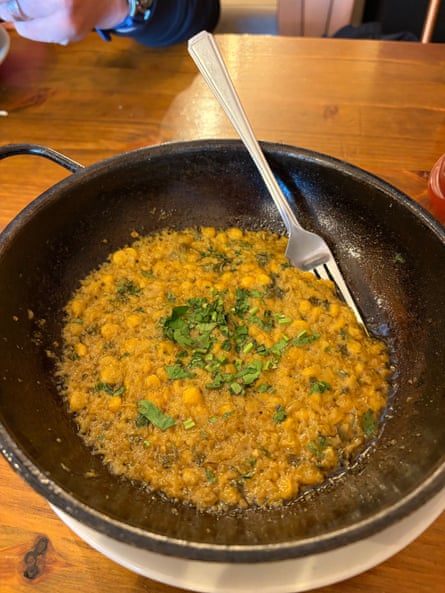
In balti kitchens around town, some chefs already add their own flair to the dish. Chef Tariq at Shahi Nan makes an earthy, umami-rich vegetarian dal balti, which involves adding slow-cooked onion gravy into the bowl after the raw lentils have been toasted with spices and tomato. Manzil’s lamb balti is heavily spiced to a dark brown and dotted with rendered fat. Shababs’ extensive menu features everything from a fiery hot chicken tikka balti to a peppery keema (minced lamb) and bone-in mutton masala.
Business may not be roaring the way it was in the 90s, but in each dining room I visit across a grey Monday and Tuesday in May, there are still a handful of customers wandering in for a meal. At Shahi Nan, Nazia Shah, a 21-year-old student, is tucking in to a paneer balti for lunch. “I’m from Milton Keynes, so I’d never had a balti before I moved here for uni,” she says. “It reminds me of my grandma’s home cooking. Plus, it’s quick and it’s not too expensive, which is perfect as a treat on a long day when you need a pick-me-up.”
At Shababs, Steve Adams, a 52-year-old regular, orders a keema balti with chips. “I grew up here, so I’ve known about Shababs my whole life. We used to come here after a night out at 3am or 4am,” he says. “I travel all around the country for work and everyone knows about balti. They just might not know it’s from Birmingham, which is a shame.”
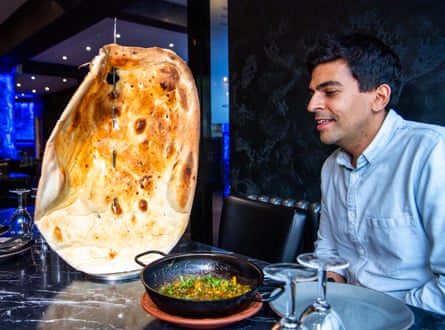
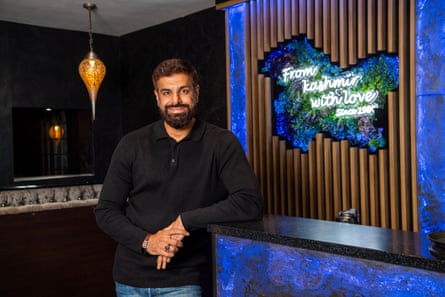
While the balti triangle struggles, newer ventures are aiming to revitalise other parts of the city. A stone’s throw from Edgbaston cricket ground and bordering the gentrified southern suburb of Stirchley is Royal Watan. Run by the brothers Imran and Arfan Ali, it boasts a recently refurbished dining room packed with marble-topped tables, leather banquettes and feature walls of faux greenery, with hashtag signs encouraging younger diners to post about their meals on social media. Here, the baltis are creamier and more sympathetic to a less spice-tolerant palate, while the giant naans are skewered on a tabletop plinth ready to be photographed.
“There weren’t any balti restaurants this side of Birmingham when our dad first took over this premises in 1984,” says Imran. “It was a business of bums on seats, getting people in and out fast for a bring-your-own-booze late-night trade. Since we’ve been in charge over the past few years, we want to make it more of a dining experience that isn’t rushed. We shut by 11pm and our clientele is more educated about food and proper baltis than ever before.
“Business can be tough, but we’ve seen this parade of shops go from being derelict to slowly regenerating because more young professionals are moving into the area, so there is hope for it to continue.”
Even balti-bowl manufacturing has made a comeback. While Singh’s designs ceased to be stocked locally more than a decade ago, since 2021 the Birmingham Balti Bowl Company has been handcrafting carbon-steel bowls. The craftsman Lee Sheppard estimates about 200 units are produced by the factory each month. Steve Heap, a local chef, has clients from as far afield as Switzerland booking into his private balti cooking class to receive a bowl and learn how to make the dish at home.
“The city has gone through its ups and downs, but these family businesses and manufacturing industries have weathered the storm and deserve to be rewarded,” says Munro. “They make a dish that’s just as specific and culturally important as the Melton Mowbray pork pie.” Munro’s living heritage bid has passed the first stage of assessment and now faces a 12-week wait for the ensuing two stages of deliberation to be completed; this may entail adding extra detail or endorsements to the submission.
For Hussain, back in the kitchen at Shababs, the certification would be a happy surprise, but the business of serving baltis will continue either way. “Birmingham has been a joke to people for years and we need to be better at promoting ourselves,” he says. “But regardless of any accolades, I’ll be in the kitchen knocking out baltis for our regulars until I can’t do it any more – it’s in my blood.”