2 months ago
96
2 months ago
96
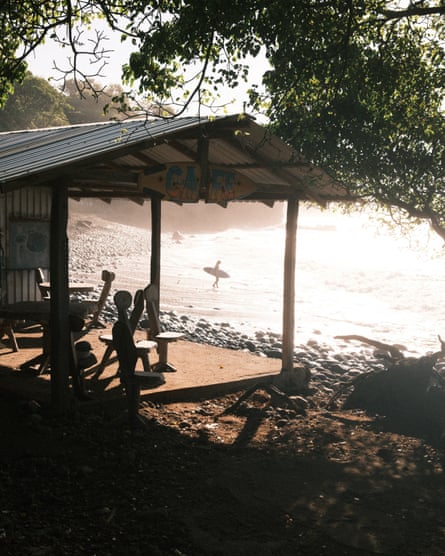
In the late 1990s in El Salvador, Rodrigo Barraza went in search of every surfer’s dream: a pristine wave, far from the crowds. Down a rough dirt track hours from any city, he found it: a little-known surf spot on the country’s eastern shores, where long lines of waves form a crisp right-hand break, surrounded by thousands of hectares of tropical forest.
“I fell in love with the place,” says Barraza. In 2004, he opened a small hotel there, and along with some surfing friends, founded a tourism association. They developed sustainable tourism standards and committed to protect the surrounding biodiverse ecosystem of rare dry tropical forest, rivers and mangroves. They called it Oriente Salvaje – the “wild east”.
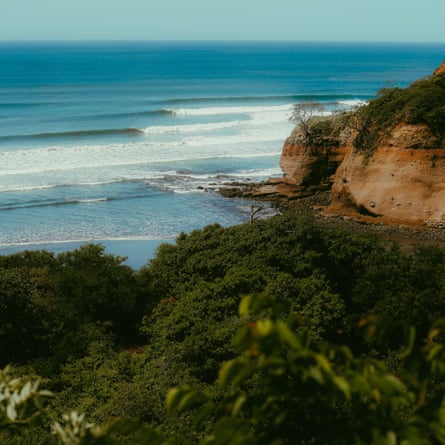
Today, Oriente Salvaje, which encompasses 19 kilometres of coastline, has a thriving surf industry that attracts intrepid wave hunters, who venture out to ride its world-class breaks, Las Flores and Punto Mango. A surf break is a natural feature such as a sandbar, coral reef, or headland which gives rise to ocean swells that break to form rideable waves. Yet this surfer’s idyll is increasingly threatened by a changing climate. Intense tropical storms cause flooding, churning up the picture-perfect waves, blocking transport routes, and keeping surfers away.
-
Oriente Salvaje is known by surfers for its world-class breaks, Las Flores and Punto Mango
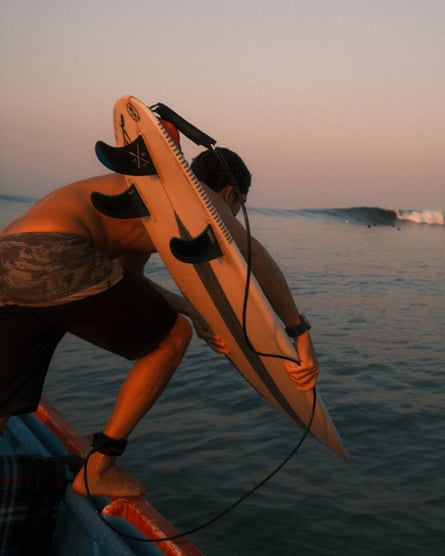
Without them, the local economy – a constellation of hotels, restaurants, surf shops, fishers and drone experts – sputters to a halt. “Surf tourism is the backbone of our local economy,” Barraza says. “However, this same dependence makes us highly vulnerable to climate-related disruptions.”
Concerned about the community’s future, in 2023 Barraza teamed up with an Save the Waves, an international surfing nonprofit organisation, and together they made an unusual decision: they took out an insurance policy for Oriente Salvaje.
This is not just any policy, but a type called parametric insurance that can be used to support recovery from the impacts of climate change. Unlike traditional insurance, which requires many months to assess claims, the parametric payouts are triggered as soon as damaging conditions cross a predetermined threshold: a particular wind speed, earthquake magnitude or rainfall level.
-
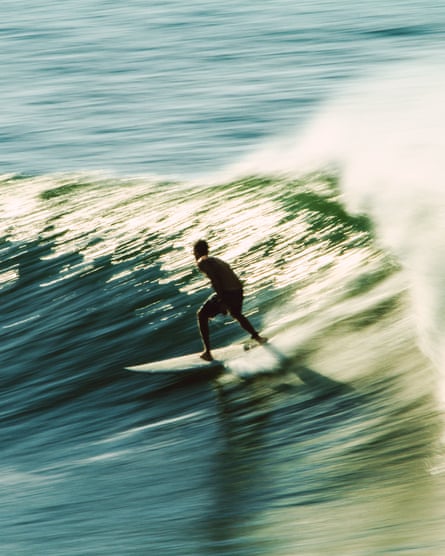
Surf tourism is the backbone of Oriente Salvaje’s local economy
This rapid support model has become attractive to property-owners, fishers and farmers whose homes and livelihoods are vulnerable to climate breakdown. It also has conservation appeal: parametric payouts have enabled the post-hurricane restoration of several coral reefs globally, helping maintain their role as storm buffers and fish nurseries.
The project at Oriente Salvaje is the first time parametric insurance will be tested on surfing. Save the Waves was launched “by a ragtag group of international surfers who were watching their favourite surf breaks around the world get destroyed” and wanted a change, says Nik Strong-Cvetich, the organisation’s chief executive.
One strand of their work involves designating World Surfing Reserves, a programme that recognises the “huge overlap between biodiversity and surf locations”, says Strong-Cvetich, and works with local groups to protect these places. Oriente Salvaje received the designation in 2024, after a campaign led by Barraza and other local groups.
The organisation also researches the economic contribution surfers make to local economies – revealing that they bring in tens of millions of dollars annually in many places. It is useful data for encouraging governments and local authorities to protect these ecosystems, he says.
-
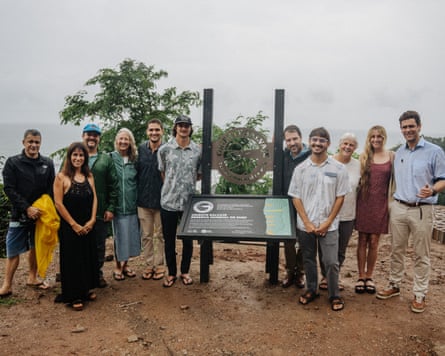
Oriente Salvaje was designated as a World Surfing Reserve in 2024. Rodrigo Barraza is first left, Diego Sancho Gallegos fifth from left, Nik Strong-Cvetich stands by the right-hand pole, and next to him is Angelo Picardo
-
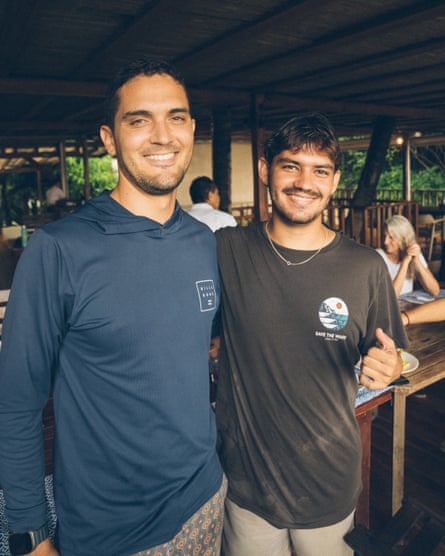
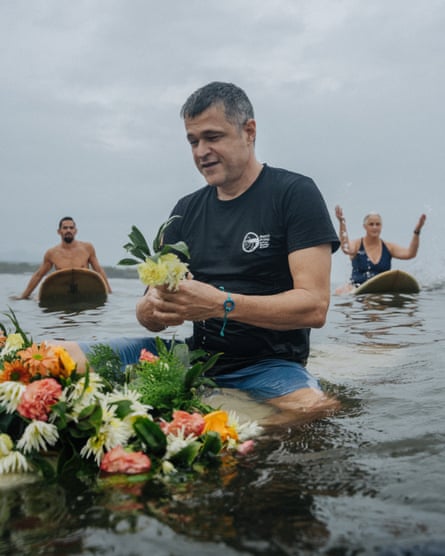
Left: Diego Sancho Gallegos, left, and Angelo Picardo. Right: Rodrigo Barraza lays flowers in the ocean during a ceremony to celebrate Oriente Salvaje becoming a World Surfing Reserve in 2024
But knowing that many of these thriving surf breaks are endangered by extreme weather, parametric insurance “became a weird obsession”, Strong-Cvetich says. “We scoured the world for places that were easily disrupted by a climate event and had a large dependence on the surf economy.” Oriente Salvaje emerged as a natural fit for their pilot.
Since then, the organisation has been working with the international insurance brokers Willis Towers Watson (WTW) to develop the bespoke financial model, in collaboration with the local community. Firstly, they had to identify a measurable trigger for the payouts. WTW considered many metrics, but “rainfall appears to represent the most robust and suitable single-trigger option for the region,” says Juanita Blanco, director of alternative risk transfer solutions for Latin America at WTW.
-
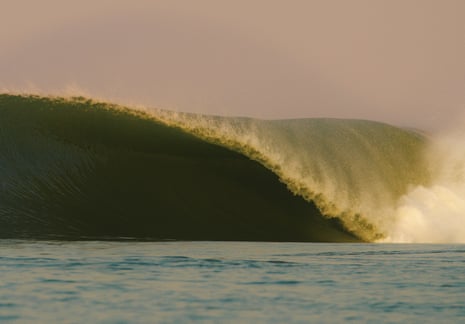
Save the Waves believe they can use surfing as a hook for wider moves to protect the environment
This was backed up by 40 years of rainfall data coupled with ten years of data on the number of surfer visits, which revealed that wetter conditions cause more disruption, explains Diego Sancho Gallegos, director of conservation programmes at Save the Waves. “We saw that every time there was a very big storm, there was a clear dip in surfer visitation, associated with accumulated rainfall.”
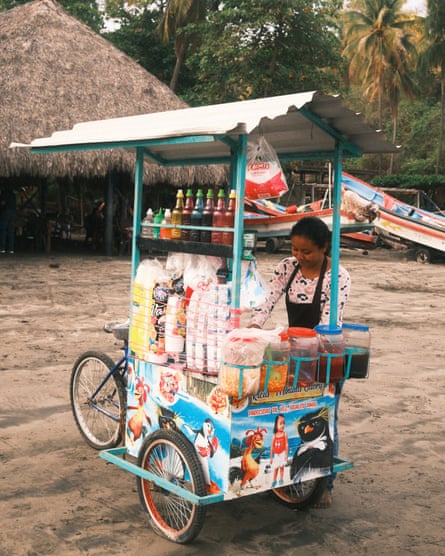
A survey of 50 local businesses showed that, on average, 70% of their income was dependent on surf tourism. Several are informal operators such as surf photographers, guides and boat drivers who are especially vulnerable to changeable weather. “It’s crazy,” says Strong-Cvetich. “People can predict their income based on the surf report.”
The payout will be triggered once weather conditions reach an extreme associated with observable income loss, according to Blanco. It will be distributed to anywhere between a few hundred and several thousand beneficiaries in the region. The size of the payout is still being determined, as well as which insurer it will be, but WTW is now shopping the idea around to several companies. If everything aligns, Save the Waves would like to have a pilot running by June to kickstart the rainy surf season, Gallegos says.
-
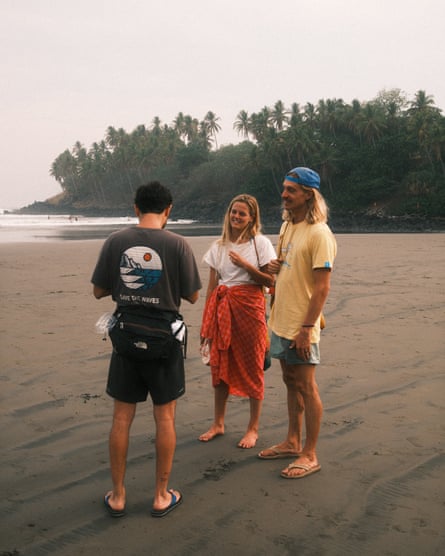
Oriente Salvaje began as Barraza’s dream of finding great waves away from the crowds; now many local businesses depend on the surfers who visit
Save the Waves says it wants to continue refining the insurance to include a dedicated payout for ecosystem restoration in the future. Some breaks such as Las Flores . Rebuilding the coastal mangroves could create a stronger buffer against run-off from the land into the sea during big storms, which can damage surf quality. Restoring the watersheds may also reduce erosion and flooding risks for residents. More broadly, it connects with the organisation’s overall vision that “we can protect the environment using surfing as the hook,” Strong-Cvetich explains.
The pioneering programme has not been hurdle-free. Angelo Picardo, Save the Waves’ local coordinator in the country, says: “El Salvador is a developing country and we don’t have an insurance culture – people don’t even have health insurance – so there’s a lot of work you have to do on the ground to bring people on board.”
Another challenge has been funding the premiums without burdening local businesses. Other community-focused parametric projects have relied on philanthropic funding or explored options such as a tourism tax. Save the Waves is in talks with the Salvadorian government, which since 2019 has been channelling millions from loans into a nationwide surf tourism initiative. The surfing enthusiasts are hopeful that the comparatively small cost of the annual premium would be “a drop in the bucket” compared with these investments, Gallegos says.
-
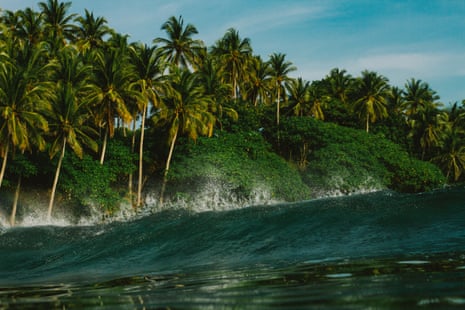
Ecosystem restoration projects, such as rebuilding the coastal mangroves, could help protect surf quality
This type of insurance is bound to spread as more communities and ecosystems experience weather extremes, according to Swenja Surminski, an international expert on innovative insurance for ecosystems at the London School of Economics, who is not involved with the project. But she warns that “parametric solutions must be combined with broader resilience and adaptation strategies”, such as disaster planning, ecosystem restoration and stronger building standards to protect these places more holistically.
From lived experience in Oriente Salvaje, Barraza agrees that no matter how innovative, insurance must exist in a patchwork of solutions: the community does not only face income losses, he says, but also landslides, property damage and poor water quality when storms strike.
For now at least, the insurance programme feels as promising as the crisp waves that roll into Oriente Salvaje on a good-weather day. “Everybody’s positive. There’s nothing but good things to hear from this,” Barraza says. “We just hope that it turns out to be the best that it can be.”
-
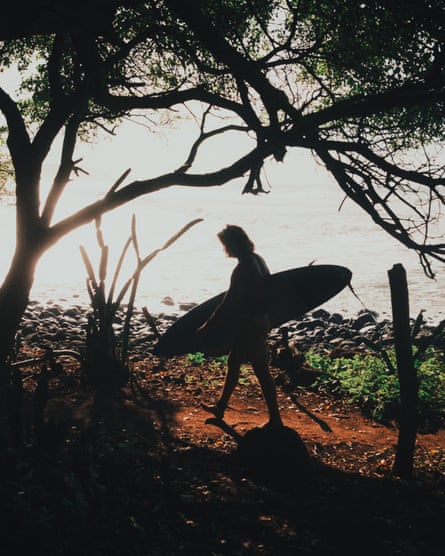
It is hoped that the annual insurance premiums will seem like ‘a drop in the bucket’ compared with the income from future surf tourism and state investment