1 month ago
135
1 month ago
135
Secateurs are the single most valued tool in the gardener’s trug, an implement as personally prized as the bricklayer’s trowel. With time, their weight and shape wear familiarly into the hand, becoming a companionable tool for all garden tasks, from pruning woody shrubs and cutting back perennials to slicing twine and preparing cut flowers.
There are two main types of secateurs, bypass and anvil (see below for their differences explained), and I’ve focused on the former here. If well looked after (we’ve included care instructions at the end of this article), a quality pair can last decades; as a result, gardeners declare staunch loyalties to particular models.
After putting a range of gardeners’ bypass secateurs through the wringer in my own garden for the Filter a year ago, I donated them to the Garden Museum in London, where volunteers have made good use of them in the museum’s public gardens. As head gardener, I took the opportunity this spring to give the secateurs an annual deep clean, sharpen and smarten, and inspected each for endurance and performance. Scrubbed with soapy water and a stiff brush, dried and wiped down, they were then rubbed with Niwaki’s Mini Clean Mate rust and sap eraser, sharpened with a whetstone, and lubricated with WD-40.
So how are they looking? The pair I named Best overall – Burgon & Ball’s RHS-endorsed secateurs – have held up exceptionally well. Easy to clean, there’s little visible deterioration of their robust frame. Similarly, the blade of the Okatsune 103 secateurs has become discoloured with accumulated grime, yet cuts just as smoothly and sharply as it did when new. The lock on the Spear & Jackson’s Razorsharp Advantage secateurs needed cleaning and oiling to get it sliding smoothly again, but it remains very much intact, and the blade is impressively sharp.
I put an additional seven pairs to the test this spring to add to the 12 pairs I tested last year. Here are the 10 best secateurs from my tests.
At a glance
-
Best secateurs overall:
Burgon & Ball bypass secateurs
-
Best secateurs for tough stems:
Felco Model 2
-
Best budget secateurs:
Spear & Jackson Razorsharp Advantage bypass secateurs
-
Best secateurs for comfort:
Darlac compact plus pruner
-
Best secateurs for repetitive action:
Felco Model 7 with rotating handle
-
Best splurge:
Niwaki Kurumi pruners
Why you should trust me
In my almost two decades as a professional gardener, I have encountered every possible use for a pair of secateurs – from sculptural pruning to paint tin opening (ill-advised). I know the strain they’re often put under and what is required of a durable pair. I’m also something of a neat freak: if a stem or branch can be cut to smarten a scene, I’ll likely have chopped it five minutes ago. My day-to-day as head gardener at the Garden Museum includes anything from shaping shrubs and sprucing perennials to snipping stems for indoor flower arrangements.
How I tested
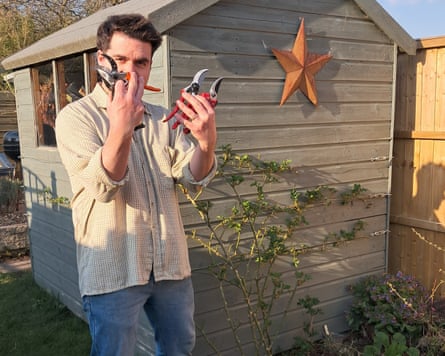
With spring in the air, the time for cutting back perennials and grasses in advance of new growth, I took each pair to task in my own garden. I tidied up the small stuff first: old aster stems, scrappy libertia leaves, brittle mounds of purple moor-grass.
Affordability, maintainability and sleek appearance are all considerations when selecting secateurs, but for me, there are four key criteria they ought to meet …
The first is sharpness. If ever I am frustrated with a pair of secateurs, it is most likely due to their failure to cut through finer plant material: slender or fibrous flower stems, the matted hair of ornamental grasses. The second concerns how well they cut through thicker stems: small shrub branches, roses, the hardened stalk of a sunflower. This is as much down to the body of the secateurs as the blade. With plenty of living and lignified hazel, elder and buddleia around the garden, I tested each pair on various tougher materials.
The third consideration is comfort: handles are everything. Whether or not a pair feels securely gripped comes down to the coating, be it plastic, rubber or metal. Comfort, however, tends to be dictated by their shape and girth.
The fourth is the catch lock. Being able to lock secateur blades shut with ease is crucial. Left open, they become a hazard, the sharp blade easily knocked against or catching a finger. Most secateurs are configured with a catch easily manoeuvred with the thumb; in some models, this is substituted with a latching lock at the bottom of the handles. Convenience makes all the difference, as locking is frequent between cuts.
There is one other factor I thought was worth testing: visibility. Secateurs are frequently put down, dropped or absent-mindedly stowed, and therefore easily lost. So, a level of conspicuousness can help, and some brands have opted for vibrant, standout colours. To test this, I asked our now six-year-old to do what six-year-olds do best and lose each pair, one by one, in the garden – under parental supervision, of course. My wife timed my subsequent searches.
The best secateurs in 2026
Best secateurs overall:
Burgon & Ball bypass secateurs
Burgon & Ball
Bypass secateurs
from £22.99
What we love
Affordably priced for the quality; stands the test of time
What we don’t love
They struggle a little with the larger diameter material
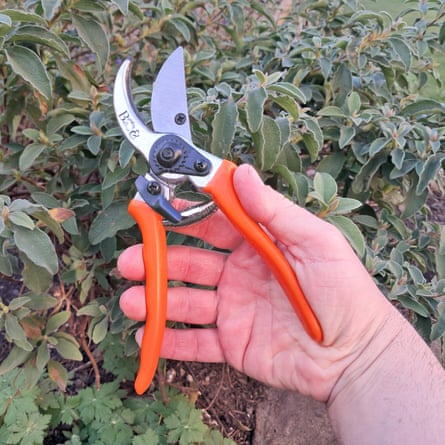
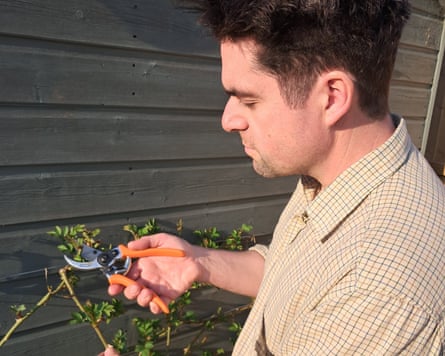
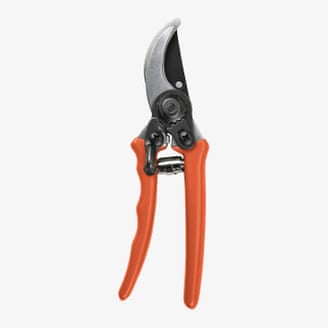
Despite alloy handles, a carbon-steel blade and an endorsement from the Royal Horticultural Society, I didn’t expect a workaday pair of secateurs like Burgon & Ball’s to top the lot. They’re not only sharp, robust and comfortable but also reasonably priced: a mid-range contender that jostles with the premier pruners.
Why we love it
On the surface, there’s nothing extraordinary about these secateurs. In appearance, they adopt a look recognisable in many other brands – the long shaft, swivelling thumb clasp, volute spring and indented handles. However, these unremarkable features are put together remarkably well: in the hand, Burgon & Ball’s secateurs feel comfortable, lightweight and well-balanced, while the blade had little trouble slicing through matted grass and larger stems alike. When cutting 2cm+ diameter material, you might need to apply some brute force – or consider the loppers – but for anything below, these make light, easy and precise work.
They stood out well in the visibility test, too. Owing to the intentionally conspicuous orange of the handles, it took a mere 17 seconds for me to locate them in the garden (half hidden beneath a cistus shrub). They’re also built with maintenance in mind: the blade and spring can be removed for cleaning or replacing (they come supplied with a spare of each, though I’m not sure whether that’s reassuring or disconcerting!). All in all, an excellent, robust and comfortable model that, even after long use, doesn’t strain the hands and wrists.
It’s a shame that … the screw head on the blade has been left exposed – it’s sure to collect mud.
Max cutting diameter: up to 25mm
Left handed available? Yes (£21.36 at Amazon)
Burgon & Ball
Bypass secateurs
from £22.99
What we love
Affordably priced for the quality; stands the test of time
What we don’t love
They struggle a little with the larger diameter material
Best secateurs for tough stems:
Felco Model 2
What we love
Pro grade; sharp; helpfully conspicuous and hard as nails
What we don’t love
The Swiss quality and precision comes at a higher price
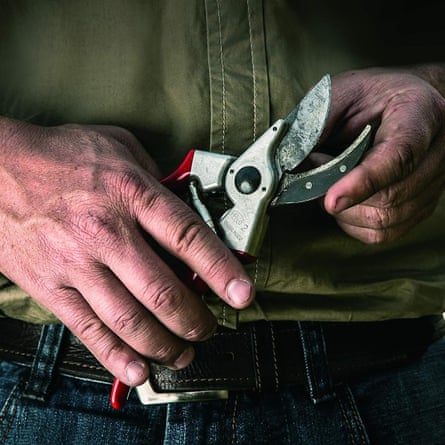
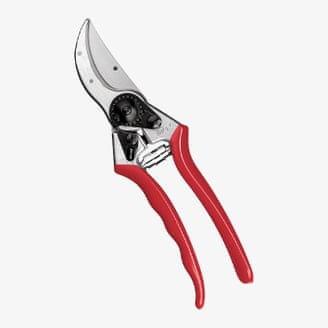
Swiss company Felco is among the best known of all secateur brands. Individually numbered, its series of red-handled pruners ranges from compact, professional and premium models to left-handed and rotating-handled options. Model 2 is its original, classic pair, hyped by working and amateur gardeners.
Why we love it
There’s an undeniable heft to Felco secateurs that offers reassurance: going at the thicker growth of my rampant buddleia, I never doubted the robustness of the body or the force behind the blade. Felco was founded in 1945 and operated out of an old watch dial factory – so the origin story goes. It introduced clockwork precision and finesse to the rugged world of garden maintenance (it also makes loppers, knives and saws). Its tools are made from 70% recycled aluminium, and any steel it uses is 95% recycled alloy. All parts can be replaced, and the company offers a reconditioning service: secateurs for life, in theory.
When put to the test on the small stuff, the blades cut cleanly each time, never folding or squashing material in that annoying way that secateurs sometimes can. They felt nicely balanced and undemanding on the wrist, the handles pleasantly cushioned by rounded rubber pads. The thumb clasp is second to none, and there’s no two ways about it, that blazing red was engineered for prominence: it took me all of six seconds to spy the pair hidden among the plant pots.
It’s a shame that … they’re just not quite as affordable as other brands.
Max cutting diameter: 25mm
Left handed available? No
Felco
Model 2
from £55.45
What we love
Pro grade; sharp; helpfully conspicuous and hard as nails
What we don’t love
The Swiss quality and precision comes at a higher price
Best budget secateurs:
Spear & Jackson Razorsharp Advantage bypass secateurs
Spear & Jackson
Razorsharp Advantage bypass secateurs
from £11.20
What we love
The no frills look; affordability; and the sharp blade
What we don’t love
The lock slider is less preferable to a thumb catch
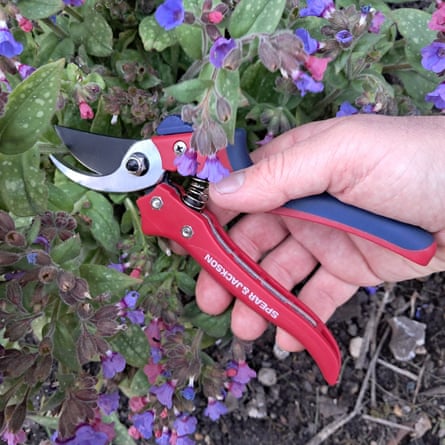
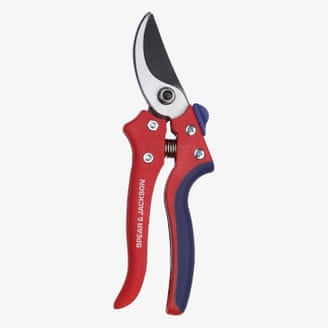
Possibly the most simply designed and hard-working budget secateurs I’ve had the pleasure of trying, Spear & Jackson’s economic offering is a genuine gem. The quality of performance is a level above their station.
Why we love it
With any budget item, there will be inevitable compromises. When it comes to secateurs, however, the element you least want to sacrifice is the quality of the blade, and this, clearly, is what Spear & Jackson prioritised with its Razorsharp Advantage bypass secateurs. The carbon steel blade is durable and smooth, and it glides neatly beside its chrome counterpart for a faultless cut.
The drawbacks lie elsewhere: the basic coil spring; the lightweight plastic handles; and I wasn’t wild about the lock slider at the top. However, they’re extremely comfortable for the price – no mean feat in the world of secateurs – and the 10-year guarantee aids confidence.
Cutting a mixture of grasses and perennials, the Razorsharp Advantage secateurs gave a satisfyingly smooth “chop” and handled most shrubby material well, provided it wasn’t too large. Aesthetically speaking, I’d say they look pretty good, too: no frills, but no clumsy components either.
Spear & Jackson doesn’t offer a reconditioning service, though it does offer advice on cleaning and restoring secateur blades.
It’s a shame that … they’re not just a little tougher with larger material.
Max cutting diameter: 15mm
Left handed available? No
Spear & Jackson
Razorsharp Advantage bypass secateurs
from £11.20
What we love
The no frills look; affordability; and the sharp blade
What we don’t love
The lock slider is less preferable to a thumb catch
Best secateurs for comfort:
Darlac compact plus pruner
Darlac
Compact plus pruner
from £10
What we love
Their shape is engineered for comfort; great all-rounders
What we don’t love
Struggle with delicate cuts like fine ornamental grasses
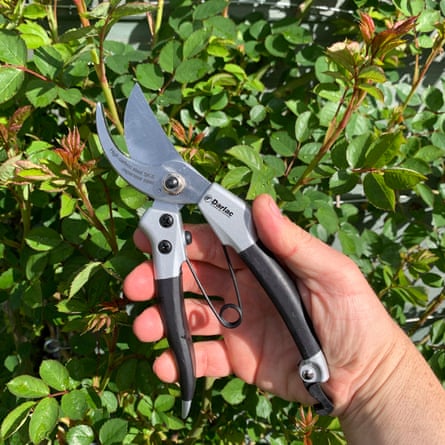
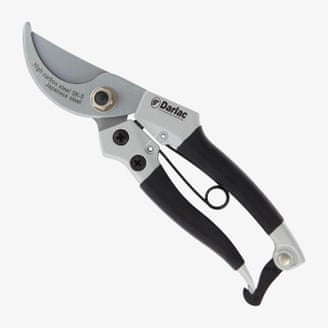
British gardening tools supplier Darlac – owned since 2017 by seed supplier Mr Fothergill’s – has produced something rare here: a pair that, among the saturated market of low- to mid-priced secateurs, stands out from the crowd. The compact plus pruner didn’t make my original list last year, but I’m pleased I’ve now had the opportunity to test it.
Why we love it
Within the vast compass of mid-range secateurs – and there really is a mass of brands and models here – it’s only going to be exceptional comfort or surprising strength that will elevate a winning pair. The former is apparent the moment you pick these up. Their lightweight frame and sleek shape sit easily in the palm, just as the smooth, fine rubber handles are so much more pleasant than that somewhat sticky, rubbery plastic so often found in cheaper secateurs. As for the cut, these performed well with the smaller-size stems and well enough with larger diameter material. The blades give that oh-so-satisfying “snip” as they go. Overall: a solid yet appealingly lightweight pair.
It’s a shame that … the colour isn’t brighter or more conspicuous – you’ll just have to keep a closer eye on these.
Max cutting diameter: up to 16mm
Left handed available? No
Darlac
Compact plus pruner
from £10
What we love
Their shape is engineered for comfort; great all-rounders
What we don’t love
Struggle with delicate cuts like fine ornamental grasses
Best secateurs for repetitive action:
Felco Model 7 with rotating handle
Felco
Model 7 with rotating handle
from £64
What we love
They’re easy on the wrist and made to last
What we don’t love
The swivel makes the catch lock slightly harder to reach
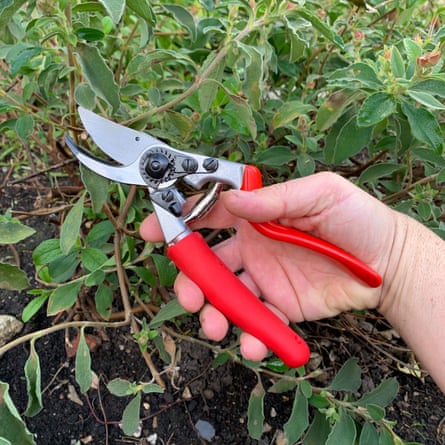
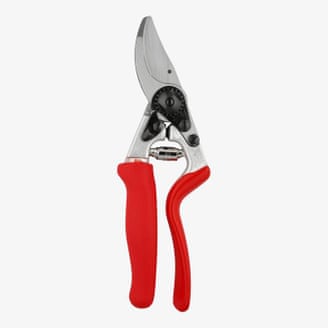
Felco’s Model 7 offers a rotating handle that swivels on its axis, rolling sympathetically with the movement of your hand as you clasp and cut – a novel, if potentially strain-saving, function.
Why we love it
If Felco had a trademark attribute, it would undoubtedly be durability. Geared around the professional market, its secateurs are built for brawn. And though they’re no heavy paperweight in the hand – made from 70% recycled aluminium, they’re actually surprisingly light and well balanced – in model number 7, the Swiss company saw fit to mitigate against any potential strains to the wrist and thumb by modifying the lower handle to swivel.
To the uninitiated, the effect can feel disorientating at first, but I know gardeners who swear by it: the bar rolls in motion with your cutting movement, easing repetitive snips and easing your grip. And true enough, once I settled into the swivel, I felt increasingly at home with the sensation: repetitive cutting felt smoother. It was particularly useful for doing the “chop and drop” cutback method, fine-snipping my ornamental moor grasses (Molinia caerulea) and scattering them as a straw-like top mulch between the sunny perennials – a tedious action that can be hard on the wrist and palm. Unsurprisingly, the Felco 7 had little trouble chopping through the bigger stuff, too.
It’s a shame that … unless you’re not into the swivelling handle, I can’t see a downside.
Max cutting diameter: 25mm
Left handed available? Yes, see Felco 10 (£85.99). Note: this is the same pair as the 7s, but the left-handed option
Felco
Model 7 with rotating handle
from £64
What we love
They’re easy on the wrist and made to last
What we don’t love
The swivel makes the catch lock slightly harder to reach
Best splurge:
Niwaki Kurumi pruners
What we love
They perform as well as they look
What we don’t love
The maximum cutting diameter is slimmer than most
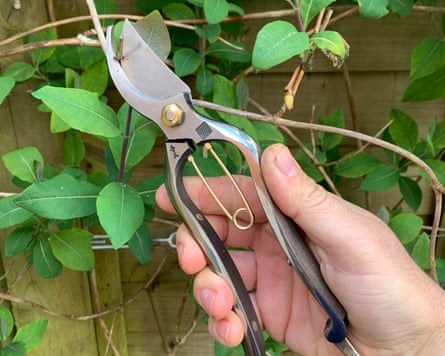
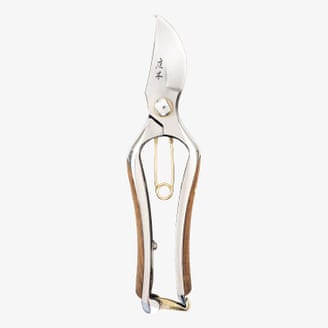
Even for a brand as exalted as Japanese tools importer Niwaki, these secateurs are pricey. But my goodness, are they special. When a central pillar of your craft is functional minimalism, embellishments are not easily conceived, yet somehow Niwaki has managed to perfect its art with the most beautiful pair of secateurs you’ve ever seen. Whether you’re buying these as a special gift for a beloved gardener or giving your own green fingers the pair they’ve long deserved, there is no higher bar.
Why we love it
Once you get past staring at the sheer elegance of these walnut-inlayed, carbon steel secateurs, you’ll find yourself questioning how you could possibly subject such a showpiece to the sap and sludge of the outside world. But I eventually got to work on stems and sticks. And, oh boy, did I enjoy myself. Heeding Niwaki’s recommendation not to tackle anything thicker than 10mm, I kept to the hydrangeas and woody salvias, but snipped with careless abandon. It’s such a smooth and satisfying cut, and those wooden handles feel all the more pleasant again than the GR Pro pair I tested last year.
What’s more, Niwaki sends them out in plastic-free packaging and offers replacement springs and bolts, should yours ever get damaged or lost (but believe me, your pair is never getting lost). So yes, the price puts them in a bracket of their own – but never was there such a beautiful and useful tool on the gardener’s belt. And as they say of quality, buy once …
It’s a shame that … at some point, you’ll actually have to put these to work.
Max cutting diameter: 10mm
Left handed available? No
Niwaki
Kurumi pruners
£200
What we love
They perform as well as they look
What we don’t love
The maximum cutting diameter is slimmer than most
The best of the rest
Alpen Gelbhorn 150 secateurs
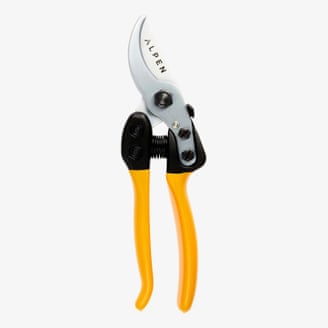
Alpen
Gelbhorn 150 secateurs
£30.54
What we love
Affordable; hardwearing; cuts well; auto unlock function
What we don’t love
Struggles a little with larger diameter wood
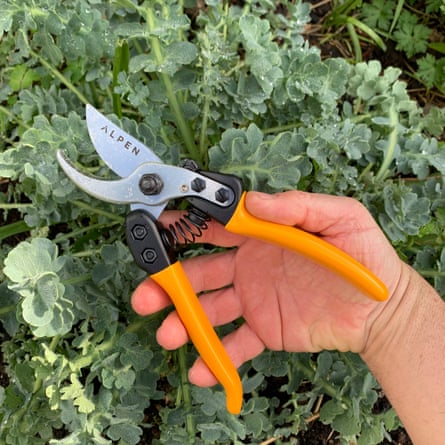
Best for: durability
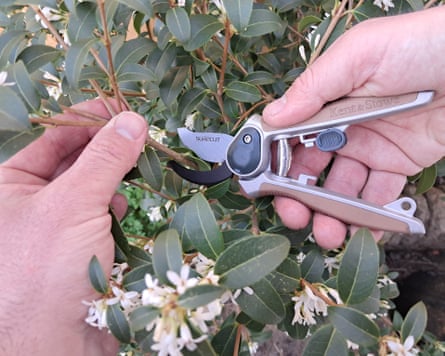
From Felco’s new Swiss sister brand Alpen comes the Gelbhorn 150 secateurs. Compact, well-balanced, razor sharp and conspicuously luminous in celandine yellow (in a good way), these are an excellent and seemingly robust, mid-priced pair of secateurs. While they do possess the top lock slider I’ve had my issues with, they also pack a neat automatic opening function – squeeze firmly and the catch unlocks with a lovely “click”. It’s mildly addictive.
The slider is only used for locking the pair afterwards. I liked how these secateurs stayed firmly in the hand (no slippage); how, like Niwaki, they arrived without plastic packaging and with spare parts available; and that the blade was chrome-coated to “guarantee” (Alpen’s own words) corrosion resistance: who wouldn’t prefer their secateurs forever gleaming.
It didn’t make the final cut because … the handles open up just a little wide for my particular preference
Max cutting diameter: 20mm; left handed available? No
Alpen
Gelbhorn 150 secateurs
£30.54
What we love
Affordable; hardwearing; cuts well; auto unlock function
What we don’t love
Struggles a little with larger diameter wood
Okatsune 103 bypass secateurs
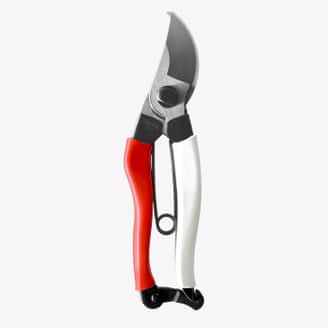
Okatsune
103 bypass secateurs
from £45
What we love
The Samurai sword blade and the slim, elegant look
What we don’t love
They can feel just slightly unbalanced in the hand
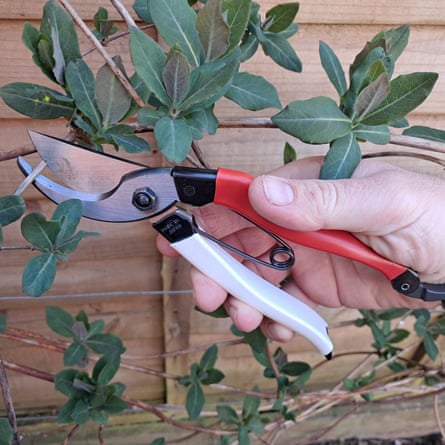
Best for: elegance and precision at a more affordable price
Okatsune’s 103 secateurs are sleek and slim, and are just as proficient when it comes to the snip. Okatsune is a Japan-based manufacturer conceived by a former blacksmith. It has blades made from the same steel from which Samurai swords are fashioned: a confidence boost for sure when it comes to keenness and durability. I particularly liked the red-and-white colouration of the handles, which, according to Okatsune, symbolises happiness in Japan. I liked the more affordable price tag, too.
It didn’t make the final cut because … they feel just a little top-heavy in the hand, with the blade ever so slightly outweighing the handles.
Max cutting diameter: 25mm; left handed available? No
Okatsune
103 bypass secateurs
from £45
What we love
The Samurai sword blade and the slim, elegant look
What we don’t love
They can feel just slightly unbalanced in the hand
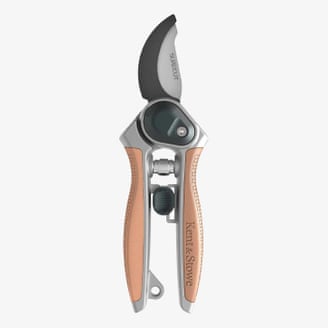
Kent & Stowe Garden Life all-purpose mini secateurs
Kent & Stowe
Garden Life all-purpose mini secateurs
from £12.99
What we love
Surprisingly tough and sharp cut: this little guy bites big
What we don’t love
The catch lock is fiddly
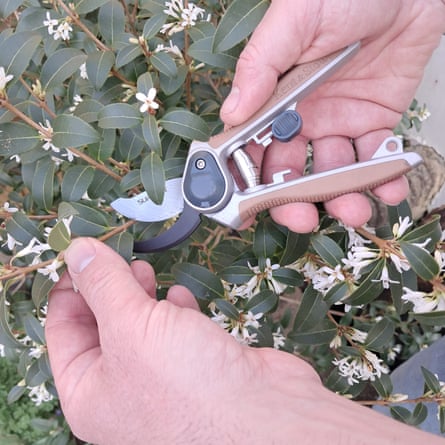
Best for: small hands and surprising strength
Trialling a few Kent & Stowe mid-price secateurs, I’d intended to review its all-purpose Eversharp model. However, I was so impressed with its more compact mini pair, I had to give them a shoutout instead. The big surprise here is that, despite the low price and dainty size (17cm in length), this little model can tackle stems that have proven challenging for average-size secateurs. The snip is clean, the grip is fast, and the handles are rigid: an excellent pair for delicate propagative work and rigorous chopping alike. But, buyers take heed: dressed in muted greys and earthy brown handles, this little wonder is liable to vanish into the undergrowth if dropped – it took me the longest to find by a good minute.
It didn’t make the final cut because … the catch lock is somewhat fiddly, which might be expected for so compact a pair of secateurs.
Max cutting diameter: 15mm; left handed available? No
Kent & Stowe
Garden Life all-purpose mini secateurs
from £12.99
What we love
Surprisingly tough and sharp cut: this little guy bites big
What we don’t love
The catch lock is fiddly
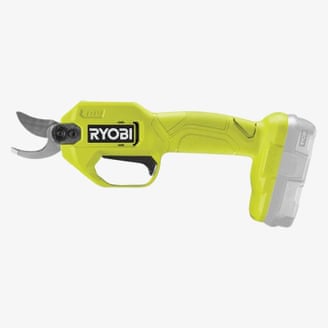
Ryobi 18V One+ cordless secateurs
Ryobi
18V One+ cordless secateurs
from £109.99
What we love
The power! The might! They quickly become addictive
What we don’t love
You’ll need to buy a battery and charger in addition
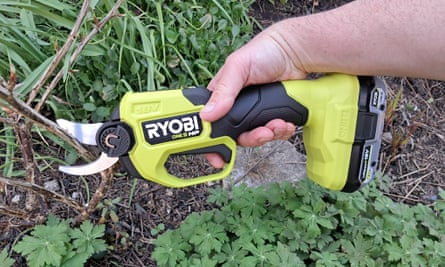
Best for: effortless pruning and for those requiring cutting assistance
A few electric-assisted secateurs are available, with companies such as Stihl and Worx throwing their hats into the ring. However, Ryobi’s cordless 18V One+ model is among the most competitively priced. If, like me, you’ve not tried electric shears before, you’re in for a novel experience. Activated and deactivated with a hold of the trigger, once you get snipping, it’s addictive – without restraint, beloved shrubs will soon be reduced to kindling. Comfortable and unexpectedly precise, this is a fantastic option for thicker stems and for those who require some assistance with their pruning. You’ll need to buy a battery and charger, and safety glasses are advisable, all available from Ryobi.
It didn’t make the final cut because … it wouldn’t be fair – this one’s got an 18V battery!
Max cutting diameter: 25mm; left handed available? No, but they are ambidextrous
Ryobi
18V One+ cordless secateurs
from £109.99
What we love
The power! The might! They quickly become addictive
What we don’t love
You’ll need to buy a battery and charger in addition
What you need to know
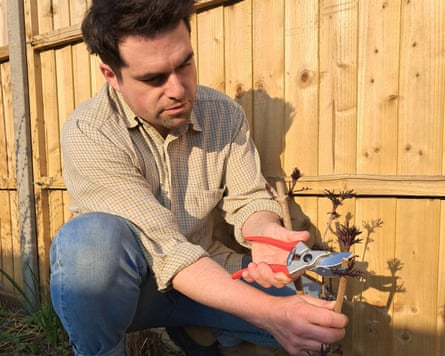
How to look after your secateurs
The key to prolonging the life of any pair of bypass secateurs is to keep them clean, oiled and sharp. A light clean after each use goes a long way, along with a semi-regular sharpen and an annual deep clean.
After more rigorous use, wipe away any soil or debris from the body and blade using a damp cloth. If there is a detachable central spring, remove this and clean inside it. Using a whetstone, carefully sharpen the edge of the blade before wiping it with another clean, oiled cloth. Finish by oiling the clasp and spring for a smooth action.
Some secateur suppliers offer a maintenance service. Felco does this with a 28-day turnaround, returning your pair by post fully restored and sharpened.
What is the difference between bypass and anvil secateurs?
Bypass secateurs are the most commonly used type, with two blades that pass each other closely, providing a clean and accurate cut. These tackle the everyday things: lighter shrub pruning, deadheading, slicing twine and so on. Anvil secateurs comprise a single blade that cuts against a flat, blunt surface, designed for cutting tougher, woodier or dead stems.
What to look for
My advice is to prioritise comfort and a durable blade. Ultimately, secateurs are a tool of frequent use – you want them to feel good and stand the test of time. Consider a size that sits comfortably in your hand, as well as an even balance (some pairs can feel overly weighted towards the blade end, causing them to slip forward when in use). If your gardening involves pruning woody plants (ie small to medium shrubs), it’s better to have two pairs – one for the light work and a tougher pair (or perhaps an anvil pair) for the thicker cuts.
What cutting diameter should I go for?
Each pair of secateurs will have a specified cutting diameter, advising the maximum size of material it should be used on. This tends to range between 10mm and 30mm. A good all-rounder pair will have a 20-25mm diameter maximum; beyond this, a pair of loppers or a cutting saw should be used.
Is a holster for my secateurs necessary?
A holster – clipped to a belt or trouser pocket – might look geeky as heck, but it will significantly reduce the risk of losing that beloved (or expensive) pair in the greenery, the tool shed or compost heap.
How to prune
Shrubs whose flowers arrive towards the beginning of the year are generally best pruned soon after blooming, so that once the flowers have been enjoyed to the fullest, the plant can be shaped and reinvigorated for next year’s exhibition. The art here is to reduce the plant by cutting entire stems back to – or near to – ground level, rather than a finer chop all round; a method sometimes referred to as the “1/3 pruning rule”.
By removing a third of the plant, you maintain the overall shape while reducing its overall size, and at the same time stimulate new healthy growth. Loppers are required for larger diameter shrubs – such as mahonia, fatsia and osmanthus – however, secateurs are ideal for a great range of smaller plants, including teucrium, skimmia, daphne and sarcococca. You can also apply this method to summer-flowering shrubs that have become too rampant, such as potentilla and hydrangea. It’s also not too late to prune back fruit bushes, including gooseberry, blueberry, and autumn-fruiting raspberry.
For more:
Gardening pros on the tools they can’t live without
The best lawnmowers to keep your grass in check
How to create a more eco-friendly lawn
Matt Collins is a garden, nature and travel writer, and head gardener at the Garden Museum in London
This article was originally published on 11 April 2025. Reviews published in the Filter may be periodically updated to reflect new products and at the editor’s discretion. The date of an article’s most recent update can be found in the timestamp at the top of the page. This article was amended on 17 April 2026; four new products were added after testing, and prices were updated throughout.