4 hours ago
11
4 hours ago
11
For Cheyenne Roundtree, an investigative reporter at Rolling Stone, the civil lawsuit that dropped on Sean “Diddy” Combs in November 2023 seemed to come from nowhere. Filed by his ex-partner, the singer Cassie Ventura, it alleged that Combs had beaten and raped her, plied her with drugs and forced her into sexual encounters with male sex workers throughout their decade-long relationship.
Roundtree, along with much of the world’s media, was shocked. “I’d grown up in the era of Diddy and Cassie and viewed them as this power couple,” she says. “Her hit Me & U was my song. Diddy was this mogul – I knew him for the music – and she was this style inspiration, this beautiful, talented woman living an amazing life.”
At first, Combs and his legal team issued blanket denials. The lawsuit, they said, had followed an attempt by Ventura to blackmail Combs, and was “riddled with baseless and outrageous lies”. Despite this, they settled it immediately with a $20m sum, but within days more women came forward. A second lawsuit was filed one week after Ventura’s, by Joi Dickerson-Neal, which alleged that, as a student in 1991, she had been drugged and raped by Combs, who had filmed the alleged assault and shared it with other men. Days later came another. In this, Anna Kane alleged that Combs and two others had gang-raped her in 2003 when she was 17. As the cases piled up, Combs’s team continued the denials – describing the lawsuits as “money grabs”. Then a leaked video forced them to change tack. Security footage from a Los Angeles hotel taken in March 2016 showed Cassie Ventura creeping from a room, pursued by Combs, who is wrapped in just a towel. He beats her, kicks her and drags her back.

“His attorneys took it head on,” says Roundtree. “They were saying: ‘We’re going to own the domestic violence, but that happened in the past – all that is locked in the 2010s and he has changed. He has become Love since then. [Combs had declared in November 2017 that he was renaming himself Love, or Brother Love.] He’s a new person, a father figure.’ But all these other lawsuits were telling a completely different story.”
Ventura started digging through the archives, finding stories, interviews and police reports lost to time, often because they weren’t online. Over the next three years, she spoke to people who had known Combs at every stage of his life – as a boy, a teenage intern, a genius producer and the founder of Bad Boy Records, a Grammy-winning artist, a business mogul – and finally as an inmate in a New Jersey prison. The lawsuits led to a federal investigation and, eventually, Combs’s indictment. Now 56, he is serving a 50-month sentence for transporting people across state lines for prostitution.
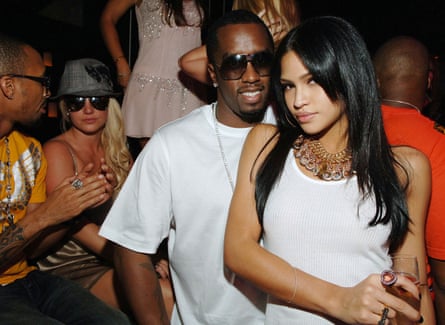
“To me, he was always ‘Diddy’,” says Roundtree. “When I talk to anyone from New York, he’s Puff or Puffy. Later, he wanted the world to call him Love and now, in this legal sense, he has become Sean Combs. He lives in these different versions for different people, but who is he?” Her book, Bad Boy for Life, attempts to answer this by picking out the patterns and repeat behaviours, the rumours and run-ins that have threaded through every reinvention. It reads like a “making of a monster”, a damning indictment of celebrity culture, where every impulse, however dark, is enabled by yes men. “I never planned to write a book but I was finding so much material, it felt important to preserve all the history in one place,” she says. “I wanted to show how all the little dots on the timeline brought us to this moment.”
It begins in Harlem where Combs spent his first years, and where his father, a gangster, was shot dead when Combs was a toddler. His mother, Janice, moved them to Mount Vernon, a suburb of Westchester County, just north of New York City. The Janice remembered by Combs’s childhood friend Tim Patterson cuts a formidable figure – glamorous, determined and ambitious. Patterson describes discipline that goes beyond “tough love”, and wild parties where it was normal to walk in on couples “butt naked”.
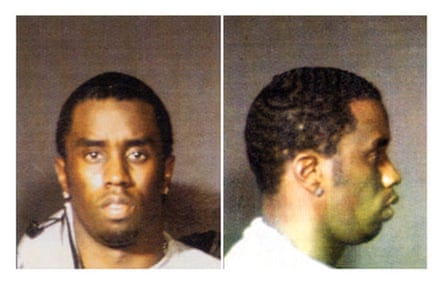
“His childhood leaves questions that only Combs and Janice can answer,” says Roundtree, “but the sources from that time said that being exposed to sexual things quite young, parenting style and growing up in Harlem meant that, by the time he was a teenager at Howard University, you’re seeing that something had manifested.”
Janice Combs has complained of “lies” and “inaccuracies” in how she and her son’s upbringing have been portrayed.
At Howard, studying business, Combs was well known – for his drive, his style and his legendary parties. Years later, he also described falling in love at Howard, in an ill-fated Romeo and Juliet-style affair. In a magazine interview, Combs said his girlfriend’s parents disapproved because her grades had dropped from As to Bs. They pulled her from Howard, allowing her back only if she ended the relationship. “That hurt so bad. It’s one of those things in life that everybody goes through, but the pain was so intense it was hard for me to handle,” he said.
Former classmates remember it differently. In their accounts to Roundtree, Combs was jealous and abusive. His girlfriend’s parents intervened, they said, only after Combs had shown up at her dorm, called her outside, whipped her with his belt and dragged her by her hair, while students watched horrified from their windows.
“The way he romanticised all that, and talked about her as if they were destined by the stars but forces kept them apart, was exactly how his attorney talked about Cassie decades later,” says Roundtree. “In the trial last year, the attorney called Combs’s relationship with Cassie ‘a great modern love story’.”
The pages of Bad Boy for Life are packed with allegations, many involving women who have since launched civil suits. (Up to 70 lawsuits are believed to be moving through the system.) There are common features: one-night encounters where drinks are spiked, a woman is raped, and the alleged abuse is filmed, and others that tell how Combs would single out a woman and pursue her relentlessly using any means necessary. (“No is not a stopping point for Combs,” says Roundtree.) He was known for his untamed rage. Many former friends and colleagues describe witnessing his assaults on girlfriends – and on any men deemed rivals.
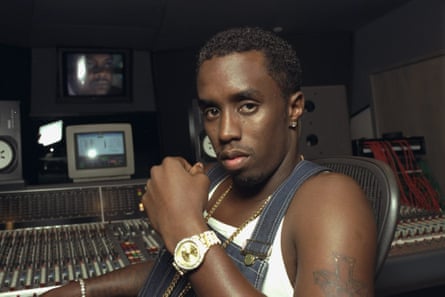
Roundtree also shines a light on other criminal activities in his orbit, from long-forgotten police reports to the notorious murders of his protege Biggie Smalls and Biggie’s rival, Tupac Shakur. Again, she picks out parallels. In 2001, after a shooting inside a Manhattan nightclub, Combs was charged with the possession of illegal weapons and attempted bribery (it was alleged that he had offered his driver $50,000 to take the blame). By then, at 31, Combs was already a multimillionaire with a record label, a fashion brand and a celebrity girlfriend, Jennifer Lopez. “His team conducted – and won – that early case in just the same way they fought the trial in 2025,” says Roundtree. “The smooth PR, the publicists who would talk to journalists and the crowds outside rooting for him.”
In that 2001 case, the jury acquitted Combs but his co-defendant, rapper Jamal “Shyne” Barrow, who had been with him on the night, was convicted, sentenced to 10 years, then deported to Belize, his birth country. Combs didn’t attend Barrow’s sentencing, quietly dropped Barrow from his record label and changed his name from Puff Daddy to P Diddy to mark his fresh start. (Barrow later described Combs as “someone who destroyed my life”.)
In every chapter of the book – and Combs’s life – people around him are shot, assaulted, imprisoned and broken, and careers are destroyed, yet he remains A-list, ascending to icon status. How? “That’s the biggest question,” says Roundtree. “How is someone with so many incidents around him, so much ruin in his wake, able to just keep doing better and better?
“I think part of it was his personality. The media loved him because he played into the spectacle – he wasn’t afraid to be larger than life. He was also building something people really believed in. His record company was everywhere in New York, and he was giving opportunities to young people, straight out of school. He’d created a living legend in Biggie, who died so early. His clothing line was cool. His fragrance was great. His parties were epic. All these things played into a figure so big and so tangible, people think they can see it all right in front of them. So why look any further?”
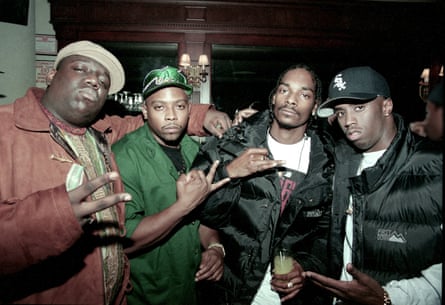
Ventura’s lawsuit was a pulling back of the curtain. “She was the first to let people into that world,” says Roundtree. “It’s really rare to see the inner workings of a public couple, but she laid it all out there, through her lawsuit, her trial testimony with all those photos on screen and text messages that she was asked to read, in front of the jury, in front of the world. She bared it all.”
Ventura had signed to Combs’s record label when she was 19, a model turned singer. She had a hit, Me & U, a 10-album deal, and so much promise ahead. The book describes Combs’s focused pursuit of her, despite the 17-year age gap. (One of his personal assistants recalls Combs describing her as “very mouldable” and saying: “I got her right where I want her. She’s young.”)
Combs’s inner circle and Ventura’s testimony describe the control he had over every part of her life – her diary, clothes, hair, nails. Even her medical records went directly to Combs’s email and he tracked her menstrual cycle. Her career stalled. Though Ventura recorded hundreds of tracks, her boss – Combs – didn’t release them. “She was his ‘wife partner’ for 10 years publicly,” says Roundtree. “One of the most surprising things to see was that, behind the scenes, she never lived with him, she never spent Christmas with him.”
The relationship described by Ventura was dominated by “freak-offs” – coerced, multi-day-long, drug-fuelled sexual encounters with male sex workers, held in hotel rooms. Every aspect was micromanaged, choreographed, directed, watched and filmed by Combs. According to Ventura, she was 22 when Combs first raised the idea, and she “had no concept of how it would be a turn-on”. But she wanted to please him. After the first, she felt “dirty” but glad Combs was “happy” with her, that she “did something right”.
Hundreds more took place around the world with unvetted men she didn’t know. Ventura says she felt “disgusting”, “humiliated”. When she attempted to leave Combs, he threatened to share the videos. (In one exchange between them, she talks of showing the world photos of her beaten face and body. “Release the videos also,” Combs shoots back.) Her life became preparing for “freak-offs”, enduring them and recovering afterwards. (“That’s why nothing gets done,” she wrote in one message to Combs, in 2017, their final year together. “Always healing.”)
Ventura officially separated from Combs in 2018 and filed her lawsuit five years later. When federal investigators subsequently approached her to build a criminal case, she handed over phones, iPads, video material, the names of sex workers and other witnesses to help corroborate her claims.
The US has no federal laws around coercive control and offences such as rape and assault carry statutes of limitations – legal time limits after which prosecution is not possible. But Combs was charged with racketeering conspiracy, sex trafficking by force, fraud, or coercion, and transportation to engage in prostitution. “Those laws were developed to bring down the mafia, to dismantle criminal networks,” says Roundtree.
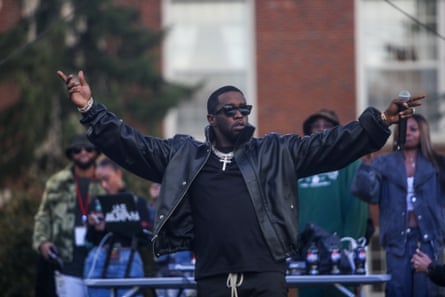
Combs’s 2025 trial lasted seven weeks, with the prosecution arguing that Combs used his business empire as a front for a criminal operation, relying on close associates to force and intimidate women into freak-offs and transport and supply drugs to keep them compliant. The defence argued successfully that what took place did not constitute a formal criminal enterprise. Ultimately, he was acquitted of most charges. “He was only found guilty of the clear examples where he paid for the male escorts to travel across a state line,” says Roundtree. “If they’d stayed within their states, they couldn’t have charged him with that.”
The music industry, says Roundtree, is yet to have its “#MeToo fallout”. “Hollywood had this reckoning; music never really has.” R Kelly is the only other high-profile musician now in prison because of abuse uncovered in the me-too fall out. Others have been untouched by swirling rumours and mounting accusations. “Maybe it’s because an artist is so singular,” says Roundtree. “Actors have this whole machine around them, procedures to go through, people to answer to. And we love our music. Those songs are our fondest memories, they take us right back to a place or a time or a person and it’s hard to give that up, to separate the art from the artist. Sean Combs was a producer. Do we give up every song he touched? So we can’t listen to Biggie any more? It’s not realistic.”
Combs’s release date is set for early in 2028, and he has multiple civil cases still to answer, although on Thursday it was reported that his attorneys are no longer acting for him in a dispute over months of unpaid legal bills. What lies beyond this? “He’ll definitely want to try to tell his story and make a comeback,” says Roundtree. “He has had a microphone in his hand since he was in his early 20s and I don’t think that desire to be loved and validated has gone away. There’ll be a next chapter for Sean Combs.”
Bad Boy for Life: The Rise and Fall of Sean Combs by Cheyenne Roundtree (Simon & Schuster, £25) is out on 29 September. To support the Guardian, order your copy at guardianbookshop.com. Delivery charges may apply.