5 hours ago
15
5 hours ago
15
What are the basic requirements of theatre-making? Actors, writers, resource and rehearsal space, to name a few. What happens when these factors are narrowed to their most dangerous extremities? Companies like Belarus Free Theatre and the Freedom Theatre have shown that theatre does not stop its production even as bombs and bullets assail the building. The work finds its way to an audience.
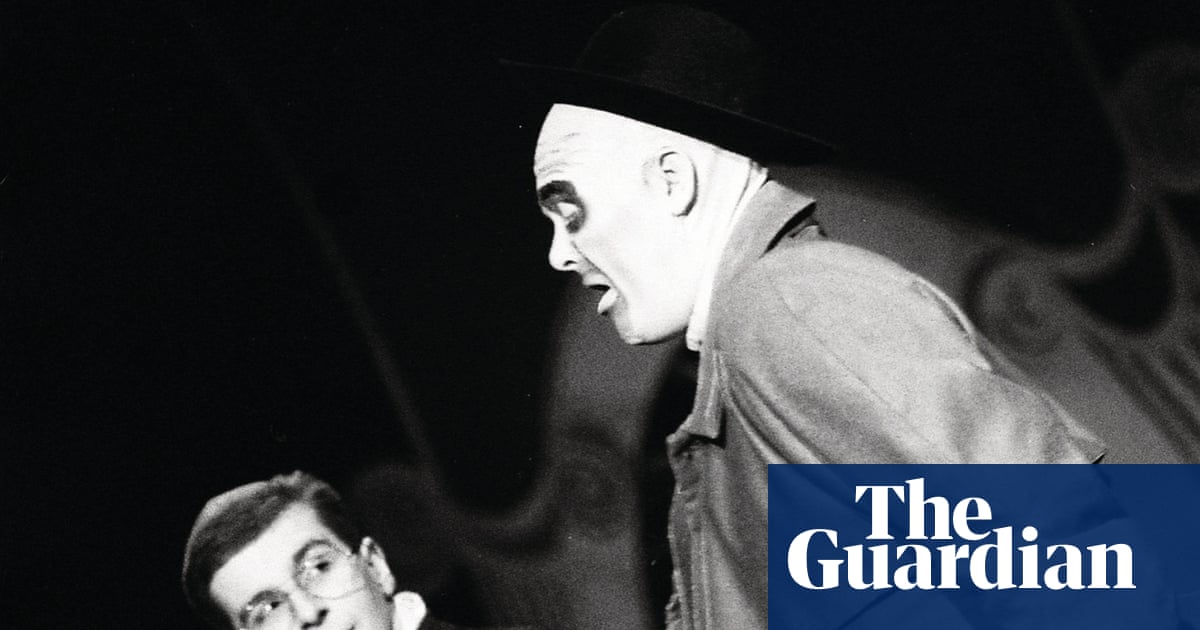
This is certainly the case with this collection of nine short plays written by Palestinian playwrights, poets and artists, and directed by Ahmed Masoud and Micaela Miranda. Four writers are currently in Gaza while two are former political prisoners, including Walid Daqqa, one of the longest-serving Palestinian prisoners, who died in custody in 2024. An extract from The Martyrs Return to Ramallah (translated by Julia Choucair Vizoso) is both absurdist and haunting, featuring the dead bodies of prisoners stored in Israeli prisons and denied burials, who begin to talk to each other.
Its absurdist overtones run across several plays, including The Last Letter by Mohammed Al Qudwa (translated by Mona Al-Khatib) in which a bewildered character in the last house standing on the wreckage of one Gazan street receives letters full of existential questioning and stark lyricism, written to the world and humanity.
Performed on a stripped stage by an agile cast of eight actors of mostly Palestinian heritage and produced by Joel Samuels, co-artistic director of Bet’n Lev Theatre along with the White Kite Collective and PalArt Collective, they all capture the sense of real-time drama and tragedy, and similar in their urgency to Nicolas Kent’s recent collection of short plays, Ukraine Unbroken, at the Arcola theatre.
Lived experience intersects with political theatre as we travel from hospitals to morgues to refugee camps. An extract from We Are… Doctors, by Dareen Tatour (imprisoned by Israel for her poetry) features a Palestinian medic who is told that words of sympathy towards injured Palestinians “can be crimes” while Jehad Abu Dayya’s Ruins (translated by Hassan Abdulrazzak) is a harrowing play featuring a family trapped under the rubble who must perform an improvised amputation.
Five Minutes by Motasem Abu Hasan brings rushed levity as its narrator summarises the arrest of a brother and son in Nablus with exaggerated comic urgency (“I don’t have long. London just gave me five minutes”). It is a powerful piece of writing in which his mother begs an Israeli soldier for a last hug with her son which she is denied.
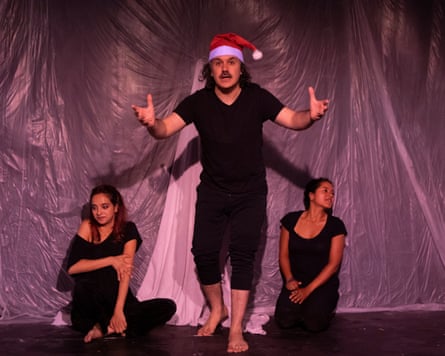
The Cage, by Ali Abu Yassin (translated again by Abdulrazzak) is a satire containing unspoken rage and featuring a girl who has been paralysed by a bomb, who refuses to speak despite (or maybe because of) becoming a media cause celebre. You can feel the child’s anger in her sustained silence over a world making promises of safety around her.
There are several children’s plays: Dr Hope and the Lantern of Miracles by Imad Wahba, The Piper by Hossam Al-Madhoun and Santa Claus on Holiday by Nahil Mohana. The latter, translated by Katharine Halls, features a visit from Santa to the bombed out terrain of Gaza; he comes with an empty sack but speaks of the importance of laughter and hope.
That is a message that cuts across several of these plays. The world of these dramas is “a city of zombies” and a result of “the most absurd of wars,” as one character says in Ruins. But hope still sits beside horror.
-
At Theatre 503, London, until 6 June