1 hour ago
9
1 hour ago
9
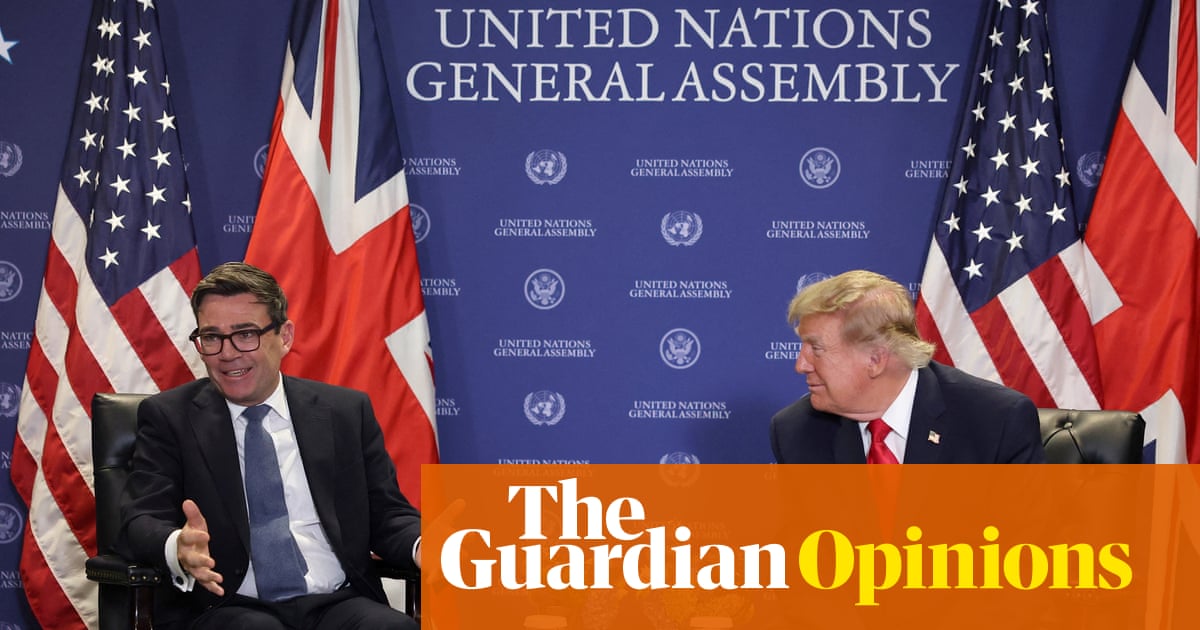
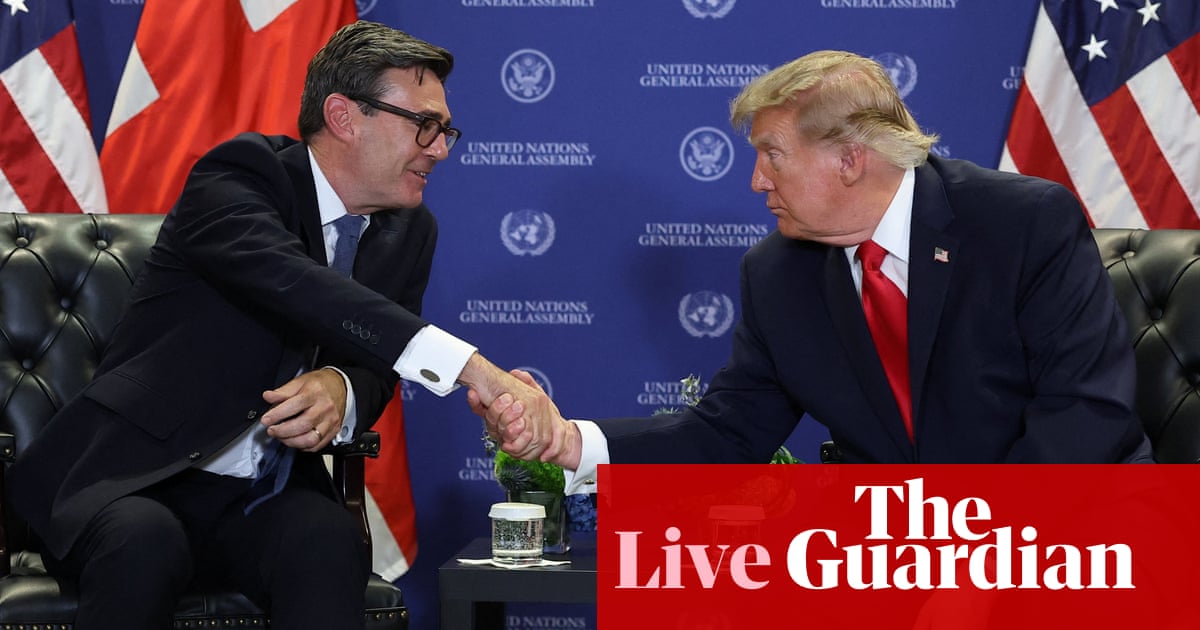
Expectations were low for Donald Trump’s address to the UN on Tuesday, and yet somehow it was even worse than expected. He does not perform well in formal settings, like chambers of government, preferring a blingier room, like Mar-a-Lago, or an outdoor rally. For years, he has made no secret of his hostility to the UN, and the very principles of international order that define it.
In recent years, that hostility has deepened into something more like a full-on assault, with frequent attacks on the International Criminal Court (perhaps out of fear that he will someday be indicted), on the UN’s climate agenda, and on Unesco (which the US decided to withdraw from in July 2025).
His flamboyant effort to launch a so-called Board of Peace in January (just before launching his war of choice on Iran) was another attack on the UN, which, at times, the president wondered if his new creation might simply replace.
Five months later, it has achieved little in the way of tangible results, except to demand huge sums of money from its small number of member nations, most of which are petrostates. Not one of those states can say that the Middle East is in better shape since the board came into existence, with a crisis that is deepening daily and may engulf Saudi Arabia soon.
But even by Trumpian standards, this was a hollow speech, long on snarling belligerence and short on ideas or policy proposals. The president read robotically from a teleprompter for long stretches, except when he remembered one of the many complaints about the world that he has memorized from his rallies, and a history of grievances that goes back to his rise as a xenophobic developer in the 1980s.
In short, he insulted nearly everyone in the room, from the Middle Eastern countries who are wondering about the validity of US security guarantees, to the European allies he habitually belittles, to Ukraine, whose leader, Volodymyr Zelensky was in the room, undoubtedly wondering why Trump is now asking him to pause his effective strikes on the Russian invader.
A famous episode of Seinfeld introduced “Festivus”, a holiday for the sharing of grievances. It felt that as Trump outlined his Hobbesian vision of the world, with touches of Rodney Dangerfield added in, from a president who complains endlessly that he gets no respect.
In one stretch, he seemed to be lobbying for a Nobel peace prize while boasting of all the conflicts he has solved, as audience members yawned and checked their phones. He mentioned that these wars had previously been “unendable”, an interesting word that effectively describes two wars today. The Ukraine-Russian war is still going strong despite his frequent promises (including today) to to stop it.
Then, of course, there is the war of choice in Iran that he launched nearly seven months ago. As he has so many times in his social media outbursts, he ranged erratically from threats to “annihilate the Islamic Republic” with car-salesman promises to help Iran achieve greatness if they will just agree do work with him. Which, obviously, they will not, as they continue to defy US threats and even to solidify their position (which has improved markedly with Houthi gains in the last two weeks).
Trump insisted that stocks of American weapons are increasing, when all news reports are they are rapidly being depleted. The price of oil has been rising steadily.
There was a lengthy assault on climate change, claiming (falsely) that the earth’s climate is cooling, and that the science is a hoax when August tied a record for the hottest month ever recorded, and several important science reports in the last week confirmed how dire the situation is. In Tennessee, the temperature on the field of a football game between the Titans and the Philadelphia reached 157F. Perhaps that is what the president meant when he bragged that the US is the “hottest” country in the world? He may need a new speechwriter – that claim was also made in his 2025 speech to the UN.
Another neologism was “super-intelligence”, or “SI”, a term that the president is hoping will suddenly replace “AI”, much as he tried to rename Lake Ontario and the Gulf of Mexico. Time will tell, but it feels unlikely the new term will stick.
On the eve of an important summit and state dinner with Xi Jinping, this might have been an important moment to stake out ways the US and China might cooperate on AI, to mitigate risks and increase the potential for beneficial research into disease and other problems. That opportunity was not seized.
Other topics that were not addressed included our rapidly deteriorating relationship with Canada, once the US’s greatest ally, and now enraged by Trump’s constant insults. Far from bending Canada to his will, they are achieving the opposite effect, as it always Elbows Up now. It will take years to repair the damage to a vital strategic relationship to the North.
Instead, more attention was paid to Greenland. The president claimed the US would now enjoying basing rights – which we already enjoy – and he also suggested that foreign adversaries would not be allowed their bases. That is hardly news – they have never been allowed bases on Greenland.
While discussing his own vision of sovereignty, including his claims to Venezuelan oil, Trump drew a page from a sordid page of US history, and quoted a corrupt New York politician, William M “Boss” Tweed, to say “to the victor belong the spoils”. Tweed, the leader of Tammany Hall, was later convicted of stealing tens of millions of dollars from the public, and died in jail.
Perhaps the saddest aspect of this speech was its utter lack of US idealism – the very force that led to the UN’s creation. In the 250th year of the United States, there were plenty of themes that might have won over a skeptical audience, But there were no inspiring words about fighting poverty, or reducing nuclear tests or keeping weapons out of space (as John F Kennedy promised in 1963).
Or human rights (introduced as a major theme by Jimmy Carter in 1977), or about reducing tensions with Russia (which Ronald Reagan spoke about in 1988), or the end of the Cold War (which George HW Bush celebrated in 1990), or the need to fight terrorism while avoiding Islamophobia (as Bill Clinton explained carefully in 1998).
It was just raw power; and a power that is likely to diminish in the years ahead. The power of persuasion has always been critical to presidents coming into the United Nations. But the United States is now at historically low levels of approval around the world, as measured by the Pew Global Attitudes project, with only 23% of people (across 36 nations) expressing confidence in Trump’s leadership. The number is unlikely to go up after today’s performance.
-
Ted Widmer, a former White House speechwriter, is the editor of American Speeches, and the recently published The Living Declaration: A Biography of America’s Founding Text, both published by the Library of America