4 hours ago
11
4 hours ago
11
There is much to be said for the extraordinary women living ordinary lives, who nonetheless shaped India. Women have changed public life in the country far more than their presence in formal politics would suggest.
And so, as India marked its 79th birthday over the weekend, I found myself reflecting on the multitude of people’s movements, big and small – as well as the women who helped shape them. During India’s struggle for freedom from British rule, women organised boycotts of British goods, made contraband salt and marched to confront the police, taking on roles usually dominated by men. In the 1970s Chipko movement, protesting deforestation, women put their bodies on the line, wrapping them around trees to stop them being felled, turning a local struggle into a national reckoning over environment and development. More recently, grandmothers in Shaheen Bagh sat to protest the citizenship law, which critics have denounced as discriminatory, creating space for dissent when many thought none existed.
Today, routes into public life for women have multiplied, with social media enabling people without political links to be in the public eye. But not all barriers have disappeared. Electoral politics remains notoriously hard to break into, especially for women. Almost half of all female parliamentarians and state legislators come from political families, while for men it is 18%, a 2025 analysis by Association for Democratic Reforms showed.
What makes a woman leading an ordinary life suddenly want to put her head above the parapet to change things for everyone? I spoke to women thrust into the spotlight in the recent student movement, who have stepped in front of vans, starved themselves and had abuse hurled at them in the process – to find out why they do it.
‘Politics is not just slogans and protests’: Neha Bora, 29
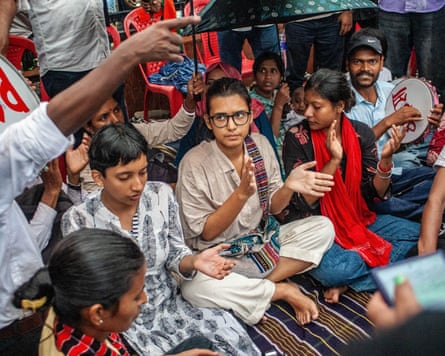
The president of the leftwing All India Students’ Association, Bora fasted for 23 days, demanding accountability over exam paper leaks and the resignation of the Education Minister during the Cockroach Protests. Now, she is touring the country as part of a Gen Z Rising outreach campaign on education reforms.
“I am a PhD student at Jawaharlal Nehru University in theatre and performance studies. My family’s political understanding is very different from mine. I ended up joining politics because that was the only way I could make sense of the times that I was living in – to not be … completely helpless in the decisions that are made for me, that should be made by me. To have a say in what I do, how I do it and what gets done around me. What is tolerable, what is good, what is injustice – all these definitions made sense to me through politics. Theatre was the first thing that taught me that politics is not just slogans and protests. Politics is the very language in which you talk to yourselves, the thoughts you formulate in your head, the relationships you have with your friends, family and peers. Student politics reaffirmed this idea.
Freedom as a student means the ability to study in a university where the model of education has not been turned into an opportunity for profit. Where education is something that helps societies move forward from dogmatism, conservatism and orthodoxy.”
‘Freedom for me is to have a voice – and not be ashamed’: Rhiya Ahir, 27
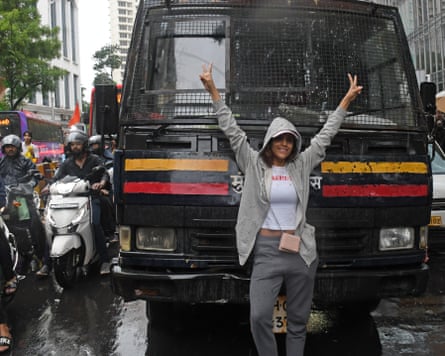
A model, actor and theatre artist from Mumbai, Ahir made the split-second decision to physically block a police van holding detained protesters – an act that exposed her to an organised hate campaign.
“I started doing theatre when I was four and a half. It taught me empathy and understanding other people’s pain, even people I don’t know. I’ve always been raised with the belief that if you see something wrong you have to step in.
Freedom for me is to have a voice, to put it across confidently and to not be ashamed. I was trolled for a photo in a swimsuit. But what about the uncles who wear chaddis at the Ganga ghat? My clothes are not my character. My clothes cannot overshadow the point or the fact that I was there, and I helped 20 students get back home safely that day. So, my clothes are just my clothes.
The hate did make me second-guess myself. The first two days [after the Mumbai protest] were very difficult because I was still trying to wrap my head around what had happened. They couldn’t find fault with my argument, so they started questioning my character. They went through my Instagram and found that I was a model. They talked about what I wear. They said she’s doing it for the camera.
When the hate started pouring in I was like, ‘What did I do to offend someone? Did I do something wrong?’ Then I realised this doesn’t change my reality. This doesn’t change who I am as a person. I don’t have to prove myself to anyone.”
‘The police have visited my ancestral village asking for information on me’: Danish Ali, 24
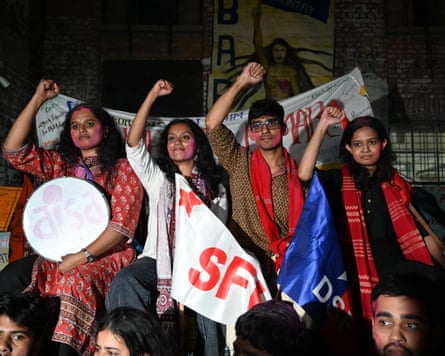
Ali was among the student activists on hunger strike at Jantar Mantar. A member of the Jawaharlal Nehru University student union, she faces a year-long suspension for dismantling a facial recognition system at the campus library. For her, freedom is deeply personal and rooted in her identity as a Muslim woman.
“I come from a very small town in Madhya Pradesh. No one in my family had even visited the city, so going to Delhi for higher education was almost like going abroad for education. Since the protest, the police have visited my ancestral village asking for information on me. They called my father, asking him to tell me to focus on my studies.
As a student activist, freedom means to be able to critique the government openly and say that we don’t like their policies. Freedom is being assertive about your individuality and not caring what the society would says, what your parents might say or what the state might do to you.
Freedom also means being an equal citizen in this country. Muslims in this country are being made to feel as if they are secondary and that they don’t have any right to express their religious or cultural identities. I am an equal citizen and I don’t want anyone to tell me otherwise.”
‘What used to work … won’t work with the youth’: Ratna Singh, 31
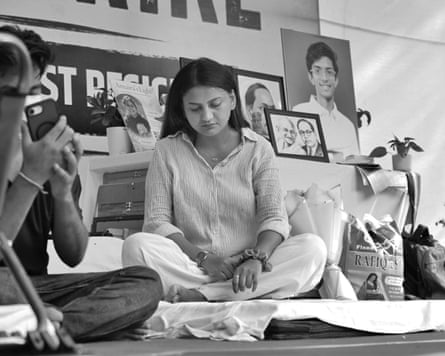
She traded a career in the law and journalism to join the Cockroach Janata party, where she now serves as the legal head. She felt drawn to the protests, seeing her work reflected in the students’ demand for accountability. Initially hesitant to become its public face, she stepped forward as spokesperson when they needed female voices.
after newsletter promotion
“When I was in law school, most of my classmates would go to law chambers for internships but I would spend the summers teaching children at NGOs. Education has been something I have been very sensitive towards, and I believe every child should have access to it.
A lot of people were criticising us [and calling us] an impatient generation. We are impatient because we want to see change. We can’t be protesting and be OK with not getting answers from the government. We are also just done with divide and rule politics on the basis of religion. Political parties need to understand that what used to work for a certain mindset of people – it won’t work with the youth.
There are so many protests which have begun in different parts of the country. The fear of speaking up is gone. We are seeing a lot of leaders coming up in their own districts. They are starting their own initiatives. I think that’s giving us all hope to keep going.”
What else we’re reading about
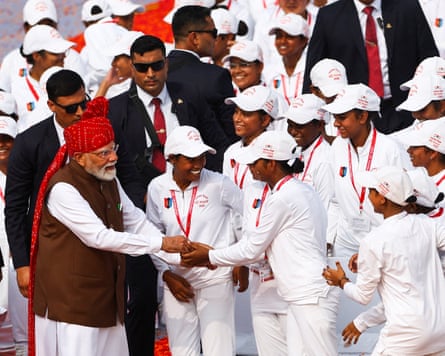
Political promises | In his Independence Day speech, Prime Minister Narendra Modi announced a series of youth-focused initiatives, including an AI skills programme, free online coaching for competitive exams and a countrywide sport talent hunt. His call to identify “dimagi naxals”, or people aligned with Naxal ideology, referring to the armed guerilla movement in central India, was criticised by the Opposition as a threat to suppress critics and rivals.
Environment targets missed | The Green India Mission, for protecting and restoring the country’s declining forest cover, fell short of its target by 97% over the past decade, according to an audit report tabled in Parliament. New forest cover added was just 0.03409 million hectares, the report said, citing poor planning and inadequate funding.
Sister act | Two women of Indian origin adopted by separate Dutch families 40 years ago, who became friends as children, recently discovered they are sisters after a DNA test, Reuters reported. “It’s like a missing puzzle piece has been found,” one said.
Guest shelf
A recommendation from someone with great taste
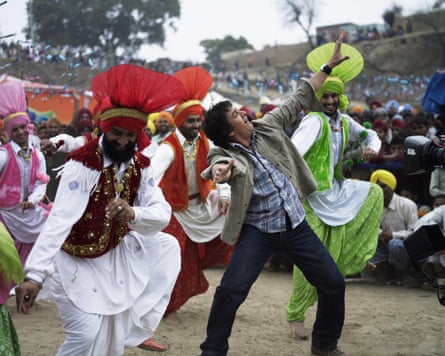
Actor Imran Khan (@imrankhan) recommends: “Rang De Basanti is an extremely timely and relevant film for this moment; it follows a young English film-maker who befriends a group of Indian students. They set out to make a film about the Indian freedom movement. A tragic accident blurs the lines between past and present, throwing them into their own conflict against an unjust power structure. The film is funny but also heartbreaking. It celebrates the spirit of the great revolutionaries, and imagines what their modern counterparts might stand for. And the soundtrack gives us AR Rahman at his most audaciously experimental. It rocks.”
Count it
A number worth knowing
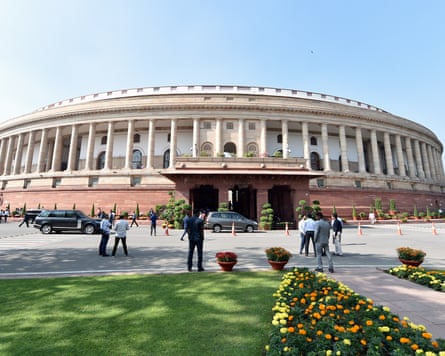
Two
Question hour in Lok Sabha functioned for 1% percent of its scheduled time during the parliament’s monsoon session, the lowest since 2019, according to PRS Legislative Research, a nonprofit that tracks the functioning of the parliament and state assemblies. The key forum for members of parliament to question the government saw two questions answered in nine minutes, PRS said.
Vibe check
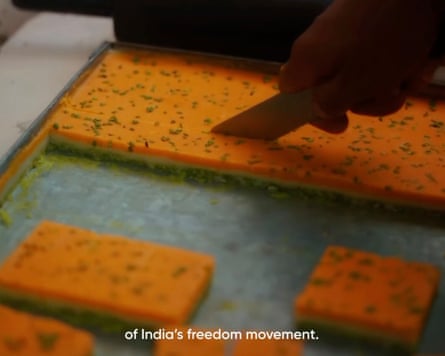
For creator Maroof Umar (@maroofculmen), storytelling can change the way we see the world. And the stories he tells, rooted in heritage and culture through cinematically shot videos, can both break and mend your heart. Each has a person at its center but the stories also belong to the city and its communities. His short videos capture his (and my) hometown of Lucknow most frequently, but his latest work takes us to a sweet shop in Varanasi. In it, Ram Bhandar makes tricolor treats in a nod to the colors of the Indian flag, carrying on a tradition begun by his ancestors decades before, as they tried to spread patriotic fervor during the freedom movement.
Get in touch
Do you have any thoughts or responses to this week’s newsletter? Is there anything you’d like us to cover in the future? Share your feedback by replying to this, or emailing us at [email protected] and we may include your response in a future issue.