3 months ago
224
3 months ago
224
Finchley Reform Synagogue in north London was my community for several years. This was a place where I found belonging, singing at Friday night services. I taught weekend classes with children ahead of their bar- and batmitzvahs. The synagogue’s former rabbi, Miriam Berger, officiated our wedding when I married my husband.
Last week, along with a synagogue in nearby Kenton and a building that previously housed Jewish charities in Hendon, this community was subject to an arson attack that mercifully did not cause substantial harm. Yet the emotional and psychological impact has been felt far beyond the physical damage. These attacks feel close to home, grounded in the very real dangers Jews face globally.
Last year was the deadliest for Jewish communities around the world in three decades. Murderous attacks on Jews simply for being Jews – including at a Hanukah candle-lighting on Bondi beach and during Yom Kippur at Heaton Park synagogue in Manchester – were among antisemitic attacks that took 20 lives in 2025.
Jewish people in Britain are feeling afraid, isolated and, too often, ignored. In recent weeks I’ve been part of conversations where people have said they’re looking to leave the UK, or have already left, largely due to the rise in hatred and violence we face as Jews. I have spoken with parents nervous about their children securing a place in a Jewish school, hoping to protect them from the harassment and bullying experienced by too many Jewish pupils in secular schools.
When friends see my Star of David on show, they ask with surprise why I have not joined those choosing to conceal their Jewishness in public. This attitude should be shocking to all in Britain – and even more so to progressives and anti-racists. Some of what we have seen from those we most expect to confront anti-Jewish racism has added pain and a further sense of alienation to recent events.
Last week was also Yom HaShoah, the date in the Hebrew calendar when Jews commemorate the lives lost and communities decimated during the Holocaust. Distinct from Holocaust Memorial Day on 27 January – held on the anniversary of the liberation of Jews, Roma, disabled people, homosexuals and political prisoners in Auschwitz by Soviet forces – Yom HaShoah marks the beginning of the Warsaw ghetto uprising. It is a day that remembers destruction and defiance.
There can be greater comfort with the January date: a universalised commemoration that situates Jews within a broader human story, rather than a specifically Jewish remembrance that foregrounds our agency. The online response to the Labour party’s post acknowledging Yom HaShoah was a demonstration of this kind of exposure. Some comments recycled conspiracy tropes about sinister Jewish power; others questioned the scale of the Holocaust. There was immediate hostility towards Jews or Israel.
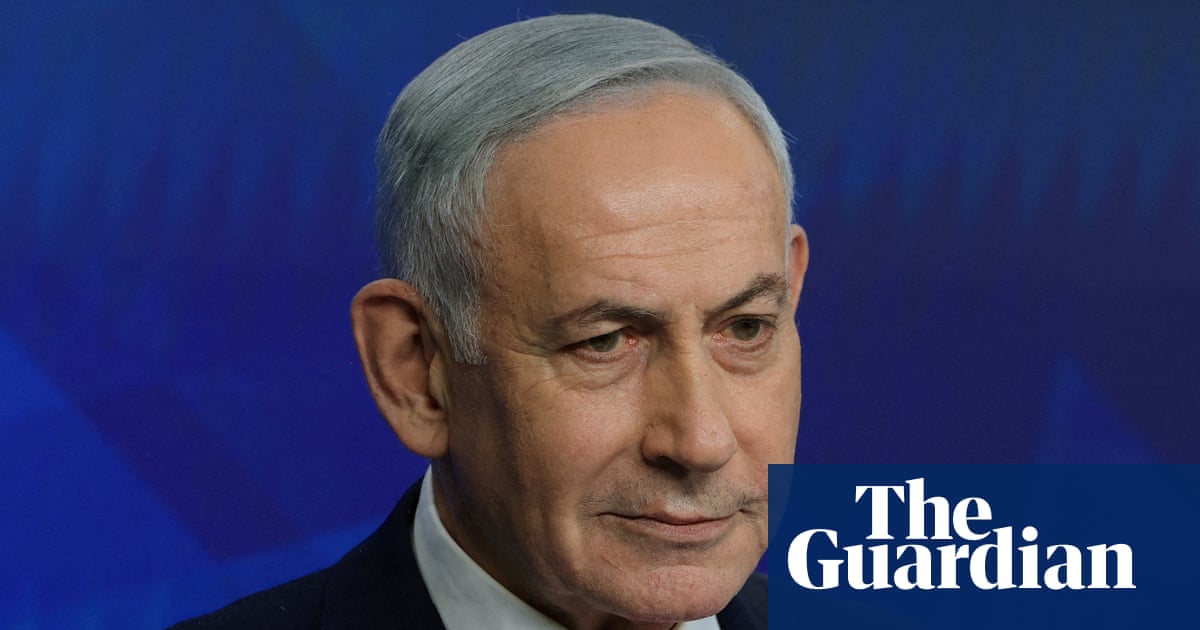
We can’t know the political leanings of those who posted, but in these difficult times, we need to send a message to our allies. We need to know they will apply the same principles to Jews as they do to other ethnic and religious minorities subject to prejudice and violence. Jews should be believed and listened to when they describe their encounters with racism. Allies also need to understand the distinct ways that anti-Jewish racism manifests, including how it relates to Israel and the Israeli-Palestinian conflict. Jews and Israelis should be afforded compassion, not conflated with the actions of Benjamin Netanyahu’s government. Jews should also not have to disavow a connection with Israel to be accepted into progressive spaces, the arts or the academy.
Let me be clear: this does not mean there cannot be robust, vocal criticism of the actions and policies of the Israeli government – past or present. I write as the chief executive in the UK of an organisation that supports Israel’s human rights NGOs, many jointly run by Jewish and Palestinian leaders.
Looking beyond what we need from anti-racist allies, these attacks also highlight challenges in how antisemitism is policed. Jewish communities need the police to continue their visible presence in Jewish areas. Unlike some minority communities, Jews in Britain generally view the police as protectors.
We also need the pursuit of perpetrators to remain relentless. There have been quick arrests following the attack on Hatzola ambulances in north London last month and the attempted arson at Finchley Reform Synagogue. Where more is needed is in how the police and CPS increase prosecution rates for antisemitic hate crimes. According to Home Office statistics for England and Wales, Jews are proportionally far more likely to be victims of religiously motivated hate crime, yet prosecution rates remain too low – as they also are for other communities, including British Muslims.
Returning to Finchley offers a model of how we can all be better allies. Members of the Somali Bravanese community – given a temporary home at the synagogue during a past Ramadan after they were victims of an arson attack – showed up in solidarity. They were joined by a Citizens UK delegation, as local allies from diverse backgrounds participated in the synagogue’s Shabbat services.
In the face of fear, that kind of solidarity matters. But it cannot be exceptional. If we, as progressives and anti-racists, are to live up to our values, solidarity must be consistently extended to Jews not only in moments of tragedy, but every day in how anti-Jewish racism is recognised, understood and challenged. Anything less leaves Jewish communities vulnerable – and alone.
-
David Davidi-Brown is chief executive of the New Israel Fund
-
Do you have an opinion on the issues raised in this article? If you would like to submit a response of up to 300 words by email to be considered for publication in our letters section, please click here.